VOA serves America best when it is free from political pressure

VOA built a reputation around the world for broadcasting objective, fact-based news.
Over the years, Congress approved the VOA Charter and an editorial Firewall to prevent political pressure from interfering with VOA's journalism.
But a new effort backed by Project 2025 to bring VOA’s parent agency under State Department control seeks to create an end run around the Firewall and risks eroding audience trust.
Published
For more than 80 years, Voice of America has advanced democratic ideals and U.S. foreign policy goals, countering disinformation about the U.S. and opening a global audience of hundreds of millions to American ideas. It does so by modeling a free press — sharing with the world a foundational right of all Americans.
While VOA’s setup has proven inventive and effective, it includes an inherent tension: that for it to work, VOA’s audience must trust that they are getting accurate news — not propaganda from Washington — even as they know the outlet is funded by American taxpayers.
To make this distinction, U.S. policymakers from both parties have worked for decades to limit the control that politicians and their appointees can have over VOA’s journalism, while preserving VOA’s role in covering U.S. foreign policy and American views. They have resisted efforts by those in government who have at times sought to control VOA’s broadcasts for short-term gain, instead taking the longer view — that the value of VOA’s independent journalism to America is too great to squander for temporary control of any news story, or for the interest of any administration.
Beginning in 1953, President Dwight D. Eisenhower created the independent U.S. Information Agency (USIA) to oversee VOA’s operations. Subsequent administrations along with a myriad of lawmakers have reinforced this choice of an independent agency, now called the U.S. Agency for Global Media (USAGM). They have also strengthened the laws that protect VOA and its sister networks, and have required them to adhere to journalistic standards rather than produce propaganda.
However, a current proposal by some House members, and championed by Project 2025, to move the functions of VOA and USAGM under the State Department threatens to destroy that hard-won independence. It would wipe out the credibility that VOA has built with its audience over decades and, in turn, jeopardize the many benefits the news organization brings to America.
“To be persuasive, we must be believable; to be believable, we must be credible; to be credible, we must be truthful.”

Edward R. Murrow
Director of the U.S. Information Agency (1961-1964)
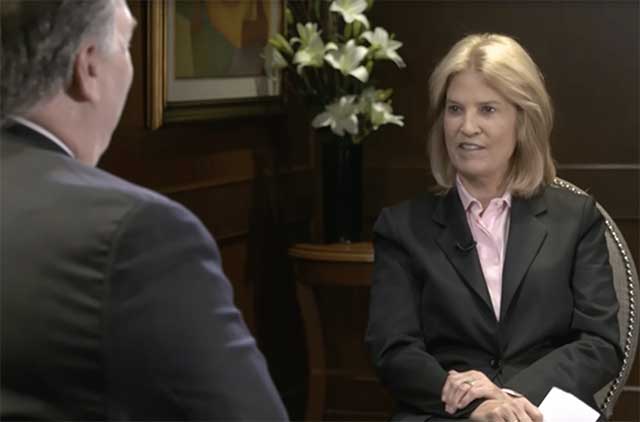
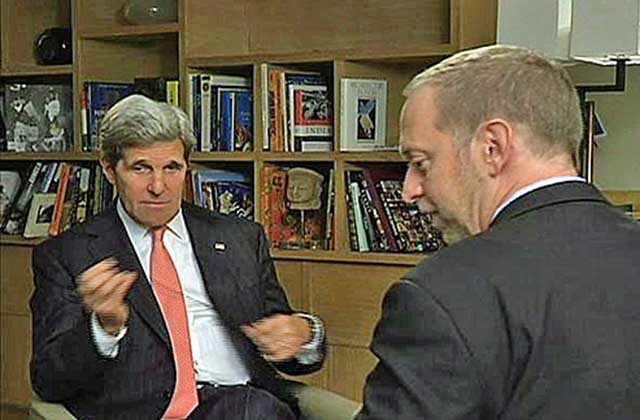
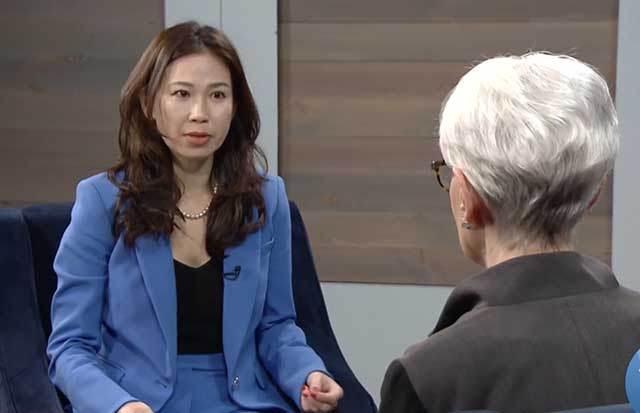
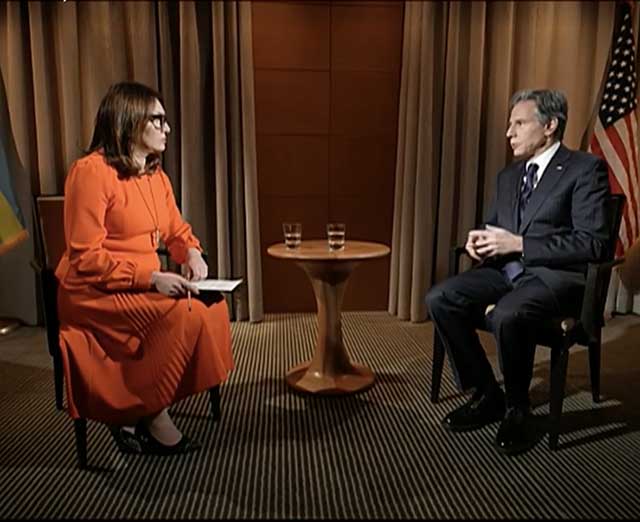
VOA journalists have a responsibility to report on and explain U.S. policies as well as opinions and discussions about those policies. VOA contributor Greta Van Susteren interviews Secretary of State Mike Pompeo, 2018; VOA State Department Correspondent Scott Stearns interviews Secretary of State John Kerry, 2013; VOA State Department Bureau Chief Nike Ching interviews Deputy Secretary of State Wendy Sherman, 2023; VOA Eastern Europe Bureau Chief Myroslava Gongadze interviews Secretary of State Antony Blinken, 2022.
An independent agency
The idea to seat VOA inside the State Department is not new, but it has been rejected by members of both parties for more than 70 years. Just four years after the Truman administration briefly experimented with VOA being under the State Department following World War II, work began on establishing an independent agency to house VOA. Lawmakers on both sides of the aisle have understood that the agency’s structural independence supports VOA’s editorial independence, which in turn allows the outlet to be trusted by its audience. This trust is what makes VOA so valuable to America.
The decisions that shaped VOA’s independence
June 13, 1942
Roosevelt administration separates open and covert U.S. information services
President Franklin D. Roosevelt splits the U.S. government’s open and covert information activities into different organizations. The U.S. Foreign Information Service, which manages the Voice of America, is placed under the newly created Office of War Information, separate from U.S. intelligence operations.
September 15, 1945
VOA broadcasts briefly move under the State Department
Following the end of World War II, President Harry Truman abolishes the Office of War Information and temporarily places VOA within the State Department.
February 1949
Hoover Commission recommends moving VOA out of the State Department
The move toward creating an independent agency to house VOA begins when the Hoover Commission's report on foreign affairs recommends that U.S. foreign information programs be removed from the State Department.
April 7, 1953
Rockefeller Committee also recommends moving VOA out of the State Department
The Rockefeller Committee appointed by the incoming Eisenhower administration recommends establishing an independent U.S. information agency to house VOA.
August 1, 1953
VOA moves under new independent agency
President Dwight D. Eisenhower removes VOA from the State Department and establishes the U.S. Information Agency as an independent agency. USIA is tasked with overseeing VOA’s operations as well as various diplomacy efforts, including educational and cultural programs.
July 12, 1976
VOA Charter becomes law
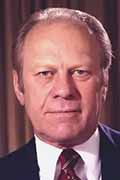
Congress passes a bill codifying the VOA Charter, and President Gerald Ford signs it into law. The Charter's editorial principles govern VOA's broadcasts and ensure they cannot be propaganda.
April 30, 1994
New law restructures USIA, codifies VOA's editorial independence
President Bill Clinton signs the International Broadcasting Act, which creates a bipartisan panel called the Broadcasting Board of Governors (BBG) to oversee all non-military U.S.-funded international broadcasting. For the first time, the law instructs the director of USIA, along with the newly created board, to "respect the professional independence and integrity" of VOA and its sister networks.
October 20, 1998
USIA is dismantled, broadcasting operations transferred to the BBG
Congress passes the Foreign Affairs Reform and Restructuring Act, which splits USIA’s functions into two. Its broadcasting arm breaks away to form the fully independent BBG, which is later renamed the U.S. Agency for Global Media. Public diplomacy operations that had been carried out under USIA, such as cultural exchanges, are moved back to the State Department.
January 21, 2021
New law creates advisory panel to hire and fire network heads
A bipartisan group of lawmakers including Marco Rubio, then a U.S. senator representing Florida, leads Congress to pass legislation to further insulate VOA and its sister outlets from political interference. The law requires a bipartisan advisory panel, called the International Broadcasting Advisory Board — the successor to the BBG — to approve the hiring and firing of network heads.
March 14, 2025
Trump signs executive order that begins the dismantling of USAGM
President Donald Trump signs an executive order that calls for reducing USAGM “to the maximum extent consistent with applicable law.” A day later, the White House releases a memo alleging that VOA is the "voice of radical America" and accuses it of leftist bias without presenting credible evidence.
2025-2026
Lake works against VOA's editorial independence
USAGM acting head Kari Lake makes multiple statements against VOA’s independence and advocates for VOA to present only the administration’s point of view.
VOA’s editorial principles became law in 1976 when President Gerald Ford approved the VOA Charter. The Charter mandates that VOA “win the attention and respect” of its global audience by being a “consistently reliable and authoritative source of news.” It says VOA will present “the policies of the United States clearly and effectively, and will also present responsible discussions and opinions on these policies.”
While lawmakers have at times reexamined how VOA’s parent agency is structured, one thing has remained untouched — the need for independence. In 1994, when lawmakers reorganized VOA’s parent agency, they wrote in a conference report that there is a “need for journalists and broadcasters to maintain their professional independence in order to produce factual, unbiased and balanced work products.” Four years later, when Congress again made changes to the structure of the agency, lawmakers explicitly rejected the idea of putting VOA and its sister networks under the State Department.
“The credibility and journalistic integrity of the broadcasters would be threatened,” said the conference report to the 1998 Foreign Affairs Reform and Restructuring Act. It said if such a move were to happen, the broadcasts “would be perceived by foreign audiences as mere adjuncts of the [State] Department.”
That report also argued that the separation between VOA’s parent agency and the State Department benefits the work of U.S. diplomats. The arms-length distance between the two agencies allows diplomats to truthfully explain to foreign governments — who might sometimes dislike VOA’s coverage of their policies — that the State Department does not direct the content of VOA’s journalism.

“The Voice is a delicate instrument. It can easily be destroyed. Without credibility, it is nothing.”
Henry Loomis
VOA and State play different roles
While VOA and the State Department have complimentary functions — both support U.S. foreign policy objectives — they achieve this goal in very different ways. The State Department’s methods do not center around journalism, while VOA’s effectiveness is entirely dependent on the credibility it has built up with its audience of more than 360 million people through its balanced reporting.
If the State Department were to control VOA’s output, its news would be perceived as propaganda. Such a move would destroy VOA’s unique abilities, whereas keeping USAGM and the State Department separate would maintain the benefits of both.
In late 2025, a report issued by the U.S. Advisory Commission on Public Diplomacy highlighted how independent reporting by outlets like VOA is perceived by foreign audiences differently than State Department messaging. The report cited analysis from outside sources and former officials that “indicates that [State] Department driven negative messaging about our adversaries including China is often not effective at persuading foreign audiences.”
“However, independent reporting that exposes malpractices or negative implications has a different effect; something that international broadcasting is far better positioned to do from a place of editorial integrity than direct State Department messaging,” it said.
When VOA was suddenly silenced in March 2025, many regional State Department offices sent cables sounding the alarm. A cable from Kuwait said, “USAGM’s closure will clear the path for adversarial nations, particularly China, to seize the opportunity to enhance their state-run media presence.” Cables from countries including Botswana, Kosovo, Nigeria, Pakistan, Serbia and the U.K. echoed similar concerns, adding that Russia, Iran and extremist groups would also fill the void that VOA is leaving.
VOA is well positioned to counter foreign propaganda in ways that the State Department and other U.S. agencies cannot. When Russia accused the U.S. of involvement in the 2024 Crocus City Hall attacks outside Moscow, VOA helped to combat the falsehood by interviewing the family members of the perpetrators.
“Without the credibility of VOA, without the actual interviews with Tajiks in Tajikistan, it would have been much more difficult for the United States to counter this disinformation narrative that the U.S. was behind the Crocus City Hall attacks,” said Eric McGlinchey, who leads the International Relations Policy Task Force at the Schar School of Policy and Government at George Mason University.
More than 70 former U.S. diplomats, who understand both the benefits of USAGM and the State Department, have publicly supported the effort to restore VOA. Through testimonial videos and amicus briefs, they argue that VOA plays a crucial role in advancing U.S. foreign policy goals.
Diplomatic voices of support
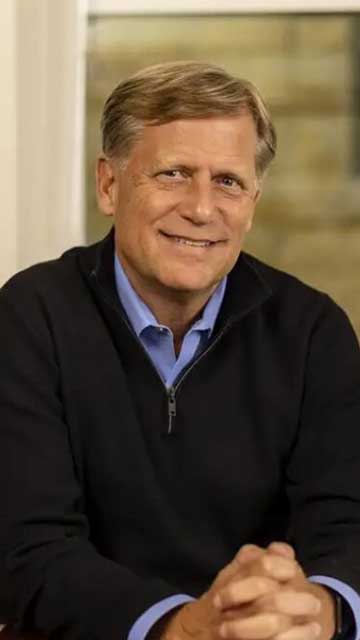
Michael McFaul
Former U.S. ambassador to Russia
“It can’t just be the military alone, and it can’t just be diplomats alone. We need this portfolio of soft power instruments to prevail when we’re especially dealing with these very powerful, autocratic countries who subsidize propaganda around the world to tell a different story, an untrue story. We have to be able to tell the true story.”
 Michael McFaulFormer U.S. ambassador to Russia
 Vivian WalkerFormer U.S. diplomat
 Thomas CountrymanFormer U.S. assistant secretary of state
 Hoyt Brian YeeFormer U.S. deputy assistant secretary
 David CowhigFormer U.S. diplomat
 Roderick MooreFormer U.S. ambassador to Montenegro
 John DinkelmanFormer U.S. diplomat, AFSA president
 Luke ZahnerFormer U.S. diplomat
 David KostelancikFormer U.S. diplomat
 Derek MitchellFormer U.S. ambassador to Myanmar
Diplomatic cables
In spring 2025, after the Trump administration attempted to shut down VOA, many regional State Department offices sent cables warning that the loss of VOA would harm U.S. strategic interests around the world. Explore the map to see excerpts from the cables, or read a court document that chronicles some of the messages.
The FirewallThe Firewall
While the VOA Charter codified standards for VOA’s accurate and objective reporting, Congress later created a set of laws that have come to be known as the “Firewall” to protect the outlet’s independent journalism.
The Firewall insulates VOA and its sister networks, their reporting, and their staff from political influence. It works in the same way that commercial news organizations protect their news divisions from the business side of their operations. The Firewall separates VOA’s journalists — including reporters and editors — from everyone else at USAGM, including administrators and the agency’s CEO. It also exists to prevent U.S. government officials outside of USAGM — such as those in the State Department, the CIA or the White House — from putting pressure on VOA’s journalists. That pressure could undermine VOA’s journalistic credibility.
The statute requires the CEO of USAGM and the Secretary of State to “respect the professional independence and integrity” of USAGM, VOA and its sister networks, and it requires that agency programming meet the “highest professional standards of broadcast journalism.”
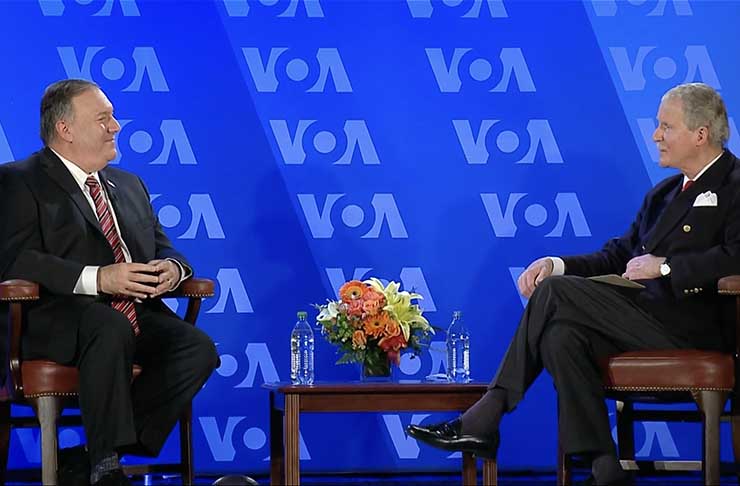
Secretary of State Mike Pompeo speaks with VOA Director Robert Reilly at VOA headquarters in Washington, January 11, 2021. Reilly did not allow VOA reporters to ask Pompeo questions at the event, leading Senior White House Correspondent Patsy Widakuswara to try to question Pompeo as he was leaving the building. Hours later, she was reassigned from her post, prompting Representatives Michael McCaul (R-Texas) and Gregory Meeks (D-N.Y.) to condemn the decision against her in a joint statement from the Foreign Affairs Committee.
This doesn’t mean that the U.S. government has no influence over its soft power tool. The statute spells out ways that USAGM administrators can ensure that VOA’s output is consistent with broad U.S. foreign policy objectives without interfering in its journalism. This includes what is known as “surge capacity,” which allows administrators to increase financial and technical resources for broadcasts to countries or regions in crisis. This has happened many times at VOA, including when it boosted coverage for audiences in Ukraine following Russia’s invasion in 2022, West Africa during the Ebola outbreak beginning in 2013, Myanmar after a military coup in 2021, and Venezuela during its economic and political crisis beginning more than a decade ago.
In addition, the law gives administrators the job of evaluating and determining which languages VOA broadcasts in. It also requires VOA to present editorials — which are clearly labeled as separate from VOA’s news output — sharing the U.S. government’s views on various topics.
What the statute does not allow is for administrators or political officials to dictate VOA’s editorial policy, such as selecting news stories or influencing how news events are covered. It is a fine but important balance that allows VOA to report credibly, grow its audience and become a formidable instrument of U.S. soft power.
Kari Lake, who led USAGM for a year beginning in March 2025, called on many occasions for the Firewall to be eliminated. Such an outcome would give U.S. government officials more control over VOA’s content, but in the end would ruin VOA’s credibility and cause its audience to turn away. An independent review of VOA by the Government Accountability Office in 2021 found that more, not less, Firewall legislation is needed to preserve the editorial independence of VOA and other USAGM networks.
Navigating government friction not new for VOA
Tensions between VOA and whichever administration is in power have been present since VOA’s founding. Much of this push-and-pull is the predictable result of VOA’s unique setup — being funded by the U.S. government, but having a mission to report accurate, independent news that is sometimes at odds with the administration’s wishes. The following are key times when tensions surfaced:
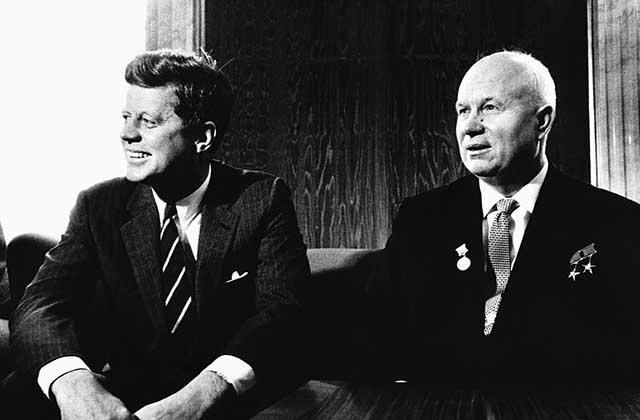
President John F. Kennedy and Soviet leader Nikita Khrushchev, May 1961.
Early years • For the first decades of VOA’s existence — before its editorial standards were put into law and a statutory Firewall was established — VOA’s reporting was subject to approval by government minders, including during World War II and the Kennedy-era Cuban missile crisis.
Watergate • During the Watergate scandal that led to President Richard Nixon's resignation in 1974, VOA journalists wanted to give a full picture of the investigation into the president's alleged wrongdoing. Those plans came into conflict with USIA officials who wanted VOA to present a more positive narrative. A compromise was reached: for every negative story that was run about the president, a positive story would also air.
September 11 • Following the September 11, 2001, attacks on the United States, Osama bin Laden's protector in Afghanistan — the reclusive Mullah Omar — offered VOA's Pashto Service an interview. State Department officials in the George W. Bush administration pressured VOA Acting Director Myrna Whitworth not to air it, while more than 100 VOA journalists signed a petition urging the agency to resist the pressure. VOA ultimately ran segments from the interview, saying that its audience in Afghanistan counts on VOA to tell the whole story. Shortly afterwards, Whitworth was removed from her position.
Pack tenure • Michael Pack, who served for seven months as the CEO of USAGM during the first Trump administration, engaged in actions that were later found to have violated the agency’s Firewall, along with other abuses. In a 2023 report, the Office of Special Counsel found that Pack investigated journalists, tried to dismiss officials he described as “deep state,” and moved the VOA standards editor — who is responsible for maintaining and enforcing VOA's journalistic ethics — to a position with no function.

“We should roll [what is left of USAGM] into the Department of State. We don't need a separate agency to do our propaganda. It should come under State where we can make sure it's in alignment with what our foreign policy is.”
Kari Lake
Photo by Gage Skidmore

Playing into the hands of dictators
Authoritarian governments have long tried to discredit VOA and its sister outlets by calling them U.S. propaganda. They have also gone to great lengths to try to jam VOA signals so their citizens cannot access truthful news.
During the Cold War, the Soviets spent around $125 million a year to block VOA, an amount worth about $1.4 billion in today’s dollars. Former USIA Director Edward R. Murrow told Congress in 1962, “The Russians spend more money jamming the Voice of America than we have to spend for the entire program of the entire agency.”
When VOA was largely silenced in March 2025, governments around the world had been actively trying to block VOA’s fact-based content, including in Russia, China, North Korea, Myanmar, Iran, Afghanistan, Venezuela and Nicaragua.
A State Department annexation of USAGM would give these governments more ammunition, both to try to undermine VOA’s credibility by claiming it is merely an arm of the U.S. government, and to justify their efforts to block VOA’s content.
U.S. adversaries would certainly feel bolstered by comments from Lake, who explicitly advocated in March 2026 for USAGM to produce U.S. propaganda under the State Department: “We should roll that [what is left of USAGM] into the Department of State. We don’t need a separate agency to do our propaganda. It should come under State where we can make sure it’s in alignment with what our foreign policy is.”
If the U.S. government were to turn VOA into a propaganda outlet, not only would U.S. adversaries rejoice, but such an effort would ultimately fail. VOA’s audience is painfully familiar with propaganda from their own governments. Why would they trust VOA if it were no better than what they get at home?
For more than eight decades, VOA has proven that the best way to counter authoritarian propaganda is with independent journalism. VOA’s credibility has given the United States a voice the world will actually listen to, strengthening American soft power and extending U.S. influence. That is worth protecting.
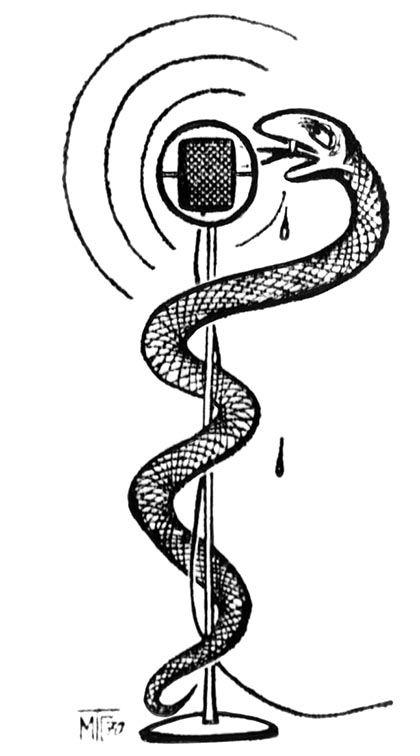
Soviet-era political cartoon critiquing VOA broadcasts. “Радио…активность” [“Radio…Activity”], Советская Эстония (Sovetskaya Estoniya), January 24, 1970.
Adversarial voices
“The Voice of America website is the media system of the government of the United States; it reports directly to the White House and the State Department, and every week they put out news stories to badmouth Venezuela — stories intended to harm Venezuela.”

Nicolas Maduro
Former Venezuelan president
“VOA is widely recognized as Washington's carefully crafted propaganda machine.”

Global Times
Chinese state media
“This [the closure of U.S.-funded media] is a major contribution to eliminating fake news, disinformation, lies, distortions, incitement, and chaos around the world, coming from the propaganda machine.”

Hun Sen
Former Cambodian prime minister
Despite U.S. adversaries trying to undermine VOA, its audience overwhelmingly had confidence in its reporting. USAGM data from early 2025 showed that 86% of VOA’s audience considered information from the outlet very or somewhat trustworthy, while 76% said the broadcasts helped them to form opinions on important issues.
Voices of support
from VOA’s audience
“We knew that the Soviet propaganda was crap and we had to just look for some real news. It’s [listening to VOA and Radio Liberty] like breathing fresh air.”

Garry Kasparov
Russian chess grandmaster and human rights advocate
“Our American listeners probably could not imagine what it means to have an opportunity to listen to an opinion, a different opinion from propaganda. And what emotional — and what mental change — does it bring to your identity when you see and you know that someone is going to say the truth.”

Giorgi Margvelashvili
Former Georgian president
“Generations of Chinese citizens risked their lives to listen to VOA just to access truthful information. … VOA’s programming not only challenged my outdated knowledge, but also subtly reshaped my worldview, outlook on life, and core values.”

Gao Yu
Independent journalist in China
"In Vietnam, I grew up listening to Voice of America every afternoon with my grandfather. After the war, under the censorship system, we could only get news about the world from Voice of America because we couldn’t trust the news from our national media.”

Do Nguyen Mai Khoi
Vietnamese singer and activist
“I grew up listening to VOA. … In a time when censorship dominated and independent voices were silenced, VOA was our window to the world.”

Khin Phyu Htway
VOA reporter, Burmese Service
“It [VOA's Russian Service] was a breath of fresh air from outside, a firm, steady reminder that a different and free world existed.”

Eric Shiraev
Researcher at George Mason University, co-founder of CARP research lab
“After the defunding of RFA and Voice of America, people are feeling the void already. From within Tibet, we receive messages like — they can’t say directly — so they saying ‘we are missing our morning tea.’”

Penpa Tsering
Head of the Tibetan government-in-exile
“VOA offered something that was otherwise impossible to find inside the country: truth.”

Damaris Rostran
Nicaraguan American democracy campaigner
“I can confidently say that [VOA] is one of the few media outlets that presents the truth without censorship or bias. ... Without [VOA], many voices, cries for justice, and reports of atrocities would be silenced.”

Afsoon Najafi
Sister of slain Iranian protester
“Voice of America broke through [the] wall of oppression and hopelessness for us. ... Those broadcasts were like oxygen to us.”

Martina Navratilova
Czech American tennis player
“VOA was like a breath of fresh air, and in a totalitarian regime like the Soviet Union these broadcasts were the only way people … behind the Iron Curtain could actually find out truthful information about their own countries and about the world at large.”

Vladimir Kara-Murza
Russian journalist and opposition politician
“During my tenure in Somalia’s government, VOA’s coverage offered valuable insights into my administration’s actions.”

Mohamed Abdirizak
Former Somali minister of Foreign Affairs
“I picked up a shortwave radio and I heard this clear signal was the Voice of America … I believe there are a lot of people in, not just China, but all over the world [who] tune in to Voice of America for news, for actual truths.”

Song S. Qian
Professor of environmental science, The University of Toledo
“As a young Cambodian in East Berlin when the Berlin Wall came down, I remember my parents listening to VOA. When we lived in Cambodia, my family also listened to VOA, a trusted source for millions as the country goes through war, genocide and ongoing struggle for democracy.”

Sophat Soeung
VOA senior editor, Khmer Service
“I learned so much from [VOA] when I was young about the situation, and the lifestyle, social things, so many things about America. And I hope if VOA can continue, the next generations can get the same experience as I [did].”

Jupti Esther
Managing director at Kardopa Radio Group, Indonesia