 Georgia
VOA helped bring democracy to Georgia, now it forfeits media landscape to Russia

VOA Georgian Service journalists Ekaterine Maghaldadze and Maia Kay report from Washington. The service serves as a window into American life and counters disinformation from local and Russian media.
Published
For 74 years, Voice of America stood as one of the United States’ most reliable and effective instruments for promoting stability, transparency and democratic values in the South Caucasus. Since its first broadcast in 1951, during the height of the Cold War, VOA’s Georgian Service built a reputation for accuracy and trustworthiness among Georgian-speaking audiences. Over time, it became a primary channel through which Georgians learned about the United States — its policies, political debates and the principles guiding Washington’s engagement in the region.
Georgia remains one of the most strategically significant countries in Eurasia: a frontline state bordering Russia, positioned between Europe and Asia, and home to critical Black Sea infrastructure. Yet today, Georgia’s geopolitical orientation is shifting. The ruling Georgian Dream party government has moved closer to Moscow while expanding ties with Beijing. A striking example came when the government canceled a Western-backed consortium and awarded a strategic deep-sea port project on the Black Sea to a Chinese company. In this environment, America’s voice is more essential than ever.
Until it was silenced in mid-March 2025, VOA’s Georgian Service reached 3 million Georgians every week — roughly one-eighth of the adult population. Its broadcasts, distributed through Georgian television partners, digital platforms and satellite, also reached audiences in the Russian-occupied territories of Abkhazia and South Ossetia, areas largely starved of independent information. For many viewers, the Georgian Service functioned as a de facto “Washington bureau” for the country’s media landscape, explaining U.S. foreign policy, clarifying congressional actions and providing context about American democratic institutions during times when local outlets faced pressure, censorship or political interference.
As Georgia’s internal political climate deteriorated — particularly after the government distanced itself from the EU integration path in 2024, cracked down on large pro-EU demonstrations, and faced allegations of election irregularities — VOA’s balanced reporting became even more vital. The service provided accurate news on sensitive issues at a time when the political climate meant independent media increasingly avoided topics such as corruption, human rights and good governance.
Before it stopped broadcasting, VOA’s Georgian Service conducted high-impact interviews with leading U.S. lawmakers overseeing policy toward the region. Senator James Risch (R-ID), chairman of the Senate Foreign Relations Committee, and Representative Joe Wilson (R-SC), chairman of the U.S. Helsinki Commission, both spoke to VOA to express deep concern about the Georgian government’s tightening restrictions on free speech, limits on peaceful assembly and its controversial “foreign agents” law. The 2024 law required foreign-funded media groups and non-governmental organizations to register as foreign agents.
These interviews were widely cited across Georgian media and frequently prompted official responses in Tbilisi. Georgians also relied on VOA for clear explanations of U.S. sanctions imposed on Georgian officials involved in human-rights abuses, corruption or election interference. A widely viewed interview with U.S. Assistant Secretary of State for Europe and Eurasia James O’Brien made headlines when he called the “foreign agents” law “fundamentally flawed,” adding, “this is not a government capable of bringing Georgia toward Europe.”
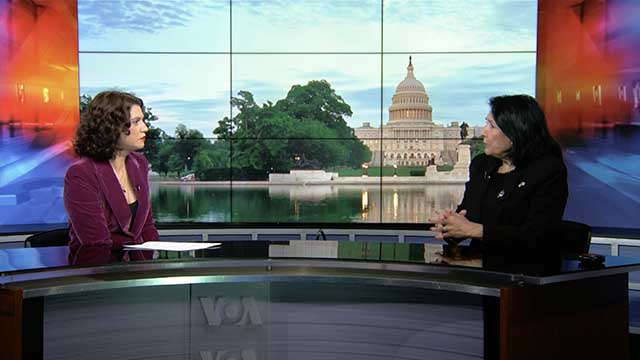 VOA Georgian reporter Mariam Ugrekhelidze interviews former Georgian President Salome Zourabichvili in January 2025. Zourabichvili, whose term expired in December 2024, urged the U.S. to help ensure that Georgia remains a “stronghold of democracy.”
VOA’s Georgian Service also carried out a high-profile interview with pro-Western former Georgian President Salome Zourabichvili following President Donald Trump’s inauguration, in which she expressed hope that the United States would continue supporting the Georgian people and their aspirations for Western integration and investment.
The absence of the Georgian Service since mid-March 2025 has created a profound information vacuum. In a media environment dominated by political pressure, Kremlin-aligned messaging, and the growing presence of Chinese state media, the loss of VOA removes one of the last trusted alternatives to misinformation. Georgians now have far fewer opportunities to hear directly from the United States at precisely the moment when anti-American narratives are spreading more aggressively across television, social media and political discourse.
For decades, VOA provided Georgian citizens with an unfiltered understanding of U.S. policy and democratic values. Restoring the service now would signal U.S. support for Georgia’s sovereignty, reinforce democratic resilience and ensure that one of America’s most effective public-diplomacy tools continues to serve a country whose future has consequences for regional stability and U.S. national-security interests.
VOA Georgian articles published online per week
Publishing on the VOA Georgian website ceased following the president’s March 2025 executive order.
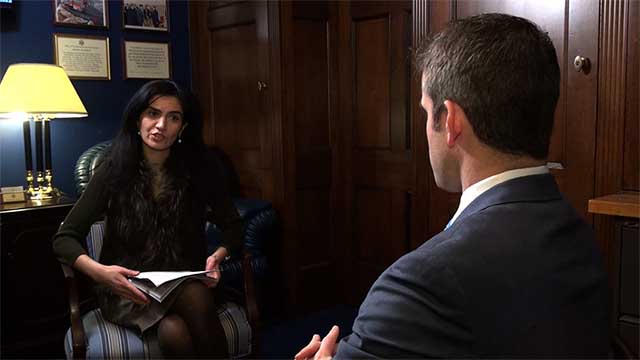
VOA Georgian reporter Anna Kalandadze interviews Rep. Adam Kinzinger on December 9, 2014. The service is responsible for bringing news about the United States and U.S. policies to its audience in Georgia.
Voices supporting VOA
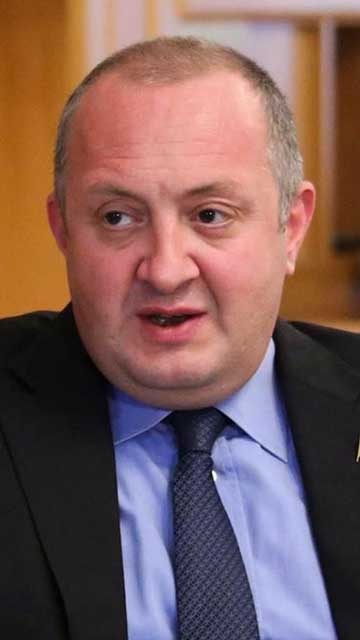
Giorgi Margvelashvili
Former President of Georgia
“[Voice of America] has basically, if we look historically, won two world wars — the Second World War with fascism and Nazi propaganda, and the Cold War.”
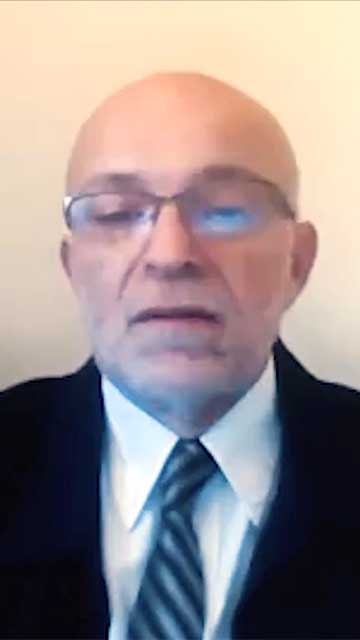
Archil Gegeshidze
Former Georgian ambassador to the United States
“From this beautiful land of Georgia, which is subject to heavy Russian propaganda and is going through troubling times to preserve its democracy, I can tell you that America’s voice still carries meaning. It still inspires hope.”
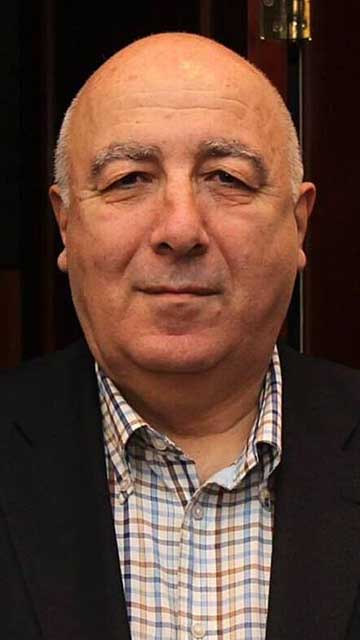
Tedo Japaridze
Former Georgian ambassador to the United States
“The Voice of America was, is and should be an essential and valuable instrument to tackle the issues and the problems of rapidly transforming regions around the world, including the South Caucasus.”
Contact your representatives
If you are a U.S. citizen and believe there is value in Voice of America — particularly if you have a personal story about listening to or watching VOA — please reach out to your representatives in Congress to encourage them to allow VOA to continue its vital mission of delivering truth to the world. We've simplified the process by creating a page to help you find their contact information and by creating a sample script of what to say.
Find out more
Press freedom situation, according to Reporters Without Borders (RSF)
Source: 2025 RSF World Press Freedom Index
Missed opportunities
Major stories VOA was unable to cover because of the effort to shut it down.

At the time of the March 15, 2025, shutdown, VOA's Georgian Service employed three full-time employees, three contractors and a network of stringers.
Timeline of VOA’s Georgian Service
May 26, 1951
VOA Georgian Service begins broadcasting
U.S. Secretary of State Dean Acheson addresses the people of Georgia at the launch of the Georgian Service, stating, “Georgia has often been conquered, but never subdued.” This message, broadcast globally, highlights Georgian resilience and America’s commitment to supporting freedom.
June 1970
The Leningrad hijacking attempt
A group of Soviet Jews unsuccessfully attempts to hijack a plane to bring attention to the issue of emigration. Their harsh sentences prompts international outrage and pressures the Kremlin to ease restrictions on travel, eventually opening borders.
May 1972
President Nixon holds historic summit in Moscow with Soviet leader Brezhnev
VOA Georgian covers the summit between U.S. President Richard Nixon and Soviet leader Leonid Brezhnev, a hallmark of the Cold War detente.
April 9, 1989
Soviet massacre of peaceful demonstrators in Tbilisi
Soviet Interior Ministry troops crack down on a gathering of peaceful pro-democracy protesters, killing at least 20 people and leaving hundreds injured or poisoned by gas.
December 1991
VOA covers US recognition of independence of former Soviet republics
The U.S. recognizes the independence of the former Soviet republics after the Union of Soviet Socialist Republics (USSR) officially dissolved.
May 1992
Secretary of State James Baker visits Georgia
VOA covers U.S. Secretary of State James Baker’s visit to Georgia to show U.S. support for its independence and for his friend Eduard Shevardnadze, the country’s leader.
October 1, 2012
Peaceful transfer of power
VOA covers the first peaceful transfer of power in Georgia’s post-Soviet history following parliamentary elections. The transition of power was from the United National Movement (UNM) party, led by President Mikheil Saakashvili, to the opposition Georgian Dream (GD) coalition, led by billionaire Bidzina Ivanishvili.
March 15, 2025
After 74 years of service, VOA Georgian programming goes dark
USAGM, led by Trump appointee Kari Lake, ceases all VOA programming, forbids journalists from reporting the news, and places more than 1,300 workers on administrative leave.
Voices of support
“Voice of America is more important now perhaps than any time since the Cold War. At this time, Russia is committing armed aggression against Ukraine. It’s more repressive now than it has been at any time since the Soviet Union existed. It is vital that people all over the world, and certainly in the region, understand what’s happening.”

William Courtney
Former U.S. ambassador to Kazakhstan, Georgia and the U.S.-Soviet Test Ban Commission
“[VOA] has credibility in those circles in Russia, in the former Soviet Union, that you don’t buy overnight. It built it up over the years. Nobody else has the same credibility. I mean BBC, Deutsche Welle, these other services just don’t carry that je ne sais quoi, that certain credibility that VOA carried.”

Michael David Kirby
Former U.S. ambassador to Moldova and Serbia
“When I spoke to my allied partners, my allied counterparts, other ambassadors or ministers from our NATO allied countries, invariably one or more of them would bring up their personal experience with VOA. ... They retained the hope of freedom because of the Voice of America.”

Douglas Lute
Former U.S. ambassador to NATO
“We know the history of VOA — that folks behind the Iron Curtain turned to it as a source of news that they could trust. And that has engendered really incredible goodwill between these peoples and the United States of America.”

Nina Jankowicz
Author, counter-disinformation expert