
VOA’s English newsroom upheld editorial standards for the global news agency
Since March 2025, nearly all of the Central Newsroom’s journalists have been fired or placed on administrative leave, eliminating all coverage in English and crippling Voice of America’s ability to fulfill the VOA Charter.
Published

At VOA’s headquarters in downtown Washington, around 100 Central Newsroom journalists focused on producing digital and broadcast content under the VOA Charter, a 1976 law requiring VOA to serve as “a consistently reliable and authoritative source of news.”
Central Newsroom journalists delivered stories for digital, radio and television in English, framing them with non-American audiences in mind. They crafted stories that could be easily adapted in newsrooms across VOA’s 48 other broadcast languages.
The journalists included key Washington beat correspondents: the White House, Congress, State Department, Justice Department, the Pentagon, Immigration and Press Freedom. These correspondents are U.S. citizens with extensive experience working closely with VOA language services to frame stories for international audiences with perspectives grounded in a deep understanding of America.

VOA editors work during President Donald Trump’s 2019 State of the Union address to help produce and share content in all of VOA’s 49 languages. (Laurie Moy | USAGM)
All VOA journalists were trained on the editorial requirements of the VOA Charter, the standards that it imposed on VOA’s journalism, and the processes the agency used to ensure all news content met that standard.
VOA Newsroom editors, together with language services and the agency’s Standards Editor, produced and trained journalists on the “Best Practices Guide” that outlined how VOA journalists must identify and conduct themselves in public.
“Voice of America is a beacon of American ideals and truthfulness,” former commander of U.S. Central Command Gen. Joseph Votel told the SaveVOA campaign. “For decades, it has been the instrument that the U.S. government has used to reach isolated and suppressed populations to provide them truthful information and share the benefits of an open and free press that characterize democratic peoples and nations,” he said.
Ever since the newsroom was silenced in March 2025, the robust editorial controls that helped maintain journalistic standards across VOA have disappeared. Minimal programming has resumed in just a handful of languages, but not English. Without the newsroom operating, VOA has also lost many of its other critical functions, including covering high-profile events and fulfilling its mission to explain all aspects of America to its foreign audiences.
Balanced and fact-based reporting
Balanced journalism
Before last March, all Central Newsroom copy was reviewed by at least two editors before publication, and many stories required an additional “balance check” by a senior editor to ensure they met the VOA Charter’s rigorous standards for balance and fairness.
“Sometimes I would ask reporters to reach out further to one side or the other for comment. Sometimes I would move a balancing comment higher in the story so that both sides received equal weight,” says a former balance editor. “The goal was to stick as much as possible to the facts, and whenever we quoted one side in an argument, to give equal weight to the other.”
All newsroom content shared for translation was also published on VOANews.com, providing transparency into the news organization’s journalism and reporting. Various media monitors that rate news organizations for bias consistently placed VOA close to dead center.
Media analysts consistently rate VOA’s English-language news as balanced
Before March 2025, media monitors that assess news organizations for bias regularly placed VOA’s English-language news coverage close to dead center.



According to Media Bias / Fact Check
“Overall, we rate Voice of America Least Biased based on balanced story selection and minimal use of loaded words. We also rate them High for factual reporting due to proper sourcing and a clean fact-check record.”
If there were internal or external complaints about whether a story met the Charter’s editorial requirements, the VOA standards editor and other senior editors would evaluate the merit of the complaint and take action if necessary, posting public corrections and holding journalists accountable.
VOA’s newsroom has defended its editorial independence throughout its history, including during the Nixon administration when it covered the Watergate scandal and in the aftermath of the 9/11 terrorist attacks, when it faced pressure to censor an interview with reclusive Taliban leader Mullah Omar.
A bipartisan group of former VOA directors wrote to Congress after VOA was silenced in March 2025 to defend its editorial process and to urge that the broadcaster be able to continue its “critical” mission.
“VOA’s news programs are, by law, not allowed to be false or unbalanced. If they are, that law can be enforced. With a mission to provide reliable news and to tell America’s story, VOA has a profound impact,” they wrote.
The letter was signed by nine of the ten then-living former VOA directors, including Robert Reilly, appointed in the first Trump administration, and President Ronald Reagan’s appointee, the late Richard W. Carlson, who died just days after joining the signatories.
Voices from VOA
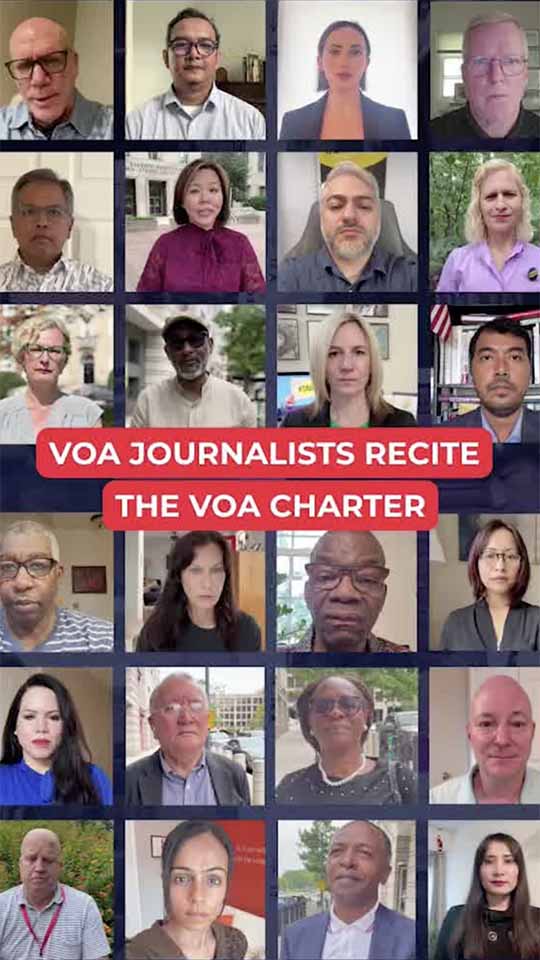
The VOA Charter
Signed into law in 1976
VOA’s mission to deliver factual, balanced and comprehensive news to audiences around the world is enshrined in its Charter. VOA journalists are deeply committed to this legal mandate, signed into law by President Gerald Ford.
Why is it important for VOA to broadcast in English?
- All major international broadcasters have programming in English, a language spoken by about 1.5 billion people.
- U.S. adversaries are broadcasting in English, including China, Russia and Iran.
- English programming provides transparency into what VOA is broadcasting.
- VOA content in English reaches policymakers in countries around the world, including in hard-to-reach nations like North Korea.
- Before March 2025, VOA’s English programming was reaching 80 million people globally each week, plus millions more in China.
- A proud tradition of editorial controls in VOA's Central Newsroom helps to ensure that content shared with all VOA languages meets the editorial requirements of the Charter and its journalism standards.
Coordinating coverage across VOACoordinating coverage
Major political speeches like the State of the Union are broadcast with translations and context across all VOA divisions and in 49 languages.
Voice of America’s Central Newsroom was the primary hub for producing news in English and for sharing content across all VOA divisions. It helped to coordinate reporting on major stories and events such as elections, wars, international summits and disasters, so that VOA’s reporting was consistent across all its 49 broadcast languages.
Newsroom editors met with representatives from all VOA’s language services each day to determine the news stories that most aligned with the agency’s mission and foreign audience interests. They held regular planning meetings about major upcoming events, such as NATO summits, the G7 and G20, presidential trips and the release of State Department reports.
Consistent planning and coordination ensured that VOA was not scrambling when news broke. It also protected resources, allowing for journalists, crews and equipment to be deployed where they mattered most and for coverage to be shared across the agency.
The result can be seen during major news events, including the 2024 election, when VOA deployed teams across the country to cover both campaigns as well as Americans voting at the polls. The organization-wide effort kept up with a surge of interest from foreign audiences around the globe.
During major U.S. events, as VOA language service journalists conducted hundreds of “live hits” — or on-scene, live reports — with foreign news networks in dozens of languages, Central Newsroom correspondents did the same in English with media partners abroad.
The newsroom’s coordination efforts of high-profile events and its regular production of high-quality content, including nearly a dozen television packages ready-made for translation every day, helped VOA’s language services to gain the large audiences that they amassed around the world.
Special event coverage

U.N. General Assembly
Around 80 VOA journalists attended UNGA each year to report on the remarks and meetings of world leaders. VOA’s live shot schedule at the U.N.’s “Press Island” often ran each day from 7 a.m. to 7 p.m.
U.S. elections
Before each election, the newsroom’s planning coordinators would scout out a high-traffic polling station for all VOA language services to use as a reporting location. More than a dozen VOA cameras would be set up at the site, where reporters would interview voters.
Party conventions
The political conventions required two years of planning, including site visits. At least 80 VOA employees attended each convention, including technical staff. Coordination efforts included finding hotels, scouting out live shot locations, and securing the most coveted badges for the convention.

State of the Union
VOA would set up three live shot locations for the yearly event: one outside the Capitol, another in the Capitol Rotunda, and one on the roof of VOA headquarters with a view of the Capitol dome. In addition, VOA’s congressional reporter would be at Statuary Hall interviewing lawmakers.
Before VOA was largely silenced in March 2025, around 100 journalists were working for the Central Newsroom, including reporters at four Washington bureaus and four foreign bureaus.
Telling America’s story
Central Newsroom journalists played a large role in a crucial part of VOA’s mission: explaining all aspects of America — including its policies, history, people and ideals — to VOA’s diverse foreign audiences. Large parts of the world learned of major U.S. events through VOA’s broadcasts, including the 1969 moon landing, the results of presidential and congressional elections, and the September 11, 2001, terrorist attacks.
Newsroom reporters produced dozens of original television, radio, and digital stories each day, along with animated video explainers on American politics, history, and current events, hourly radio newscasts, and regular television programs. Its journalists also traveled extensively across the country, capturing the voices of ordinary Americans from across the political spectrum and telling uniquely American stories that resonated with audiences around the world.
A key part of America’s story is its commitment to freedom of expression. Newsroom journalists helped to tell that story by showing global audiences how a free press operates at its best: asking hard questions, putting facts into a balanced context, and showcasing a wide range of views. In doing so, they reflected the spirit of the First Amendment, demonstrating that independent journalism is foundational to democracy.
Their work was guided by the VOA Charter, which required them to represent America fully and “not any single segment of American society.” In addition to accurately presenting U.S. policies, the Charter also directs VOA to provide “responsible discussions and opinion on these policies.”
To fulfill that mission, newsroom correspondents covered all Washington news beats including the White House, Congress, State Department and Pentagon, reporting on the major domestic and foreign policy issues of interest to audiences, while accurately presenting the policies of the United States. Other VOA reporters based across the U.S., including in New York, the Midwest and Silicon Valley, covered American culture, society and technology.
VOA’s commitment to delivering journalism and not propaganda is the reason that its English programs gained a global audience of more than 80 million — part of VOA’s total audience of 360 million — and earned their trust.
Featured stories
Journalists in VOA’s Central Newsroom traveled across the United States to tell all aspects of America’s story.


The Central Newsroom oversees four bureaus around the world to provide fact-based reporting to regions where many people have little access to independent news.
Global coverage
VOA’s mandate to deliver news that is accurate, objective and comprehensive cannot be met from within the United States alone. In countries where VOA audiences most depend on its reporting, the decisive facts are on the ground — in war zones, protests, refugee camps, courtrooms and hospitals where people often take real risks to speak. Foreign bureaus allow VOA journalists to verify information independently, respond quickly to breaking events, and report with the local knowledge needed to avoid distortion and misinformation.
VOA’s foreign bureaus represent America abroad by explaining U.S. policy and institutions through credible, independent reporting that connects with local issues. Especially in parts of the world where U.S. policy is misrepresented or unpopular, VOA has built large audiences by establishing credibility through accurate, objective and comprehensive journalism about U.S. issues and international events.
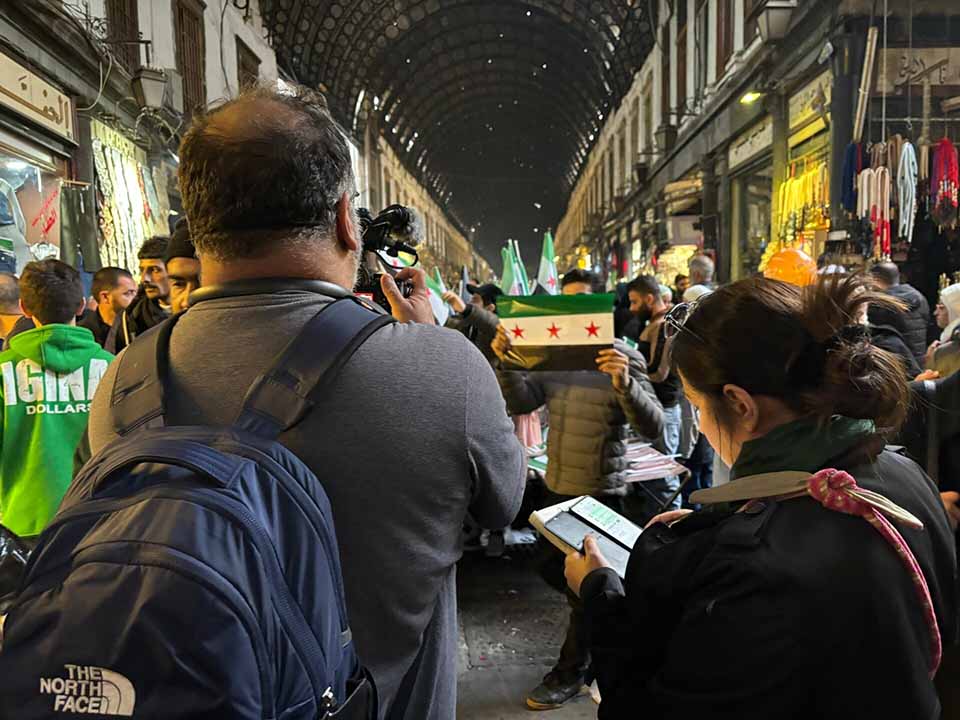
VOA reporters visit a Damascus market in Syria on Dec. 11, 2024, shortly after the collapse of the government.
For decades, VOA foreign bureau reporters have documented major geopolitical shifts from the ground, often working in places where access is limited and local media face restrictions or lack resources. The journalists in these bureaus bring deep sourcing and extensive knowledge of the local landscape, enabling them to quickly get into the heart of key stories.
In the weeks before VOA’s foreign bureaus were forced to halt operations, reporters were covering the newly formed Syrian government, rebel attacks in Pakistan, war in the Democratic Republic of Congo, and countless other critical developments. Their work provided audiences with independent reporting from regions where many local outlets are closely tied to governments or non-state actors, and where most international media report primarily for audiences at home.
Back in Washington’s Central Newsroom, editors worked 24/7 with overseas reporters to coordinate their coverage. Overnight editors focused largely on East Asia, South Asia and the Middle East, and daytime editors on the Americas, Europe and Africa. There was also a team of journalists in the newsroom that focused on debunking Chinese, Russian and Iranian propaganda. A China Abroad desk produced stories in English and Mandarin from datelines around the world where China is trying to boost its political, economic and military influence.
Foreign bureaus lead authoritative crisis reporting

When world-changing news breaks, journalists race to the scene from every corner of the globe. But the strongest news organizations are already there.
Foreign bureaus provide the context, cultural knowledge, relationships and logistics needed to cover crises as they unfold. Reporters who live in the regions they cover understand the history, language and people. News outlets that “parachute in” for major events risk producing coverage that is shallow or incomplete.
The difference can be decisive. When the Taliban returned to power in Afghanistan in 2021, VOA reporters were waiting in Kabul. When war erupted in Ukraine the following year, VOA journalists were reporting from Sloviansk, an eastern city that soon became a regular Russian target.
But in 2025 and 2026, despite having correspondents in the region, VOA’s on-the-ground reporting was silenced as wars broke out between Iran, Israel and the United States. In many parts of the world, audiences instead heard the news through governments and political actors shaping their own narratives. When independent reporting disappears, the information space quickly fills with propaganda.
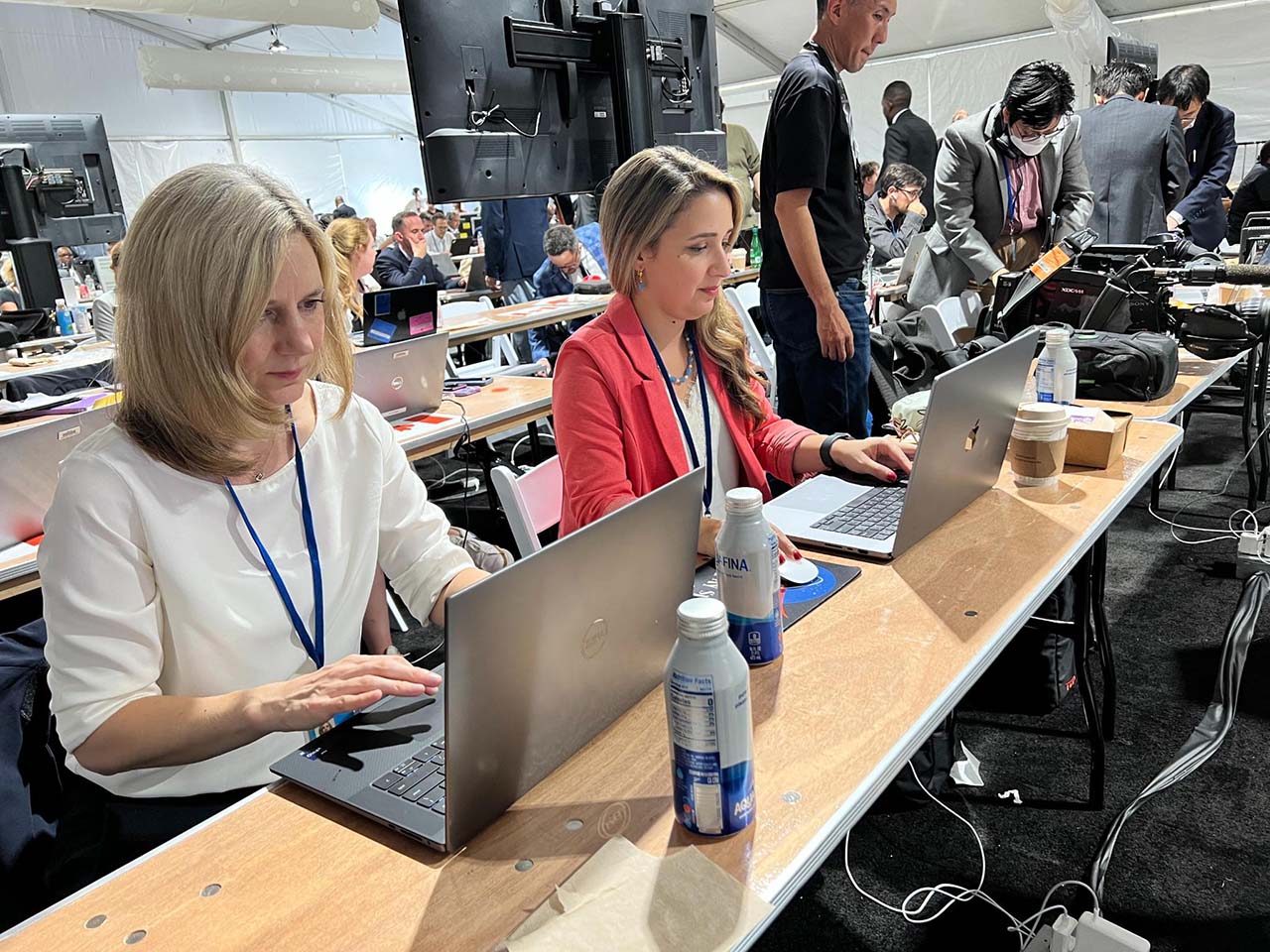
Press Freedom Editor Jessica Jerreat and reporter Cristina Caicedo Smit report from the United Nations General Assembly media tent for VOA’s “The Inside Story: A Free Press Matters” in September 2024.
Press Freedom desk
“A Free Press Matters” is more than a tagline at VOA. Free and independent media is integral to what VOA does and who its journalists are. Which is why, in 2020, VOA created the first Press Freedom Desk.
In doing so, VOA became what is believed to be the only news outlet to have a full-time team dedicated to reporting on the challenges confronting media today, and the impact that credible, independent media can have in repressive regions. The team of staff and contributors produced award-winning content that tracked threats and attacks on journalists, and the innovative way journalists overcome censorship, conflict and exile to keep their audiences informed.
Central to the desk’s work was covering any threats to VOA and its USAGM sister networks. It reported on the lawsuits and jailings of colleagues including Vietnamese reporter Pham Chi Dung and Myanmar journalist Sithu Aung Myint. It covered Russia’s arrest and sham trial of Alsu Kurmasheva, a reporter at sister network Radio Free Europe/Radio Liberty, and Radio Free Asia journalist Su Yutong about the intense surveillance Beijing inflicts on her. The team also reported on attempts by a Trump-appointed CEO to interfere with VOA’s editorial independence in 2020.
The Press Freedom desk earned international recognition for its in-depth and innovative reporting, winning nearly a dozen industry awards. Its team, like journalists across VOA, know the importance of upholding the values and rights of journalists. When VOA was shut down, the Press Freedom editor joined the lawsuit to restore broadcasts and to ensure that VOA content is always journalism and never propaganda.
Voices from VOA
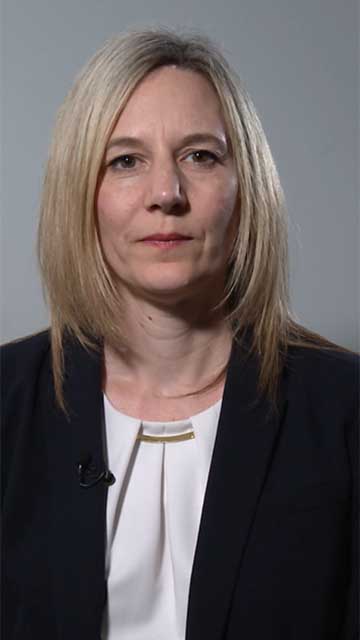
Jessica Jerreat
VOA Press Freedom Editor
“At VOA, we broadcast to some of the most censored countries in the world. And our journalists know firsthand the impact that credible, independent news has on our audience.”
Award-winning press freedom coverage

The Empty Chair
The Empty Chair: A family’s fight to bring a jailed American journalist home
Husband, father, journalist, advocate: Pavel Butorin spent nine long months fighting to secure the release of his wife, U.S.-Russian journalist Alsu Kurmasheva, from a Russian prison. His journey shows the challenges American families confront when a loved one is taken hostage or wrongfully detained by a foreign government.
Watch the documentary. English

Risk and Reward
Risk and reward: The violence faced by journalists in Mexico
Decades of impunity in states rife with organized crime have made Mexico among the most dangerous for news media. In covering violence in Tijuana, Mexico, the city’s journalists give voice to a community demanding change. This series incorporates graphic novel-style artwork into long-form web features about the violence journalists in Mexico confront daily.

Last of the Watchdogs
Last of the watchdogs: The story of a local Kansas newspaper
As news deserts and disinformation spread, U.S. towns are missing a vital part of their community. The National Press Club awarded Voice of America with the 2024 Arthur Rowse Award for its original coverage of a police raid on a small-town Kansas newspaper in August 2023. The story underscores the need to protect and support local journalism.
Read the story. English
Learning English
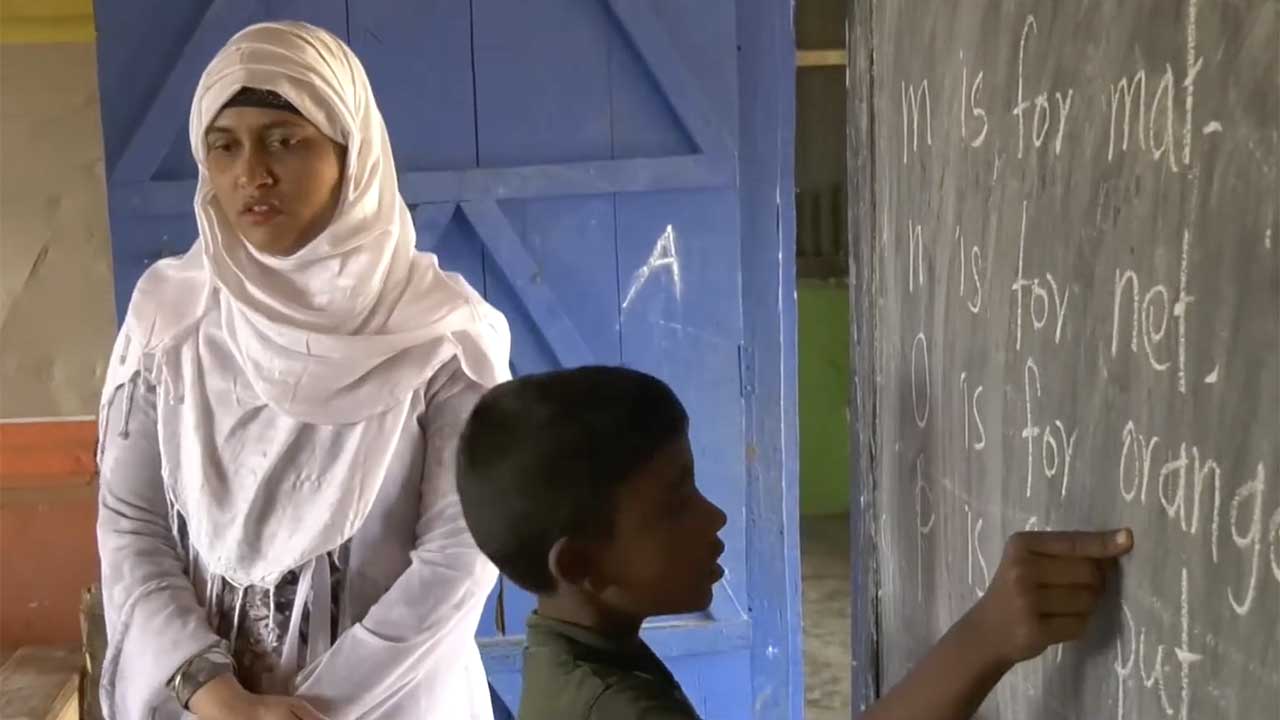
VOA’s Learning English partnered with UNHCR at Rohingya refugee camps in Bangladesh.
VOA’s Learning English service has provided millions of people around the world with programs to help them to learn American English. Originally called Special English, the service has been a fixture of VOA’s international shortwave broadcasts since 1959. In 2001, it expanded to include video and digital programs and in 2014 it further increased its programs to include English teaching materials.
Learning English garnered a loyal following by using journalism to engage people’s interests. It used short, simple sentence structure and a vocabulary of just 1,500 words. Its reports were one-third slower than a typical English-speaking pace to allow learners to increase comprehension.
While not part of the Central Newsroom, Learning English was an important part of VOA’s global English programming. Before it was silenced, Learning English was regularly offering more than a dozen programs each week, including a daily 30-minute podcast focusing on news and information for English learners, a weekly television series teaching grammar points, and a 40-week course for children 8 to 12 in both English and their native languages, which reached youth around the world.
The service provided materials for the State Department’s English fellows and Peace Corps volunteers who taught English. Its staff led efforts to help targeted populations around the world, including Ukrainian children displaced by war, Rohingya refugees in Bangladesh’s Cox’s Bazar, and young Afghan women under Taliban rule who wanted to continue their English education.
Voices supporting VOA
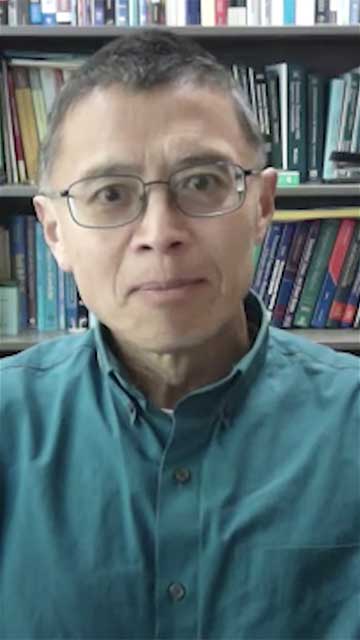
Song S. Qian
Professor of environmental science, The University of Toledo
“I picked up a shortwave radio and I heard this clear signal was the Voice of America … ‘Special English’ was on. It made me a better English speaker. [Later], the Tiananmen Square movement started … and that’s when I went back to listening to Voice of America for news.”
“You have not just educated us. You have changed our lives. And through us, you're shaping the future of Afghanistan.”
— Khalida, a 22-year-old Afghan student
VOA English articles published online per week
Publishing on the VOA English website ceased following the president’s March 2025 executive order.
Voices of support
“I spend probably half of my professional time in Central and Eastern Europe, and I am always encountering people who, when I ask them, ‘Where do you get your information, what do you know about America, how did you learn English?’ … they always talk about Voice of America.”

Ret. Lt. Gen. Ben Hodges
Former commander, U.S. Army Europe
“I think you all [at Voice of America] are showing, and not just telling, how democracy works, and you do that through independent, factual reporting.”

William McKenzie
Senior Editorial Advisor George W. Bush Institute
“[VOA] is that vehicle for telling America’s story in an independent way, in an environment still where countries like Armenia and Azerbaijan do not have the same free access to information that we have become accustomed to.”

Richard Kauzlarich
Former U.S. ambassador to Azerbaijan
“I witnessed … the power that VOA has to project the power of American ideals and tell great stories about what America does and stands for in countries where the governments are actively blocking that kind of good news about America. I strongly believe Voice of America makes America stronger.”

Virginia Palmer
Former U.S. ambassador to Ghana
“The thing about the Voice of America is that it presents facts — the good, bad, and the ugly — and that's the way it should be. That’s what makes it so important.”

Christine Todd Whitman
Former Republican governor of New Jersey
“Voice of America is a much cheaper way for the United States to influence and inform people around the world — cheaper than sending our military, even cheaper than setting up U.S. embassies around the world.”

David Kramer
Former U.S. assistant secretary of state