
 Myanmar
For millions in Myanmar, VOA is a voice of hope during coups and democratic resistance

VOA's Burmese Service hosting a news program for Mizzima, a leading independent media station in Myanmar.
Published
At the beginning of 2025, Voice of America was regularly reaching a significant audience in Myanmar — 17.9% of adults, or 7.3 million people each week. It was doing so mostly through its Burmese Service, broadcasting in the country’s primary language.
At the time, the service was a vibrant, round-the-clock operation, broadcasting more than 180 hours of audio and video reports each week. It attracted record engagement after the 2021 military coup as audiences sought out independent, fact-based news. However, since President Donald Trump issued his March 14, 2025, executive order that effectively began dismantling VOA, the service has gone silent.
Since its launch in 1943, the VOA Burmese Service has been a trusted and independent voice for the people of Myanmar. Through decades of dictatorship, censorship and conflict in the country, VOA journalists have risked their lives to deliver accurate, balanced reporting. From the 1988 democracy uprising to the current fight against military rule, VOA Burmese has provided vital coverage that connected Myanmar’s people with the world — proving that truth can survive, even under repression.
Following the 2021 military coup, VOA and its sister network Radio Free Asia launched a 24-hour digital TV channel, Ludu Meitswe or Friend of the People, to ensure continuous Burmese-language news and analysis. After seizing control in the coup, the junta arrested dozens of journalists, revoked broadcasting licenses and imposed restrictions that left the population with fewer sources to provide accurate updates on their safety, the conflict and political developments. Those who turn to VOA for their information say they have a 96% level of trust about its content, according to survey data from VOA’s parent organization, the U.S. Agency for Global Media.
The Burmese Service has a long history of chronicling major developments in Myanmar, including the 1962 coup, various pro-democracy uprisings, the 2007 monk-led Saffron Revolution, and the 2017 killing and mass displacement of the Muslim Rohingya.
For decades, the service covered Aung San Suu Kyi, a key figure in Myanmar’s democracy movement, including interviews with her during years of house arrest. To commemorate VOA’s 70th anniversary in 2012, Suu Kyi recorded a video, saying the anniversary “is like the birthday of a friend, because the VOA and other broadcasting stations were the friends that kept me company during my long years of house arrest.”
The Nobel laureate is currently in detention after being arrested during the 2021 coup. Her son, Kim Aris, told the SaveVOA campaign in April 2025, “For decades, media outlets like VOA and RFA have been lifelines.”
In addition to being one of only a few independent outlets broadcasting in the Burmese language, VOA provided a uniquely American perspective. In 2025, the service covered Trump’s inauguration through special programs that highlighted his policies and priorities. It provided live coverage of the funeral of former U.S. President Jimmy Carter, including live streams, interviews with attendees and analysis of Carter’s legacy, highlighting how the United States honors its democratically-elected leaders and traditions.
In VOA’s absence, its audience has largely turned to Facebook, Telegram channels or local media reporting from exile. Others rely on state-controlled media from China, which has expanded its Burmese-language content. Two Chinese state media outlets, Xinhua News Agency and China Radio International (CRI), now regularly provide reports in the Burmese language, promoting China’s policies and initiatives.
As the people of Myanmar continue their struggle for democracy and truth, the need for VOA Burmese has never been greater.
VOA Burmese articles published online per week
Publishing on the VOA Burmese website ceased following the president’s March 2025 executive order.
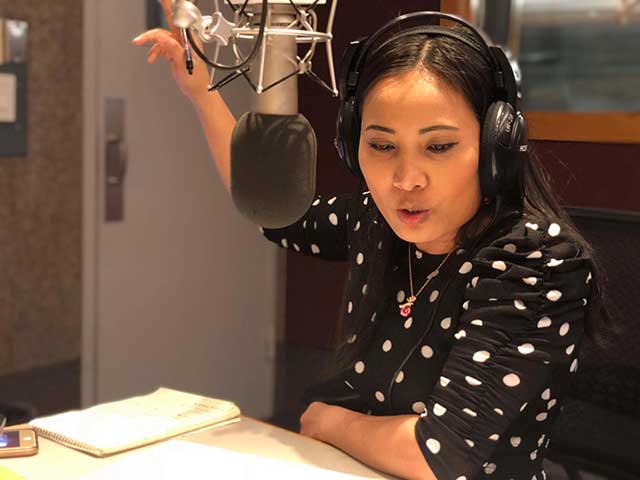
VOA's Burmese Service broadcasting the call-in show “Live on Air!” in which listeners can call in to ask questions to a panel of experts.
VOA Burmese
America’s voice in a region of conflict
For more than 80 years, VOA Burmese delivered facts people could not get from their government, covering protests, civil war and genocide. It brought America’s story to Myanmar while countering China’s influence.
Voices from VOA
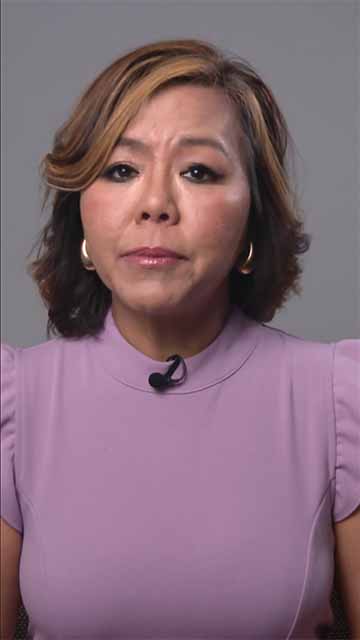
Ingyin Naing
VOA Burmese reporter
“Currently, our voices are silenced at a time when our audience needs us the most.”
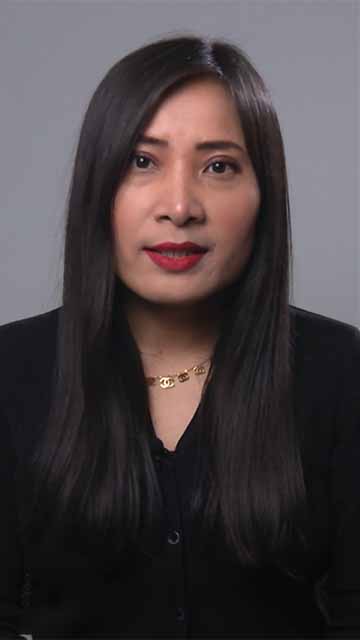
Khin Phyu Htway
VOA Burmese reporter
“This is not just the loss of a news outlet. It is the silencing of a vital voice for millions who relied on it.”
Coup leader cheers VOA’s closing
“I sincerely appreciate Your Excellency’s efforts aimed at promoting global peace, in regulating broadcasting agencies and funds, which have sometimes exacerbated the existing conflicts.”
— Min Aung Hlaing
In a July letter to U.S. President Donald Trump, the Myanmar junta leader thanked him for silencing U.S. funded news outlets. Democracy advocates see this as a chilling endorsement of U.S. media restrictions by a military government that has jailed dozens of journalists and suppressed dissent.
Contact your representatives
If you are a U.S. citizen and believe there is value in Voice of America — particularly if you have a personal story about listening to or watching VOA — please reach out to your representatives in Congress to encourage them to allow VOA to continue its vital mission of delivering truth to the world. We've simplified the process by creating a page to help you find their contact information and by creating a sample script of what to say.
Find out more
Press freedom situation, according to Reporters Without Borders (RSF)
Source: 2025 RSF World Press Freedom Index
Missed opportunities
Major stories VOA was unable to cover because of the effort to shut it down.
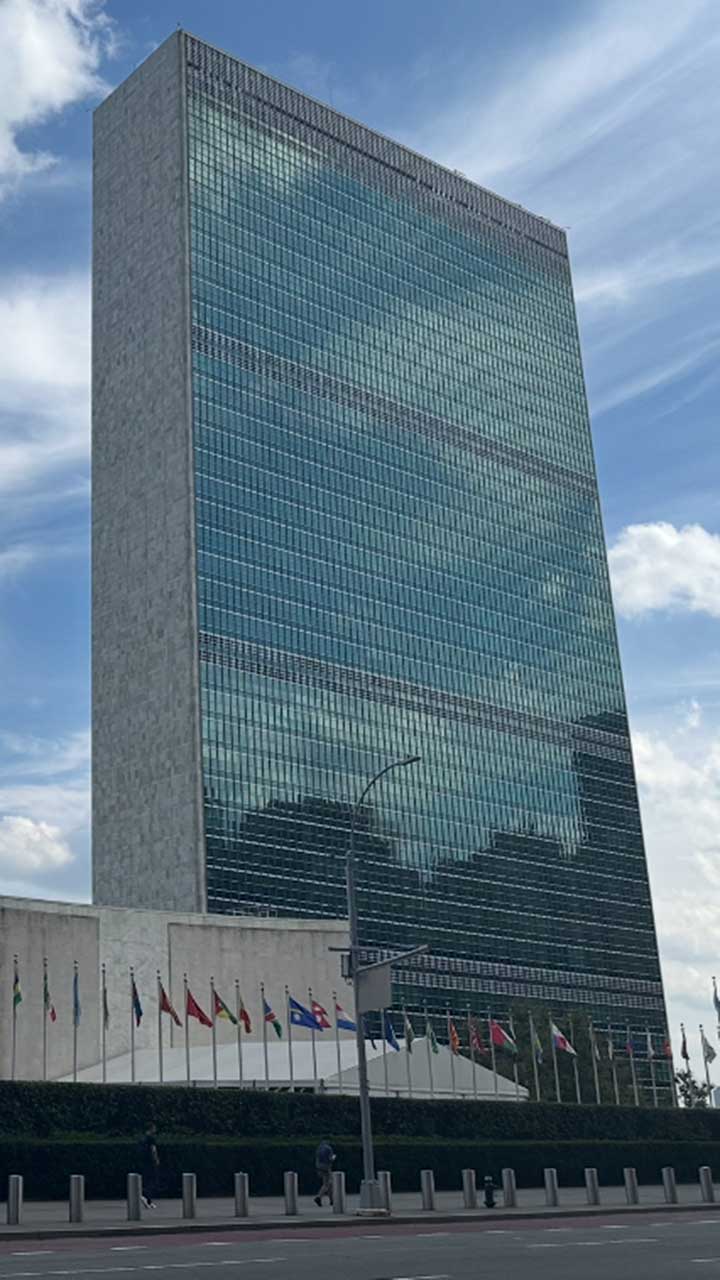
When VOA falls silent, America loses ground
Last year, VOA Burmese carried America’s voice to the global stage — connecting Myanmar’s fight for freedom with U.S. leadership at the U.N. This year, most of VOA is shut down. Burmese voices are silenced, millions are left in the dark — and America’s influence is ceded to China and Russia.
Headlines from around the world

At the time of the March 15, 2025, shutdown, VOA's Burmese Service employed 15 full-time employees and 15 contractors.
Timeline of VOA’s Burmese Service
June 8, 1943
Service begins broadcasting during WWII
VOA’s Burmese Service begins broadcasting from San Francisco, providing Burmese-language news to a population under Japanese occupation.
1945
Temporary postwar stoppage
VOA stops broadcasting in Burmese, along with several other languages, at the end of World War II. The pause will prove temporary as the Cold War looms.
June 24, 1951
Resumption of operations during Cold War
VOA resumes its Burmese-language programming, with broadcasts taking place daily from New York to counter Communist influence in Southeast Asia. The first program includes statements from U.S. Vice President Alben Barkley, Secretary of State Dean Acheson and Burma’s ambassador to Washington, James Barrington.
1962
Coverage of Ne Win’s military coup
After General Ne Win seizes power in 1962, VOA’s Burmese Service becomes one of the only uncensored sources of information for the Burmese public as the new government restricts free press and foreign communication.
1988
Pro-democracy uprising
VOA Burmese provides extensive coverage of the nationwide, student-led democracy protests, including conducting interviews with exiled leaders and providing eyewitness reports after the military crackdown. The service becomes a lifeline of reliable news for the Burmese people.
October 14, 1991
Aung San Suu Kyi wins peace prize, maintains long relationship with VOA
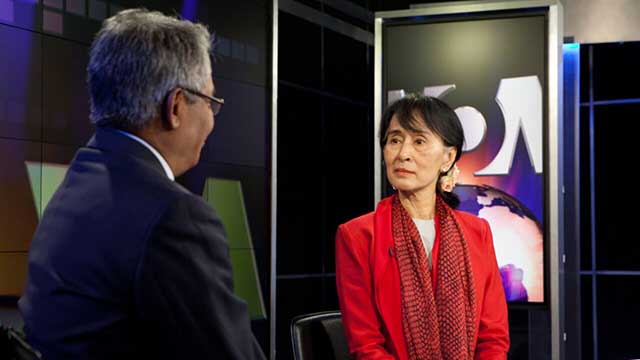
Aung San Suu Kyi, a key figure in Myanmar’s democracy movement, is under house arrest when she is awarded the Nobel Peace Prize. The Burmese Service interviews her extensively during her years of house arrest. During a 2012 trip to Washington, Suu Kyi (pictured above) is interviewed at VOA headquarters.
2007
Saffron Revolution
During the monk-led protests against military rule, VOA Burmese expands its coverage through shortwave, television and online platforms, providing timely reports amid government blackouts.
May 2, 2008
Cyclone Nargis devastates Myanmar
VOA Burmese provides critical humanitarian updates following the cyclone when state media remains silent.
2017
Rohingya crisis
VOA Burmese extensively covers the crisis, including the displacement of more than a million Rohingya from their homes, human rights abuses and the international response.
2021
Military coup and democratic resistance
VOA Burmese delivers real-time updates and verified reporting on the February 1 military coup, resistance movements and international reactions — remaining one of the few trusted news sources for Burmese audiences both inside and outside the country.
March 15, 2025
After 76 years of service, VOA Burmese programming goes dark
USAGM, led by Trump appointee Kari Lake, ceases all VOA programming, forbids journalists from reporting the news, and places more than 1,300 workers on administrative leave.
Voices of support
“The Chinese are filling the space that we are leaving … [if we] retreat from the battlefield others see that China is playing, it makes China look strong and America look weak. And I think it hurts us.”

Derek Mitchell
Former U.S. ambassador to Myanmar
“For decades, media outlets like VOA and RFA [Radio Free Asia] have been lifelines, providing reliable news and updates about Burma and my mother’s situation when I was young. Since the illegal military coup, they have enabled us to stay informed about the realities inside Burma — the suffering, resilience and resistance of its people.”

Kim Aris
Son of Aung San Suu Kyi
“The departure of Voice of America also leaves a gaping vacuum in the information world that can only be filled by countries like China and Russia. And believe me, [Russian President] Vladimir Putin and [Chinese President] Xi Jinping aren’t going to give the world a clear picture of what’s going on in their countries, much less in the United States.”

David Shear
Former U.S. ambassador to Vietnam