STATUS UPDATE: While the Afghan Service resumed operations in May 2025, its output is down from its pre-March 2025 levels and its journalists are under pressure to be a mouthpiece for the administration.
 Afghanistan
US abandons Afghanistan media landscape to Taliban, global competitors

Muska Safi reports for VOA's Afghan Service on the closure of the Torkham crossing between Afghanistan and Pakistan, March 14, 2025.
Published
Before it was largely taken off the air, Voice of America was reaching 59% of the adult population in Afghanistan. It was doing so mostly through its Afghan Service, which was broadcasting 117.8 hours of audio and video reports each week in the country’s main languages — Dari and Pashto. However, since President Donald Trump issued his March 14, 2025, executive order that effectively began dismantling the international broadcaster, VOA’s Afghan Service has lost almost all of its audience. Its programming has dwindled to about 2.5 hours of radio-only broadcasts per week.
The service debuted in 1980, broadcasting first in Dari and two years later adding programming in Pashto. For 45 years, the Afghan Service chronicled major changes in the country, including the Soviet Union’s occupation, years of civil war, two decades of U.S.-led military operations, the fall of the Taliban, and the eventual return of the militant group to power.
Its programming had increased steadily since the 9/11 terrorist attacks on the United States, after which the service began around-the-clock radio reports. It further expanded in 2022, when the Taliban sought to ban VOA radio and television. VOA responded by launching a 24/7 direct-to-home, satellite-delivered television channel for the country.
Before its operations were largely silenced in mid-March 2025, the Afghan Service was one of the leading sources of daily news in the country, reaching 12.5 million adults each week, as well as informing a large Afghan diaspora around the world. Its web and social media sites were widely popular, with its Dari and Pashto Facebook pages amassing more than 12 million followers. The service used two technology tools — NthLink and Psiphon — to circumvent the Taliban’s efforts to block VOA’s digital media.
VOA’s history of truthful reporting in Afghanistan, including during the chaotic U.S. military withdrawal from the country, made VOA the most trusted news source in Afghanistan, according to USAGM research cited by VOA Director Michael Abramowitz in testimony he gave to Congress in 2024.
Under the Taliban in Afghanistan, local media cannot question authorities, but VOA held them accountable. In April 2023, the Taliban’s spokesperson, Zabiullah Mujahid, appeared on VOA’s Hayal television program, a bilingual weekly talk show that was one of the most popular shows in the country. Mujahid was there to discuss justice under the Taliban, however, he walked off the show when the show’s host asked pointed follow-up questions.
In the aftermath of the fall of Kabul in August 2021, the Afghan Service expanded its focus on Afghan women, who continue to face repressive measures under the Taliban. The service increased the number of women hosts and reporters, expanded coverage of women’s issues and dedicated radio shows to topics affecting women. Just before the service was largely silenced, it was about to launch an English learning program aimed at providing a learning opportunity for girls in Afghanistan, who have been denied access to education beyond the sixth grade.
In addition to being a trusted source of news about Afghanistan, VOA’s Afghan Service also provided a uniquely American perspective. On U.S. Election Day 2024, the service aired 6.5 hours of programming — on television, radio and digital platforms — featuring live coverage from polling stations, the Trump and Harris headquarters, the White House and the Capitol. The service spoke with experts and analysts about a range of election-related issues, including U.S. foreign policy towards Afghanistan, the Afghan-American community and Afghan refugees living in the United States.
A critical part of the Afghan Service’s mission is to explain U.S. policies to its Dari- and Pashto-speaking audiences. To do that, it broadcast numerous interviews with U.S. Congress members in recent years, including Representatives Tim Burchett, Michael McCaul and Seth Moulton, as well as Senators Jeanne Shaheen and John Curtis.
In recent years, VOA’s reporting in Afghanistan has become more even important to its audience. After the Taliban returned to power in 2021, the group cracked down on independent media. Now, without robust broadcasting from VOA, its audience in Afghanistan has nowhere to turn to understand U.S. politics and the impact of U.S. foreign policy decisions on Afghanistan and the region.
In VOA’s near-absence in Afghanistan, China, Iran and Russia are filling the gap. China Radio International operates a Pashto service that broadcasts on shortwave radio as well as via local FM affiliates in Kabul and Kandahar, while an Afghan television station, Shamshad TV, is carrying content from China’s Global Television Network. The state-run media of Iran, Islamic Republic of Iran Broadcasting (IRIB), has developed regular radio programs for an Afghan audience, and its TV signals can be received in Afghanistan. Russian state-owned radio is also broadcasting to the Afghan audience in local languages.
VOA Afghan articles published online per week
Publishing on VOA Afghan websites virtually ceased following the president’s March 2025 executive order.
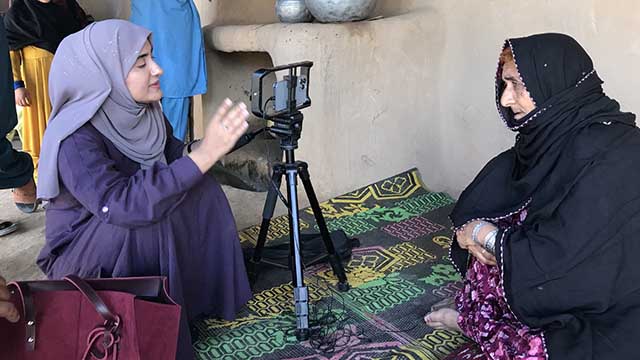
Reporting from VOA’s Afghan Service highlights the decline in women’s rights since the Taliban returned to power.
Voices from VOA
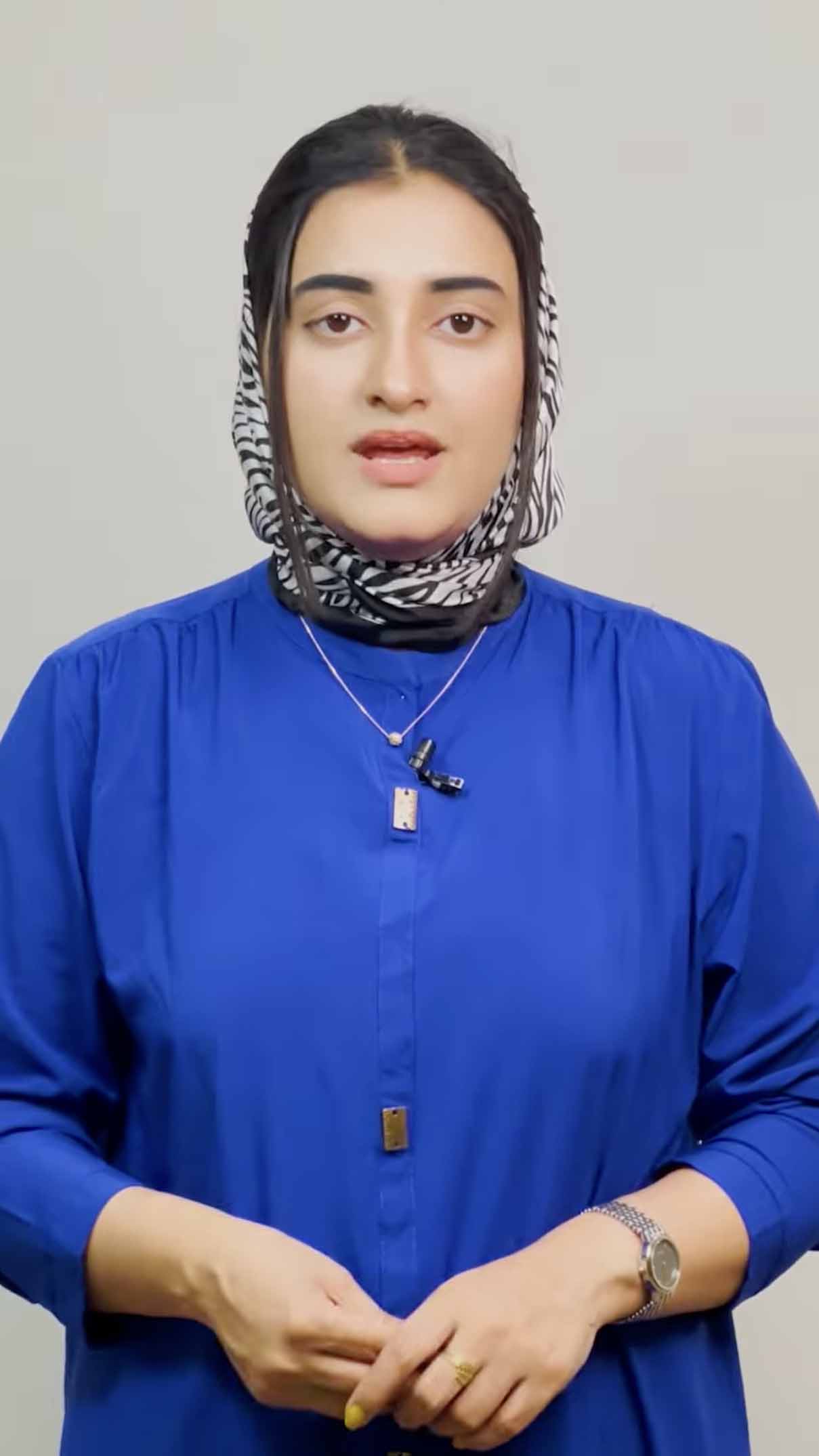
Muska Safi
VOA Afghan reporter
Muska Safi is a journalist working with VOA’s Afghan service in both Pashto and Dari languages. Based in Peshawar, she has shined a light on stories about Afghan refugees and women that too often go unheard.
Voices supporting VOA
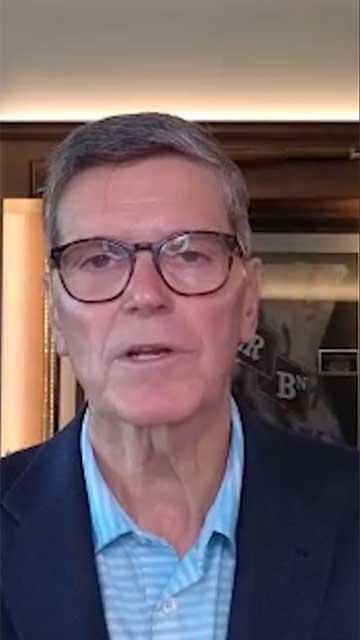
Ret. Gen. Joseph Votel
Former commander, U.S. Central Command
“The existence of Voice of America as a trusted source is critical to us in times of emergency. We simply cannot create the expertise, the cultural understanding and the ability to communicate to indigenous populations on short notice. That has to be developed over time and it is a tool that we need in our kit bag all the time.”
Contact your representatives
If you are a U.S. citizen and believe there is value in Voice of America — particularly if you have a personal story about listening to or watching VOA — please reach out to your representatives in Congress to encourage them to allow VOA to continue its vital mission of delivering truth to the world. We've simplified the process by creating a page to help you find their contact information and by creating a sample script of what to say.
Find out more
Press freedom situation, according to Reporters Without Borders (RSF)
Source: 2025 RSF World Press Freedom Index
Missed opportunities
Major stories VOA was unable to cover because of the effort to shut it down.
Featured stories
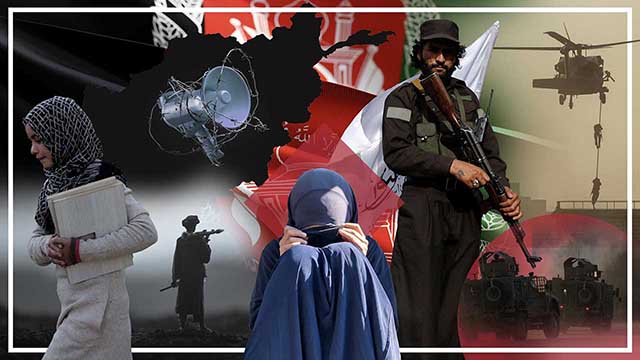
Life under the Taliban
One year after the Taliban took over Afghanistan, VOA brought special coverage of how the group was running the country and how the lives of Afghans, both those who fled and those who stayed, have changed.
Explore the series. English
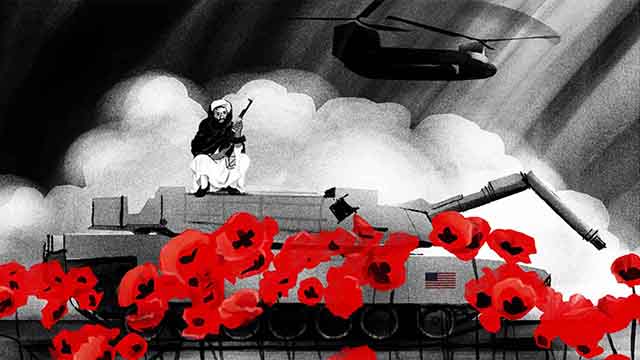
Afghanistan: The costs of war
The United States mounted an invasion of Afghanistan following the September 11, 2001, attacks that killed nearly 3,000 people in New York, Washington, D.C., and Pennsylvania. The war in Afghanistan had high costs for the United States in terms of lives lost, troops deployed and dollars spent.
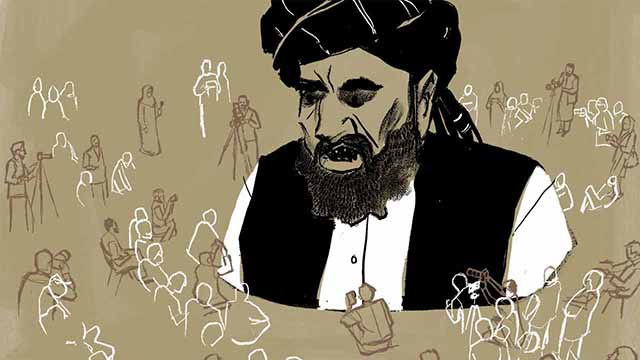
The Afghan journalists who stayed
As the Taliban took power, scores of journalists, fled for their safety in the face of likely media repression. Yet many more chose to stay in their country and stand by their audiences. VOA spoke with journalists from across Afghanistan who decided to remain. They described a deep commitment to journalism and expressed hope that conditions would improve, despite some recent setbacks.

At the time of the March 15, 2025, shutdown, VOA's Afghan Service employed 29 full-time employees, 29 contractors and a network of stringers. On May 6, 2025, a fraction of those journalists were recalled to produce a minimal amount of content.
Timeline of VOA’s Afghan Service
September 1980 – July 4, 1982
VOA launches radio programming to Afghanistan
VOA’s Afghan Service begins broadcasting in Dari in September 1980 and in Pashto in July 1982. The broadcasts begin a few months after the Soviet invasion of Afghanistan. VOA becomes one of the primary sources of news and information in Afghanistan during the Soviet occupation (1979-1989) and the pro-Soviet regime (1978-1992).
April 1992 – October 2001
Fall of the pro-Soviet regime, Afghan Civil War
The pro-Soviet regime of President Mohammad Najibullah falls, and a coalition of seven mujahideen leaders take power, but the group quickly fractures, leading to years of fighting. The newly formed Taliban insurgency begins its rise to power, eventually controlling much of the country. VOA’s Afghanistan Service is one of the few sources of news and information during the Afghan Civil War.
September 11, 2001
9/11 terrorist attacks on the United States
Al-Qaida operatives carry out the 9/11 terrorist attacks, putting the U.S. on a warpath with Taliban-ruled Afghanistan, host to al-Qaida and its leader Osama bin Laden. VOA’s Afghan Service provides extensive coverage of the U.S. military engagement in Afghanistan and the fall of the Taliban. With its news programs, analyses and U.S. foreign policy coverage, the service is a primary source of news throughout the U.S.-led operation.
September 2006
VOA launches “Ashna TV”
As part of an expansion of its programming to its Afghan audience, VOA launches the television show, “Ashna TV,” on the state-owned Radio Television Afghanistan (RTA).
February 2020
US-Taliban peace agreement
VOA’s Afghanistan Service provides extensive coverage of the peace negotiations that lead to the U.S.-Taliban agreement in Doha, Qatar. The service provides live coverage of the signing ceremony and interviews with U.S. officials, former Afghan government officials and Taliban negotiators. In addition, VOA highlights the perspectives of Afghan civil society, local politicians, women and human rights activists, giving voice to those directly affected by the agreement and ensuring comprehensive coverage of the potential impact of the Taliban’s return.
August 2021
Fall of Kabul and Taliban’s return
VOA’s Afghanistan Service provides live coverage of the fall of the Afghan government, the withdrawal of U.S. troops and the evacuation of Afghan allies in 2021. Although the service has to close its Kabul bureau and evacuate its staff, it continues to provide programming for its audience in Afghanistan.
March 15, 2025
After 45 years of service, VOA’s Afghan Service goes dark
USAGM, led by Trump appointee Kari Lake, ceases all VOA programming, forbids journalists from reporting the news, and places more than 1,300 workers on administrative leave.
May 6, 2025
Handful of workers return
USAGM recalls only a few dozen full-time VOA employees to produce limited content in four languages — Dari, Pashto, Mandarin and Farsi — down from broadcasts in 49 languages before the news agency was silenced. VOA Afghan’s output is reduced to about 15 minutes of weekday radio news in Dari and 15 minutes in Pashto, a stark contrast to its once-vibrant, round-the-clock coverage.
Voices of support
“Shuttering VOA’s Pashto service will leave a critical news and information gap along the Afghanistan-Pakistan border, where military, jihadist, and extremist narratives and disinformation dominate the media landscape.”
— Islamabad, Pakistan
U.S. diplomatic cable
“If you believe, as I do, that America is different than other countries — that is, that we stand not only for American interests, but for American and universal values — VOA is the only way in which many people in the world … can learn in an objective way how America is different, how America serves not only the interests of a country, but of certain values.”

Cameron Munter
Former U.S. ambassador to Pakistan and Serbia
“VOA’s social media platforms, at least in the region that I cover, they get a lot of hits. They’re massively popular. Even if the authorities don’t like them, these platforms are huge.”

Michael Kugelman
South Asia regional expert
“Voice of America is a much cheaper way for the United States to influence and inform people around the world — cheaper than sending our military, even cheaper than setting up U.S. embassies around the world.”

David Kramer
Former U.S. assistant secretary of state