
Latin America
VOA spent decades building an enviable media network in Latin America. It was silenced overnight
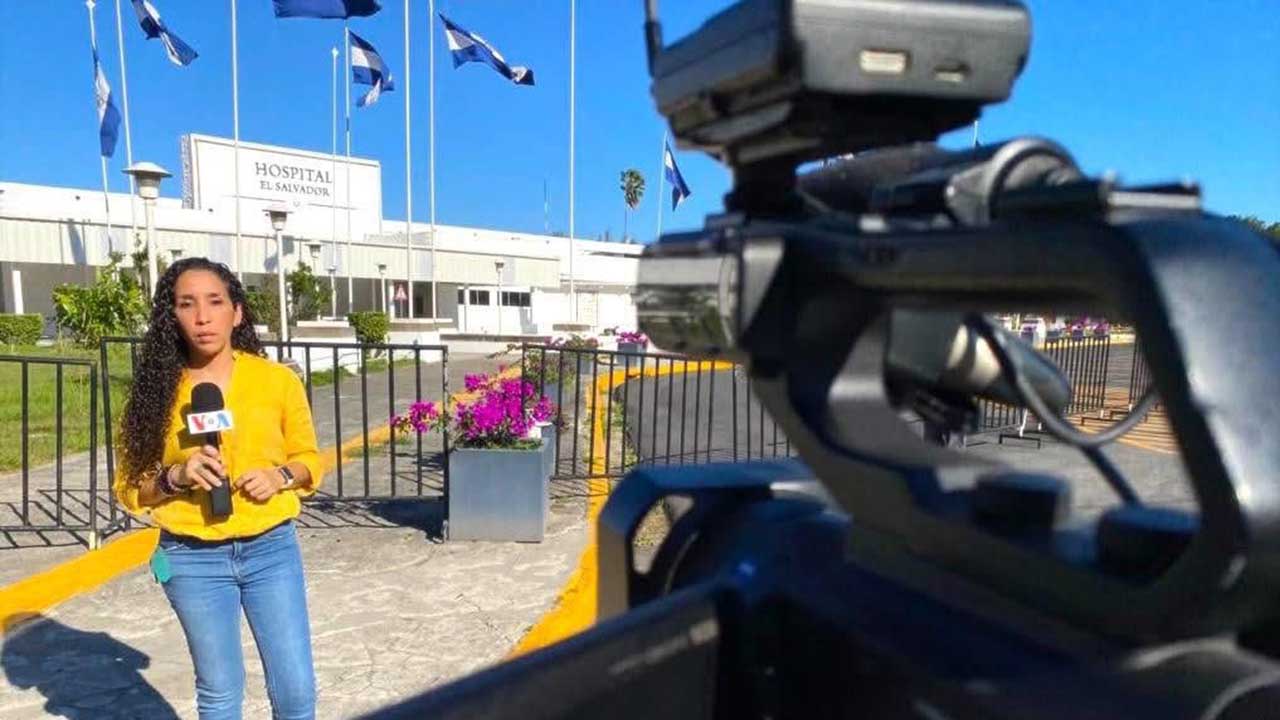
VOA Spanish reporter Claudia Zaldaña reports from El Salvador. VOA’s Spanish Service plays a critical role in advancing democratic values across Latin America in an era of growing authoritarian influence in the region.
Updated
For more than six decades, Voice of America provided uninterrupted news and information to Latin America, covering Cold War tensions, military dictatorships, a transition to democracy and changing relations with the United States. Before President Donald Trump issued his March 14, 2025, executive order that effectively began dismantling the international broadcaster, VOA’s Spanish-language content reached a weekly audience of 100.7 million. It had amassed large audiences in countries across the region, even in highly censored markets like Venezuela.
VOA Spanish audience across Latin America

Source: USAGM research
At the beginning of 2025, VOA’s Spanish Service was broadcasting 64 hours of audio and video reports every week, which were amplified by more than 680 local media outlets. Its extensive partner network made it one of the most effective U.S. international broadcasting platforms for countering disinformation and promoting democratic values.
However, on March 15, 2025, the service went dark. It has stopped all its broadcasts and is producing no content on digital media. When the broadcasts were shut off without warning, more than a dozen leading affiliate networks across Latin America expressed concern, citing how important VOA’s objective journalism is to their audiences, including informing the public about the United States and U.S. foreign policy, Russia’s invasion of Ukraine, the Israel-Hamas war, immigration and drug trafficking.
Affiliates in Peru (ATV), Mexico (ADN40), Uruguay (Montecarlo TV - Canal 4), Honduras (grupo VTV) and Venezuela (Venevision) described VOA’s collaboration as “essential” or “crucial” to their outlets. A Paraguayan television network, Telefuturo, said because of its agreement with VOA the network “followed the entire U.S. electoral process, even broadcasting VOA’s live signal uninterrupted to keep our viewers informed about every development.”
The director of the Latin American Information Alliance (AIL), Juan Carlos Isaza, said “I would like, on behalf of the 21 channels that constitute the Latin American Information Alliance, to express our complete solidarity with [VOA]. … The support that the VOA has given to our organization and our partner channels has been invaluable.” Many of VOA’s largest affiliate stations are part of the AIL network, including Caracol TV in Colombia, Azteca in Mexico, Latina in Peru, and Venevision in Venezuela.
VOA’s reporting had been especially important in countries with restricted press freedoms, where independent outlets affiliated with VOA provided one of the few sources of information outside of state‑controlled media. In Venezuela and Nicaragua — two countries facing the most censorship in the region — VOA had combined affiliate partnerships with more than 40 local independent media outlets.
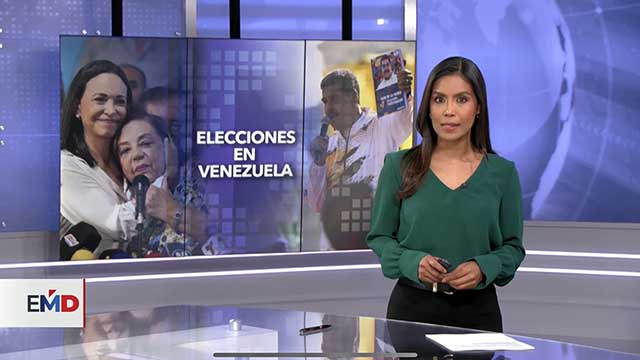 VOA’s Spanish Service produced a 30-minute daily newscast El Mundo al Día showcasing topics that included the Venezuelan crisis and its impact on the U.S. The daily program was broadcast by more than 100 TV stations across Latin America.
In Venezuela, where 400 media outlets have been closed over the past two decades, VOA’s Spanish Service was one of the few remaining independent sources of news that was able to address the country’s deepening crisis. Through in-depth reporting and exclusive interviews with key figures, such as opposition leaders Maria Corina Machado and Edmundo Gonzalez, as well as bipartisan U.S. policymakers and regional experts, the service connected Venezuelan audiences directly with the global conversation about their country’s future.
Its impact was so significant that former Venezuelan President Nicolas Maduro repeatedly attacked VOA’s Spanish Service in public statements — an unmistakable sign of the service’s reach and influence inside the country, and of the threat that its truthful reporting posed to the government’s control of information.
In September 2026, the State Department’s Office of Inspector General found that the reductions to VOA have diminished the U.S. Agency for Global Media’s capacity to fulfill its core statutory mission of “informing, engaging, and connecting people worldwide in support of freedom and democracy.” It warned that decreasing the number of broadcasting languages at VOA and its sister networks may “lessen USAGM’s impact on advancing U.S. national interests, supporting democratic values, and countering disinformation in closed societies.” The report recommended that USAGM seek congressional input when determining in what languages to broadcast so that U.S. national security and diplomatic interests are taken into account.
In the absence of VOA’s Spanish Service, China’s state-run media has aggressively expanded its reach by partnering with former VOA Spanish affiliates, including AIL, which unites major TV and radio stations across Latin America.
Russia is also filling the void after ramping up its disinformation efforts across Latin America. In April 2024, the U.S. Embassy in Mexico City sent a diplomatic cable to Washington about Russian media outlet RT, titled “Mexico: RT’s Invasion,” according to reporting from The New York Times. “RT’s aggressive investment in Mexico and its strategy to build its credibility and undermine the United States, poses a threat to current popular perception,” the cable said, adding, the mission “needs more resources to counter RT’s well-funded efforts.” The cable noted that RT’s Spanish language Twitter account, which targets viewers across Latin America, had 191,000 views in 2022, but jumped to 715 million views a year later.
Both Russia and China have been expanding their footprint across Latin America, including through media investments in Nicaragua and Venezuela, where pro-Kremlin and pro-Beijing narratives are increasingly visible.
In Nicaragua, Russian state media have formalized their role through several agreements: Sputnik signed a cooperation deal in September 2022, RT Español followed with a content-sharing and training agreement in December 2022, and Izvestia added a broader collaboration agreement in August 2025. These arrangements allow Russian outlets to provide video content, technical support and training directly to state-controlled media.
In Venezuela, Russia and China rely on regional platforms like TeleSUR, which is sponsored by the governments of Venezuela, Cuba and Nicaragua, to reinforce messaging that challenges U.S. influence. Reports from the German Marshall Fund note that this coordinated communication strategy helps amplify anti-U.S. rhetoric, giving it broader reach across the region.
VOA Spanish articles published online per week
Publishing on the VOA Spanish website ceased following the president’s March 2025 executive order.
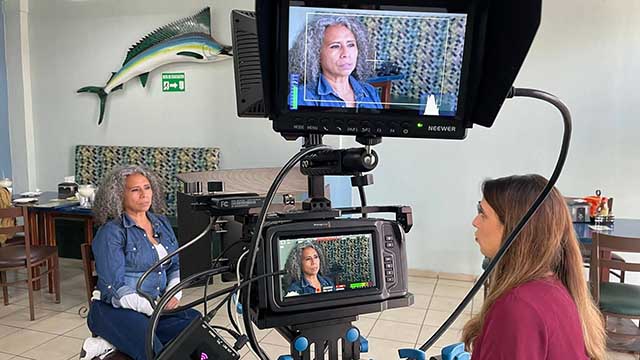
VOA journalist Cristina Caicedo Smit films an interview with a crime scene photographer in Mexico. Journalists in Mexico risk their lives to cover news in their communities. Explore the series in Spanish or English.
Voices supporting VOA

Juan Carlos Isaza
Executive director, Alianza Informativa Latinoamericana
“All 21 TV stations in AIL [Alianza Informativa Latinoamericana] are able to reach an audience — listen to this — near to 500 million people in all Latin America. So, the reach of our broadcasters is huge. And now, those audiences are missing information that was provided by Voice of America.”
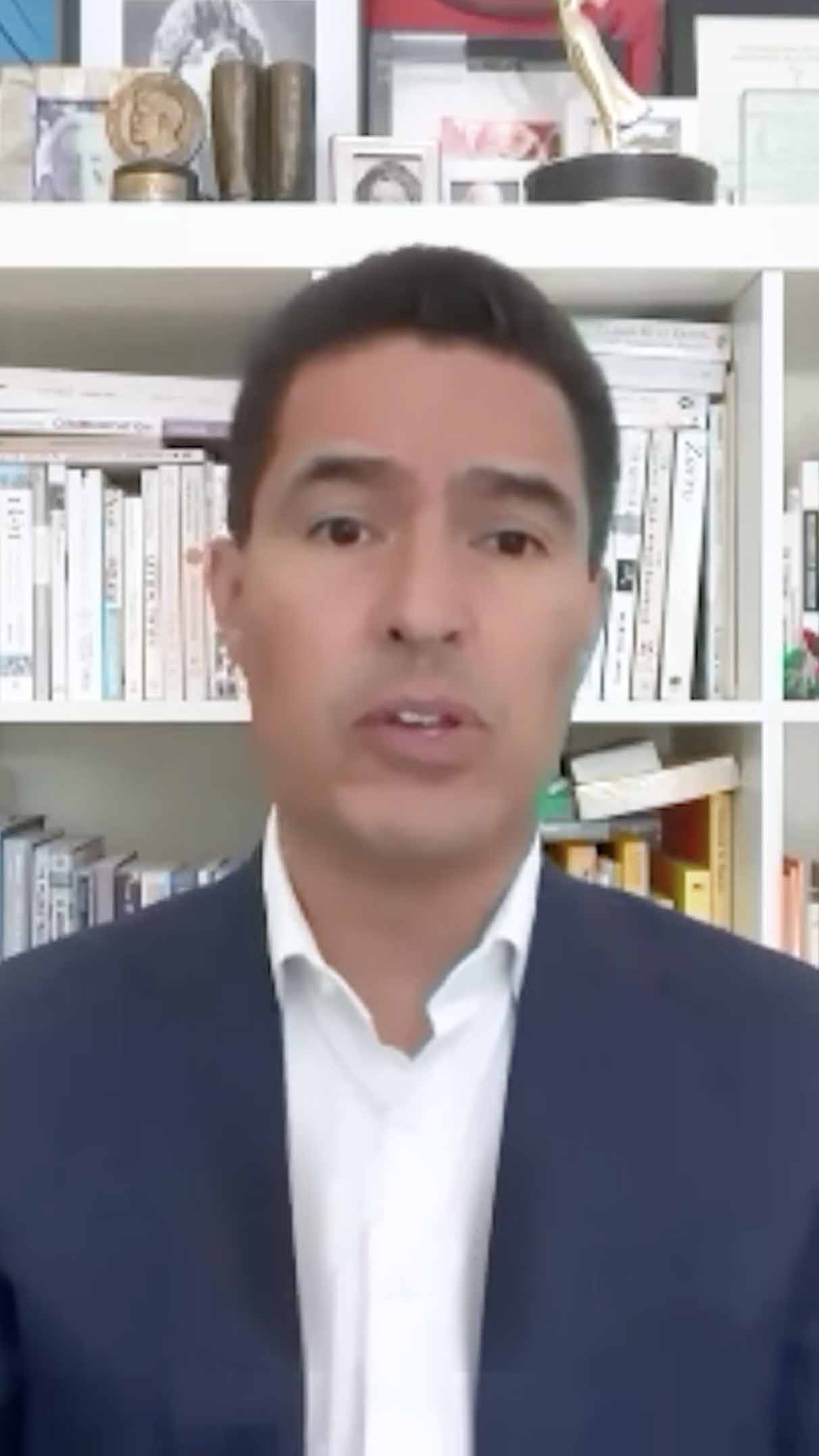
Jose Zamora
CPJ regional director for the Americas
“Voice of America is a lifeline of truth for millions living under censorship. … When Voice of America's mission is undermined, it's not just foreign audiences who lose, it's the U.S. credibility as a leader and defender of free expression.”
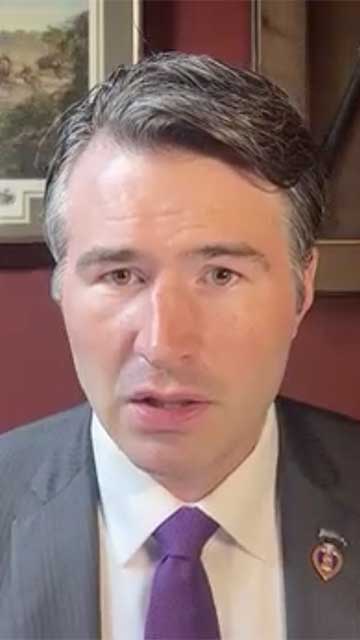
Ret. Capt. Jason Church
U.S. Army, Purple Heart recipient
“When we cut that [VOA] budget, what we really did is we ceded a significant amount of ground to China, especially in Latin America.”
USAGM across Latin America
VOA’s sister organization, the Office of Cuba Broadcasting (OCB), also broadcasts to Latin America — with both entities operating under the umbrella of the U.S. Agency for Global Media (USAGM) — but OCB was created to broadcast exclusively to Cuba to “promote freedom and democracy” there. OCB programs about developments in Cuba have some audience elsewhere, but its overall reach in the region is a fraction of VOA's Spanish audience.
USAGM weekly audience in Latin America in 2024
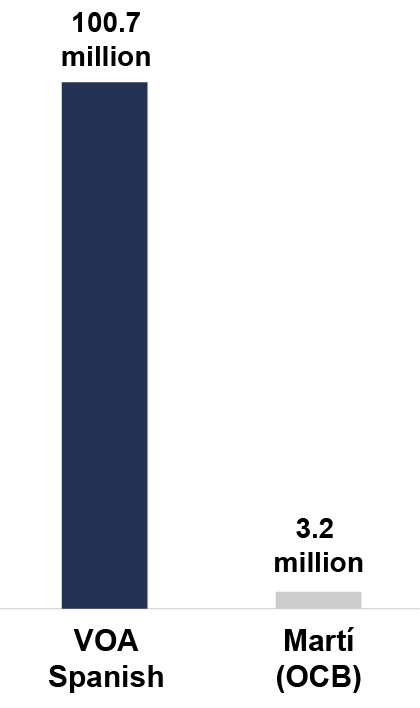
When deposed in September 2025 as part of court proceedings in two cases that VOA employees brought against USAGM and Kari Lake, who was then leading the agency, Lake agreed that Latin America is a “significant region” of the world. Congressional statute mandates that VOA broadcast about “developments in each significant region of the world.” Lake suggested that USAGM was fulfilling that obligation for Latin America through its current broadcasts by OCB, which unlike VOA’s Spanish Service has not been silenced. However, that assertion does not correspond with the data.
USAGM budgets 2024
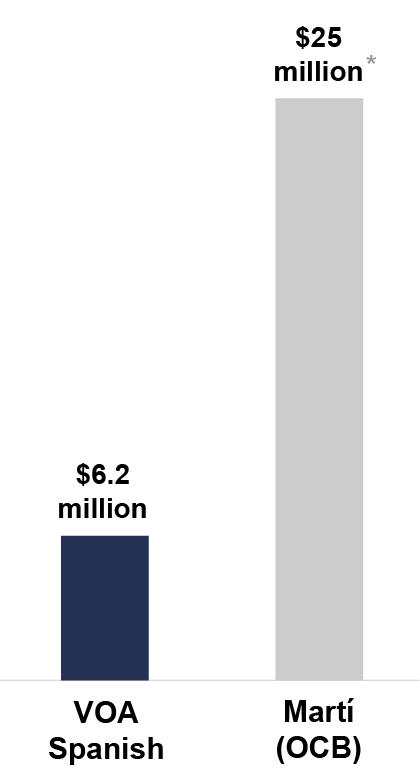
* Includes some back office support costs not reflected in VOA Spanish spending.
Contact your representatives
If you are a U.S. citizen and believe there is value in Voice of America — particularly if you have a personal story about listening to or watching VOA — please reach out to your representatives in Congress to encourage them to allow VOA to continue its vital mission of delivering truth to the world. We've simplified the process by creating a page to help you find their contact information and by creating a sample script of what to say.
Find out more
Press freedom situation, according to Reporters Without Borders (RSF)
Source: 2025 RSF World Press Freedom Index
Missed opportunities
Major stories VOA was unable to cover because of the effort to shut it down.
Featured stories

Floating Swarm
The special report, Enjambre Flotante — which exposed the environmental and geopolitical consequences of massive Chinese fishing fleets near the Galapagos Islands and international waters — earned a Clarion Award for Television Feature and was named a finalist by the Inter American Press Association.
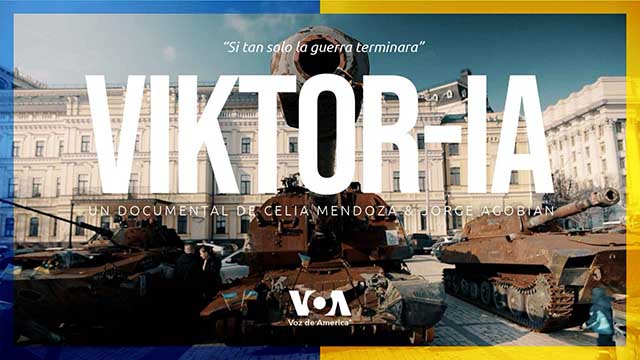
VIKTOR-IA
A portrayal of Ukrainians living under the constant shadow of war and Russian occupation, won the Grand Prize and Gold Award for Best Documentary in the Foreign Affairs category at the 2025 New York Film & TV Festival.
Explore the project. Spanish
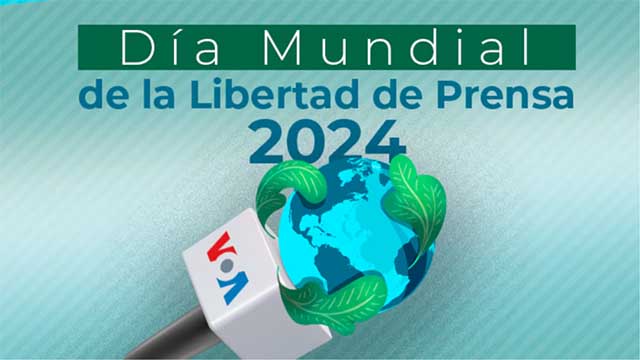
Press freedom and environmental journalism in the Americas
VOA explores the challenges of environmental journalism, speaking with reporters who are committed to exposing environmental crimes and actions that are endangering the ecosystem. The journalists’ investigations give voice to the demands of Indigenous communities, often isolated in remote corners of the Amazon rainforest.
Explore the series Spanish
Headlines from around the world
- The battle for the Americas Is a battle for belief (Real Clear Defense) China is prioritizing widespread influence over building trust. By weakening Voice of America and related networks, the United States is giving up its unique advantage—credibility—at a pivotal moment for influence in the hemisphere, when these assets are most needed and cannot be replaced by Beijing.
- GOP, Democratic senators pressure Trump to combat China’s influence in Latin America (The Hill) The bipartisan resolution calls for the U.S. to develop a comprehensive strategy combatting China’s economic, security and diplomatic influence in Latin America, and takes aim at the administration’s hobbling of the Voice of America as ceding critical ground to China to fill the information space.
- The Kremlin’s expanding media conglomerate 2026 (The Institute for the Study of War) “The Kremlin and other US adversaries, such as the PRC, will likely try to compete for and fill the spaces in the information spaces in Africa, Asia, and Latin America, which the United States left vacant as it reduced the media footprint of the Voice of America and US Agency for Global Media (USAGM). Maintaining a global US media outreach effort is essential to deny US adversaries the ability to advance their objectives via cognitive warfare means.”
- Trump’s closure of Voice of America is coming back to bite him (The Washington Post) As the president threatens Venezuela, Russia and China are filling the information vacuum.
- Russian disinformation comes to Mexico, seeking to rupture US ties (The New York Times) A U.S. government cable said that Kremlin-run outlets had scaled up their efforts across Latin America, seeking to turn people against the United States and garner support for Russia.
- Show all headlines
- ‘Maduro did not close our bureau – Trump did’: Voice of America journalists speak out (The Guardian)
- What’s lost if Voice of America disappears: Watchdog spirit, intrepid reporters, and focus on the global south (Global Investigative Journalism Network)
- The end of Voice of America deals a blow to coverage of democracy and repression in Latin America (LatAm Journalism Review)
- Cuba cheers collapse of US-funded media following Trump cuts (Reuters)

At the time of the March 15, 2025, shutdown, VOA's Spanish Service employed 13 full-time employees, 19 contractors and a network of stringers.
Timeline of VOA’s Spanish Service
1942 – 1956
VOA’s intermittent broadcasts to Latin America in the early years
VOA’s early broadcasts in Spanish to Latin America air from 1942–1945, 1946–1948 and 1953–1956. The Spanish Service launches during World War II to provide accurate news to Latin America and to counter Axis propaganda.
1961
VOA’s Spanish Service begins uninterrupted coverage
VOA Spanish becomes established as a trusted source of news for Spanish-speaking audiences across Latin America.
1960s – 1970s
Cold War tensions in Latin America
The service covers political repression, coups and the Cuban Revolution. It provides an alternative source of news to the censored or communist-aligned media that dominates in many countries and it strengthens U.S. influence in the region.
1982
Falklands (Malvinas) War coverage
VOA Spanish reports on the conflict between Argentina and the United Kingdom. It offers timely, independent information to Latin American audiences and helps to shape regional understanding of the international conflict.
1980s
Coverage of Central American conflicts
The service reports on civil wars in Nicaragua, El Salvador and Guatemala, as well as human rights issues in those countries and U.S. involvement. It provides balanced reporting in places where local media is polarized or censored and informs the public on the complex regional conflicts.
June 2010
Venezuelan crisis coverage begins
Led by President Hugo Chavez for more than a decade, Venezuela now enters into a deep economic and political crisis. The VOA Spanish Service creates a specific unit of reporters to document the political, economic and humanitarian effects of the crisis, including covering opposition protests and the migration of large numbers of Venezuelans out of the country. Its coverage reaches millions and serves as one of the few independent sources of information in a country with heavy media restrictions.
April 18, 2018
Crisis in Nicaragua begins
The start of the crisis is marked by widespread protests and the killing of more than 300 people, mostly students. VOA Spanish reports extensively on the political repression, the protests and the U.S. policy responses to the actions of President Daniel Ortega’s government. Within just two days, a team of VOA Spanish journalists is providing coverage to all the service’s affiliates, including live reporting on social media despite operating in a heavily censored environment. The reporting informs regional audiences about the human rights abuses and political developments in the country, and offers audiences a critical alternative to state propaganda.
2022 – 2025
VOA Spanish Service repeatedly honored for coverage
Between 2022 and early 2025, VOA’s Spanish Service earns a total of 10 international awards in recognition of its journalistic excellence. By December 2024, the service is reaching a weekly audience of more than 100 million people.
March 15, 2025
After 64 years of uninterrupted service, VOA Spanish programming goes dark
USAGM, led by Trump appointee Kari Lake, ceases all VOA programming, forbids journalists from reporting the news, and places more than 1,300 workers on administrative leave.
Voices of support
“Voice of America stood out as one of the few platforms able to consistently reach the Nicaraguan people with factual, unbiased reporting.”

Damaris Rostran
Nicaraguan American democracy campaigner
“[VOA] was always a very balanced … source of reference for us in Nicaragua. For seven years now, people [in Nicaragua] have lived under a police state … it's unfortunate that the VOA isn't doing [reporting], not because it can't, but because it has been prevented from continuing to do journalism.”

Carlos Fernando Chamorro
Nicaraguan journalist and founder of Confidencial
“There are constant offers to media outlets (I'm speaking on behalf of Latina), for example, from Sputnik, also from CCTV — the Chinese news service — and also from European agencies. ... Many times, these come with a biased reporting style, with a different approach from the one that the Voice of America used to have.”

José Alvan
Journalist with Latina Television, Peru
“As VOA, you can provide us information that we cannot afford to cover without you, for example, the things that happens in [the] Middle East, in Europe.”

Amada Castañon
International news editor at TV Azteca, Mexico