
STATUS UPDATE: While the Mandarin Service resumed operations in May 2025, its output is down from its pre-March 2025 levels and its journalists are under pressure to be a mouthpiece for the administration. The Cantonese Service has not resumed.
 China
China
China celebrates VOA's silencing, expands its global outreach

VOA Mandarin White House Correspondent Paris Huang covers the U.S. presidential election. The service is responsible for bringing news about the United States and the country's policies to audiences in China.
Published
For more than 80 years, Voice of America chronicled major developments in China — including the Cultural Revolution, the Tiananmen Square massacre, protests in Hong Kong and the coronavirus outbreak in Wuhan. VOA broadcast uncensored U.S. and global news to Chinese audiences isolated by state censorship and the digital barrier of the “Great Firewall.”
In early 2025, VOA’s Mandarin and Cantonese services were broadcasting 230.7 hours of audio and video reports each week. However, since President Donald Trump issued his March 14, 2025, executive order that effectively began dismantling VOA, they have mostly gone dark. Both services have ceased all broadcasts and the Cantonese Service has also stopped producing news on its website and social media pages. The only news from VOA now reaching China is from the Mandarin Service, but it is producing only limited content on digital media.
In recent years, VOA’s Mandarin Service played a critical role in exposing China’s human rights abuses, economic coercion and military expansion. It also countered Beijing’s disinformation campaign against the United States. Examples included its 2024 coverage of Google’s AI Gemini and the technology’s pro-Beijing stance, and a months-long investigation that uncovered a pattern of Chinese government-sponsored disinformation during the 2024 U.S. elections. The service was also known for its comprehensive reporting on the Chinese Communist Party’s transnational repression — its systematic attempts to silence and intimidate Chinese communities abroad — including by operating overseas police stations on U.S. soil and stifling free expression among Chinese students studying at American universities. VOA was regularly quoted by U.S. officials and other news media outlets on the subject.
In 2024, VOA Mandarin outperformed the Mandarin-language offerings from both Chinese state media and respected global brands like the BBC on digital platforms, drawing 180 million YouTube views and 190 million X video views, underscoring its widespread reach and influence among Chinese-speaking audiences worldwide. More than half of VOA Mandarin’s 60 million website visits in 2024 came from mainland China — despite strict censorship — showing the audience’s strong demand for uncensored information. VOA’s reporting in English was also popular with Chinese internet users; an online panel survey that Gallup and a local partner conducted for USAGM found that 5.5% of Chinese internet users accessed VOA content in English each week.
In the absence of VOA, Chinese citizens and the 60 million-strong Chinese-speaking diaspora are increasingly relying on Beijing’s state-controlled media and on social media influencers operating on unregulated platforms. Many of them actively spread propaganda and disinformation. China’s government is rapidly expanding its global influence through a sprawling, state-funded media apparatus around the world.
Outlets such as China Radio International (CRI) and China Global Television Network (CGTN) have exploited the steady withdrawal of Western broadcasters over the past two decades. Today, CGTN broadcasts to audiences in more than 200 countries, while the state-run Xinhua News Agency operates more than 220 bureaus worldwide — supplying content to over 8,000 news organizations and amplifying Beijing’s narratives across every continent.
VOA Chinese articles published online per week
Publishing on VOA Chinese websites virtually ceased following the president’s March 2025 executive order.
Voices from VOA
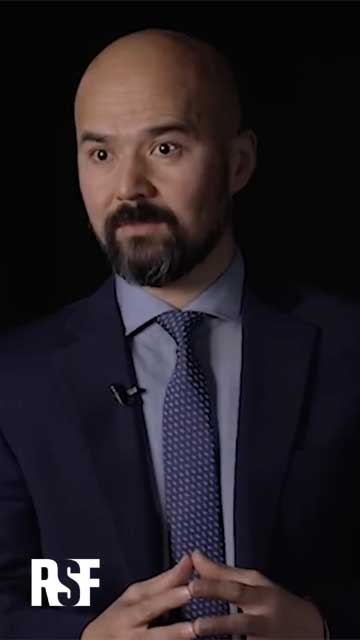
Kasim Abdurehim Kashgar
Former VOA journalist
Kashgar is a Uyghur journalist who covered international news related to China and the Uyghur population for VOA. Initially working under a pseudonym out of fear for his family and colleagues remaining in China, he revealed his identity in the documentary “From Fear to Freedom: A Uyghur's Journey,” broadcast by VOA in June 2023.
Voices supporting VOA

Gao Yu
Independent journalist in China
“VOA’s ongoing coverage of my cases generated widespread international support and became a vital source of strength — helping me preserve my dignity during the darkest times and sustain my long struggle for freedom of speech.”
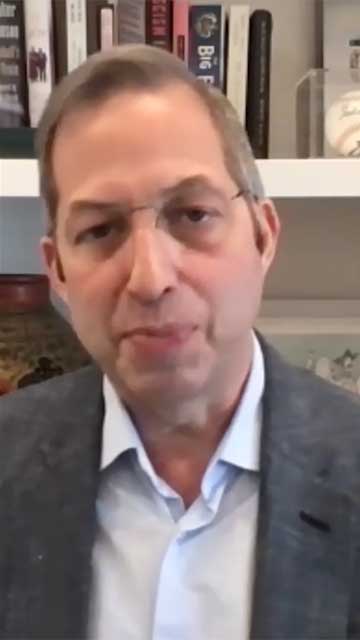
Derek Mitchell
Former U.S. ambassador to Myanmar
“The Chinese are filling the space that we are leaving … [if we] retreat from the battlefield others see that China is playing, it makes China look strong and America look weak. And I think it hurts us.”
State media cheers VOA’s shuttering
“The so-called beacon of freedom, VOA, has now been discarded by its own government like a dirty rag.”
— Global Times editorial
The Chinese newspaper serves as a platform for the Chinese Communist Party.
Contact your representatives
If you are a U.S. citizen and believe there is value in Voice of America — particularly if you have a personal story about listening to or watching VOA — please reach out to your representatives in Congress to encourage them to allow VOA to continue its vital mission of delivering truth to the world. We've simplified the process by creating a page to help you find their contact information and by creating a sample script of what to say.
Find out more
Press freedom situation, according to Reporters Without Borders (RSF)
Source: 2025 RSF World Press Freedom Index
Missed opportunities
Major stories VOA was unable to cover because of the effort to shut it down.
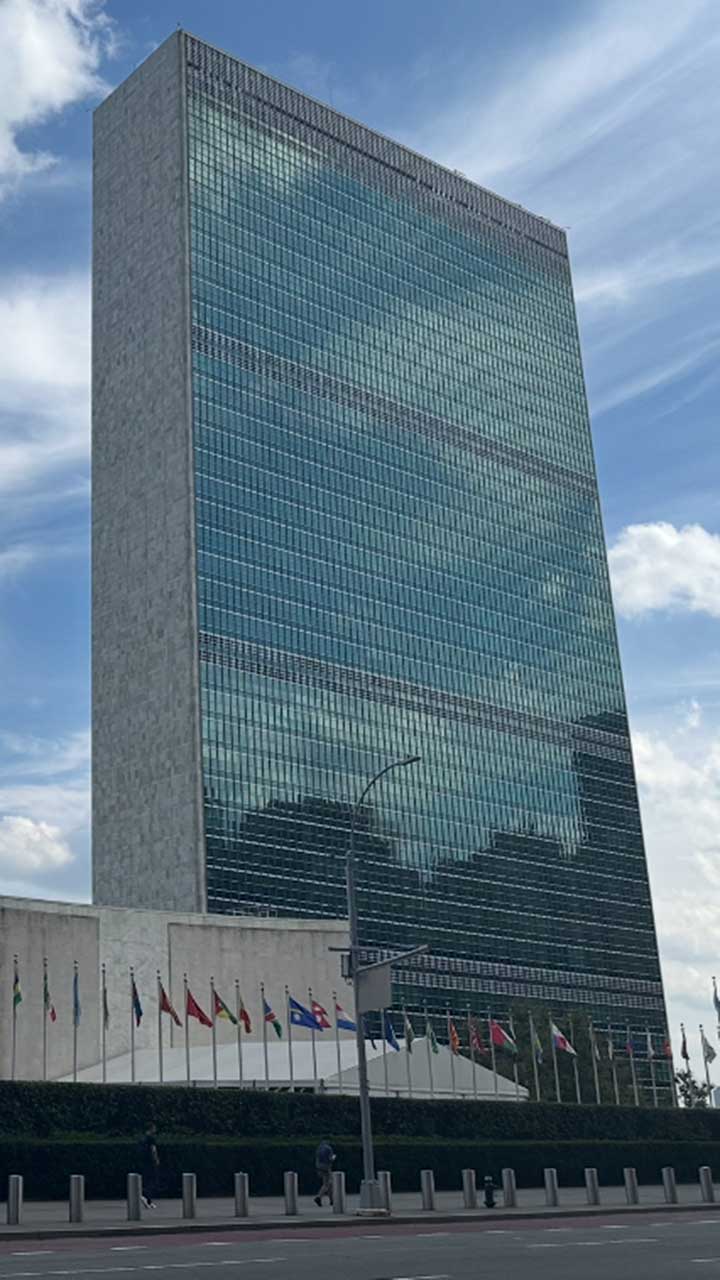
Silenced at UNGA: VOA shrinks, Beijing expands
Featured stories
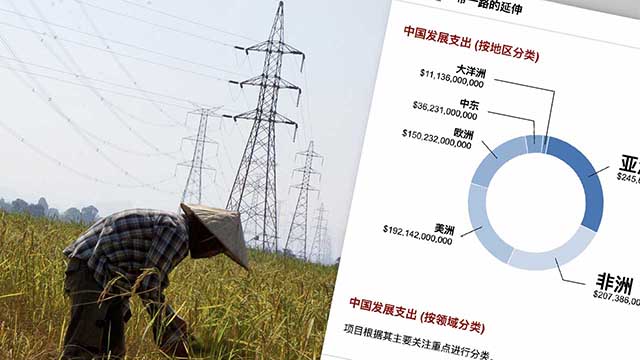
Beyond the Belt and Road: Exploring China’s global development spending
China’s spending on global development projects has surpassed $1 trillion since the turn of the century, making Beijing one of the world’s most sought-after financiers. Over a 22-year-period beginning in 2000, China spent at least $1.34 trillion on more than 20,985 projects across 165 countries
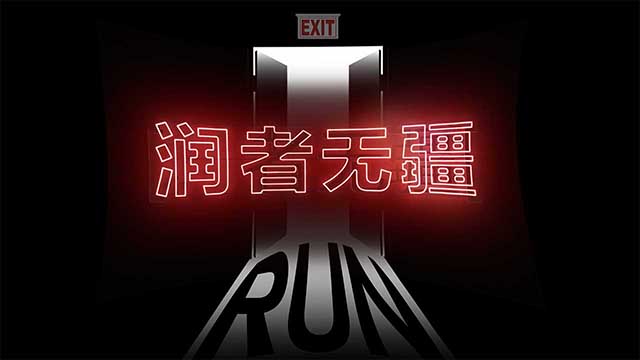
Runners without borders
The COVID-19 lockdowns initiated by Chinese authorities were supposed to contain the coronavirus that had killed millions of people worldwide. Instead, the increasingly restrictive rules forced thousands of Chinese citizens to reconsider life under an authoritarian government and make the difficult decision to leave their homes, family and country — what they call “runology.” In this VOA special report, 12 Chinese people describe the risks, sacrifices and perilous treks across thousands of miles for better lives in new countries.
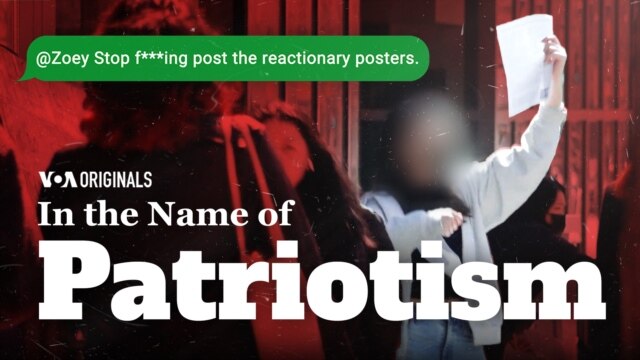
In the name of patriotism
In April 2024, Chinese student Wu Xiaolei was sentenced to nine months in U.S. federal prison for harassing another Chinese student who had posted a pro-democracy poster. The case highlights a growing ideological divide within Chinese students studying in the U.S. — and shows how Beijing’s influence can follow students overseas.
Headlines on the loss of VOA in China and how it benefits Beijing
- Stalin, Mao and Khomeini couldn’t quell freedom’s voice. But Trump did (The Washington Post) The world’s autocrats are doing somersaults about the silencing of the Voice of America.
- Chinese Nationalists Praise Trump’s Cuts to Voice of America (The New York Times)
- Trump mutes Voice of America, makes space for Russian and Chinese influence (France 24)
- Trump's latest round of cuts threatens free media in Asia (ABC News (Australia))
- How Elon Musk’s DOGE cuts Leave a vacuum that China can fill (The New York Times)
- Show all headlines
- Voice of America: How Trump's cuts to US news outlets could be an opportunity for Australia (SBS News)
- Trump could hand China a ‘strategic victory’ by silencing Voice of America (The New York Times)
- RFA and VOA shutdown: The erosion of US soft power in Southeast Asia (CSIS)
- As Trump silences Voice of America, Russia and China seize the opportunity to reshape Africa’s news ecosystem (NiemanLab)
- China and Russia rejoice as the US cuts its global media (Foundation for Defense of Democracies)
- How shutting down VOA and RFA also leaves US policymakers in the dark (UnderReported China | Substack)
- The fight to restore VOA continues. China hopes the agency loses (The Washington Post) A less-informed global public is good for autocrats, who want people uninformed.
- Chinese propaganda surges as the U.S. defunds Radio Free Asia (The Washington Post) Beijing expanded its state propaganda, including to the persecuted Tibetan and Uyghur minorities, as RFA pulled back.
- World needs voice from America, not China (Boston Herald)
- As U.S. dismantles Voice of America, rival powers hope to fill the void (The New York Times) The Trump administration is not just releasing its grip on the global megaphone but handing it off to its eager adversaries, foreign policy experts say.
- That VOA has had its day will not be cause for lament (China Daily)
- China Gets More Airtime Around the World as Voice of America Signs Off (The Wall Street Journal)
- How Trump's shutdown of Voice of America will impact underserved countries worldwide (WBUR)
- Kari Lake’s accusations about VOA and China are bad for the country (The Washington Post) Kari Lake says VOA cooperated with the Chinese Communist Party. In reality, VOA fights propaganda.
- America surrenders in the global information wars (The Atlantic) The U.S. is reorienting its foreign policy to protect governments that manipulate and suppress information.
- Why the U.S. is losing the battle for hearts and minds (The Washington Post) As rivals flood the world with propaganda, Washington is dismantling its best tools to respond.

At the time of the March 15, 2025, shutdown, VOA's China division employed 49 full-time employees, 27 contractors and a network of stringers around the world. On May 6, 2025, a fraction of those journalists were recalled to produce a minimal amount of content.
Timeline of VOA’s China Branch
December 28, 1941
US starts broadcasting to China during WWII
The Voice of America is still months away from being officially established when the first Chinese-language shortwave broadcasts are transmitted from studios in San Francisco, just weeks after the attack on Pearl Harbor. VOA is officially created in February 1942 and takes over operations of the shortwave broadcasts to China.
1966 – 1976
China’s Cultural Revolution
China’s Cultural Revolution is a 10-year-long sociopolitical movement launched by Chinese Communist Party (CCP) leader Mao Zedong, which causes violence and chaos across Chinese society. Despite the severe punishment for tuning in to VOA, many Chinese citizens listen to VOA for information about their own country and the world.
1972
US–China rapprochement
The 1972 U.S.–China rapprochement, sparked by President Richard Nixon’s historic visit to Beijing, marks the beginning of a new chapter in U.S.–China relations. VOA’s extensive coverage of the event establishes VOA Mandarin’s enduring tradition of reporting on U.S.–China relations. For decades, Chinese citizens, top leaders and the Chinese diaspora have relied on VOA for accurate and insightful analysis of U.S.–China relations.
1989
Pro-democracy protests and the Tiananmen Massacre
VOA is on the scene during the 1989 Tiananmen movement, substantially expanding its broadcasting to cover the protests and the government’s violent crackdown. As the Chinese government censors all information, VOA Mandarin becomes one of the only reliable sources for tens of millions of Chinese seeking to learn what is truly happening in their own country. This watershed event cements VOA Mandarin’s enduring focus on exposing China’s human rights abuses to Chinese audiences worldwide.
LATE 1980s - PRESENT
China’s human rights abuses
Since the 1980s, VOA Mandarin has made human rights reporting a cornerstone of its China coverage. From documenting Beijing’s suppression of dissents to exposing repression in Tibet and the mass internment of Uyghurs in Xinjiang, its fact-based journalism has brought global attention to China’s abuses. VOA gives voice to exiled activists, political prisoners’ families and others silenced inside China, remaining among the few independent outlets connecting global audiences — and Chinese citizens — to the truth about China’s human rights record.
2019
Hong Kong’s pro-democracy protests and Beijing’s crackdown
VOA provides on-the-ground coverage of the 2019 Hong Kong protests — by capturing firsthand accounts from demonstrators and relaying their voices to global audiences through live reports and daily TV specials. Since that time, VOA Mandarin continued to follow Hong Kong’s political transformation — chronicling Beijing’s tightening control, the erosion of press freedom and the shrinking space for dissent in the once-free city.
2020 - 2022
China’s COVID-19 pandemic, lockdowns, and the White Paper Movement
VOA Mandarin is among the first international outlets to report on the Wuhan outbreak, capturing the pain and fear of Chinese citizens as the crisis unfolds. As Beijing imposes draconian lockdowns, VOA provides in-depth coverage of China’s zero-COVID policy and its human and social toll. It also counters Beijing’s disinformation, including false claims that COVID originated in the U.S. When protests erupt in 2022, known as the White Paper Movement, VOA documents citizens’ defiance and Beijing’s eventual retreat from its zero-COVID policy.
2010s - PRESENT
US–China Tensions: Trade, Technology and Global Influence
VOA Mandarin plays a pivotal role in exposing China’s malign global influence — from exploitative trade practices and intellectual property theft to geopolitical aggression. Its in-depth, fact-based reporting cuts through Beijing’s propaganda, offering clarity on the forces shaping U.S.–China relations. Chinese audiences, intellectuals and policymakers turn to VOA as a trusted source of news to grasp the realities behind the two countries’ economic, technological and strategic competition.
March 15, 2025
After 84 years of service, VOA programming to China goes dark
USAGM, led by Trump appointee Kari Lake, ceases all VOA programming and places more than 1,300 employees on administrative leave. As the U.S. congressionally mandated service goes dark, Chinese state-run media moves in to fill the void — especially in regions such as Africa and Southeast Asia. China watchers raise concerns over China’s growing influence in the global media landscape.
May 6, 2025
Handful of workers return
USAGM recalls only a few dozen full-time employees to produce limited content in just four languages — Mandarin, Farsi, Dari and Pashto — down from broadcasts in 49 languages before the shutdown. VOA Mandarin’s output is reduced to a few web articles and a handful of social media posts each day, a stark contrast to its once-vibrant, round-the-clock coverage.
Voices of support
“The departure of Voice of America also leaves a gaping vacuum in the information world that can only be filled by countries like China and Russia. And believe me, [Russian President] Vladimir Putin and [Chinese President] Xi Jinping aren’t going to give the world a clear picture of what’s going on in their countries, much less in the United States.”

David Shear
Former U.S. ambassador to Vietnam
“The Russian and Chinese broadcast services are directly controlled by the government. They do not have the independence that Voice of America has always had to be accurate and critical in reporting on the government, on their own government.”

Thomas Countryman
Former State Department official
“The big advantage in my mind of VOA, and on the soft power tools, is that they come at far lower cost and far lower risk than coercive hard power tools, such as military force.”

Roderick Moore
Former U.S. ambassador to Montenegro
“USAGM's closure will clear the path for adversarial nations, particularly China, to seize the opportunity to enhance their state-run media presence. With the end of U.S. broadcasts not only in Iran but throughout the Middle East, we will witness a shift toward pro-China and pro-Iran messaging throughout the region, expanding their influence and further eroding U.S. influence.”
— Kuwait City, Kuwait
U.S. diplomatic cable
“When the Voice of America China branch goes silent, we cede the field of public diplomacy to the Chinese government, to the Chinese Communist Party.”

Robert Daly
Former director of the Kissinger Institute on China and the United States