
Afghanistan-Pakistan border region
US suspends broadcasting in volatile region, surrendering to extremists and rival powers

VOA Deewa reporter Nasrullah hosts TV Newshour, the service’s daily TV program offering news and analysis on the major issues of the day.
Published
For nearly 20 years, VOA produced dedicated programming for the critically important border region between Afghanistan and Pakistan. The mountainous region lacks local independent sources of information about regional, international and U.S. news, and its state and private media markets are dominated by military and extremist narratives.
VOA filled the information void by broadcasting in Pashto with its Deewa Service. (Deewa in Pashto means “light”). The programming ensured the United States had a credible voice in the strategically significant region, where Russia, China and Iran all vie for influence.
At the start of 2025, the Deewa Service was broadcasting 75.3 hours of audio and video reports each week. It had a 24/7 television stream via satellite and round-the-clock digital operations. However, since President Donald Trump issued his March 14, 2025, executive order that effectively began dismantling VOA, the Deewa Service has stopped all broadcasts and is not producing any content on digital media.
The sudden silencing of VOA broadcasts caused alarm in several regional U.S. State Department offices across the globe, including in Islamabad, Pakistan. A cable from that post warned, “Shuttering VOA’s [Deewa] service will leave a critical news and information gap along the Afghanistan-Pakistan border, where military, jihadist, and extremist narratives and disinformation dominate the media landscape.”
VOA launched its Deewa Service in 2006, when the Afghanistan-Pakistan border region was the scene of an escalating Taliban insurgency, with militants using Pakistani’s then-tribal areas as safe havens to launch attacks into Afghanistan, and the U.S. carrying out targeted strikes in the area. “This is an area that is facing significant challenges ranging from ethnic and political strife to poverty and health issues, so it’s critical for them to have access to accurate and unbiased news and information,” said then-VOA Director David S. Jackson in announcing the new service.
The region continues to face significant hostilities as groups designated terrorists by the U.S. such as Tehrik-e Taliban Pakistan, al-Qaida, Islamic State, and Baloch Liberation Army, as well as their allies and off-shoots pose a persistent threat to security.
Pakistan’s military said in early January that terrorists had carried out 5,379 attacks in the country in 2025, with violence largely concentrated in the provinces bordering Afghanistan — the region VOA Deewa serves. The U.S. Council on Foreign Relations warned in a December 2025 report that recent cross-border militant attacks in the area could lead to renewed armed conflict between Afghanistan and Pakistan in 2026.
Michael Kugelman, a senior fellow for South Asia at the Atlantic Council, wrote in a January article for Foreign Affairs, “The most worrisome flash point in South Asia today lies not between the nuclear-armed rivals India and Pakistan but to the west, along the border between Afghanistan and Pakistan. A simmering conflict between these two neighbors now threatens to explode — with damaging consequences for the wider region.”
Before it was silenced, the Deewa Service had a significant reach in the region that was rapidly increasing. The Pakistani state was so threatened by VOA’s reporting on sensitive issues like militancy and enforced disappearance that it placed restrictions in 2018 on accessing VOA’s online journalism, which continue to this day. To counter the censorship, VOA Deewa used proxy sites and ensured digital stories were compatible with different social media platforms to minimize the impact of the state-imposed restrictions.
Political leaders and activists have credited Deewa’s impactful journalism with helping to force the Pakistani government to eliminate British colonial era regulations in the then-tribal region of Khyber Pakhtunkhwa province in 2018. The controversial laws allowed for arbitrary arrests and collective punishment, and were referred to as “black laws” by human rights organizations. Their repeal after more than 100 years advanced democratic and political rights throughout the region.
The service provided intensive coverage of the Israel-Hamas war, assigning reporters to Israel soon after the October 7, 2023, terrorist attack. The coverage provided objective news to its mostly-Muslim audience and received millions of views. In the four days following the attack, content from VOA’s Deewa, Urdu, Dari and Pashto services broadcasting to Afghanistan and Pakistan generated a combined 77.7 million video views.
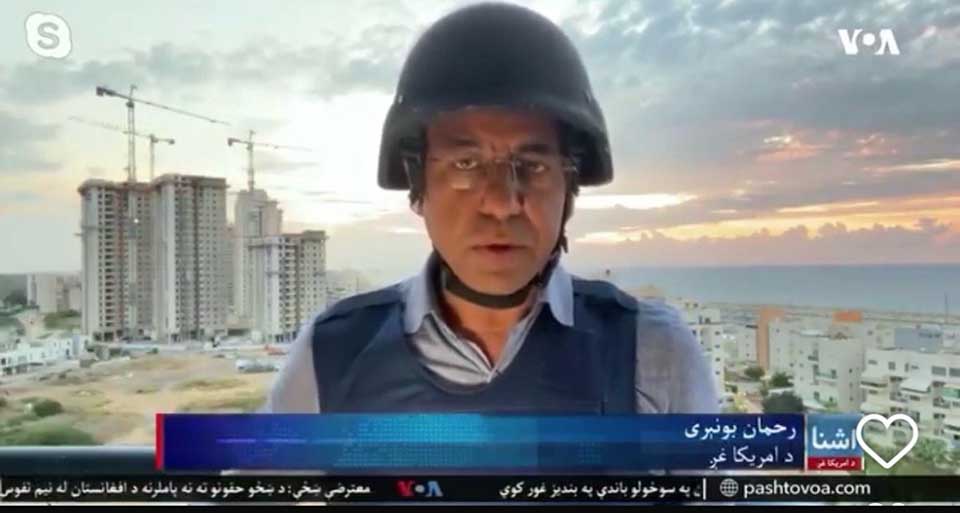 VOA Deewa journalist Rahman Bunairee reports from Israel after the Hamas terror attack in October 2023. VOA Deewa updated audiences in Pakistan, Afghanistan, Turkey and Bangladesh on the latest developments.
In the absence of VOA, religious extremists are filling the news vacuum in the region, promoting anti-American views, radical ideologies and violence. In addition, a growing interest in the region from China, Russia and Iran has led those countries to expand their state-controlled media presence in recent years.
China Radio International and China Global Television Network (CGTN) broadcast in Pashto to Deewa’s target audience. Both of those outlets partner with local media to amplify their programming. Other Chinese media outlets operating in the region include the Xinhua News agency, People’s Daily and Economic Daily. The Russian TV broadcast RT is also accessible in the Afghanistan-Pakistan border region via dish and cable. Iran’s Radio Tehran has a dedicated Pashto Service targeting Pashtuns in Pakistan and Afghanistan.
VOA Deewa articles published online per week
Publishing on the VOA Deewa website ceased following the president’s March 2025 executive order.
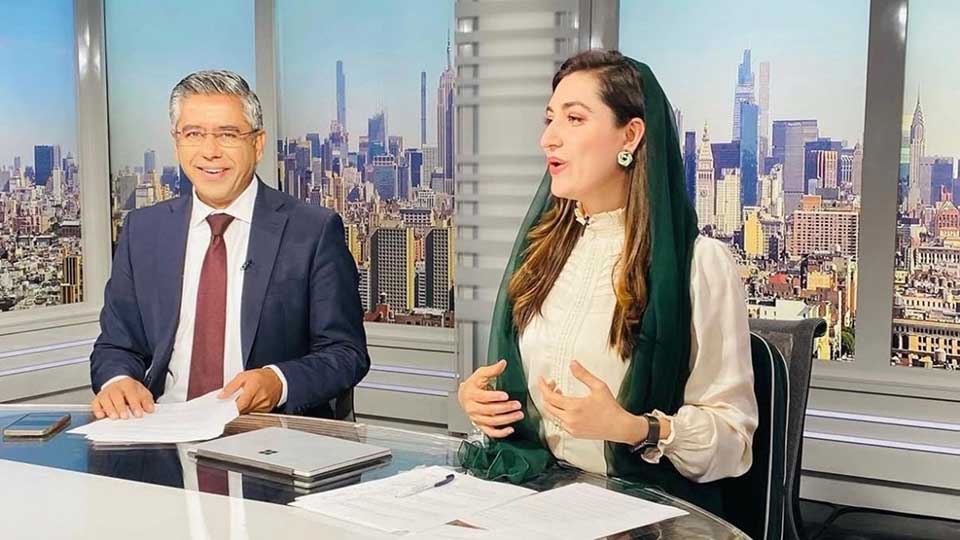
VOA broadcasters Munaza Shaheed (right) and Rahman Bunairee host a TV show from VOA’s New York City studio in September 2021.
Voices supporting VOA
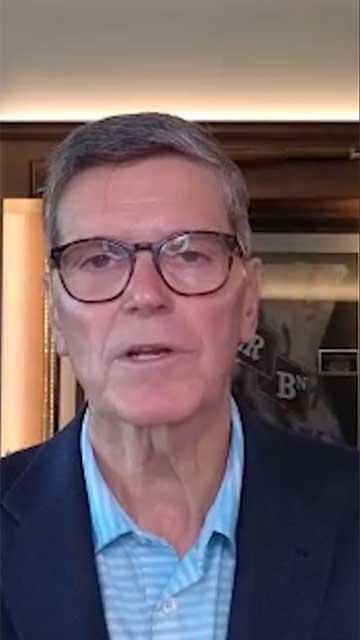
Ret. Gen. Joseph Votel
Former commander, U.S. Central Command
“The existence of Voice of America as a trusted source is critical to us in times of emergency. We simply cannot create the expertise, the cultural understanding and the ability to communicate to indigenous populations on short notice. That has to be developed over time and it is a tool that we need in our kit bag all the time.”
VOA Deewa
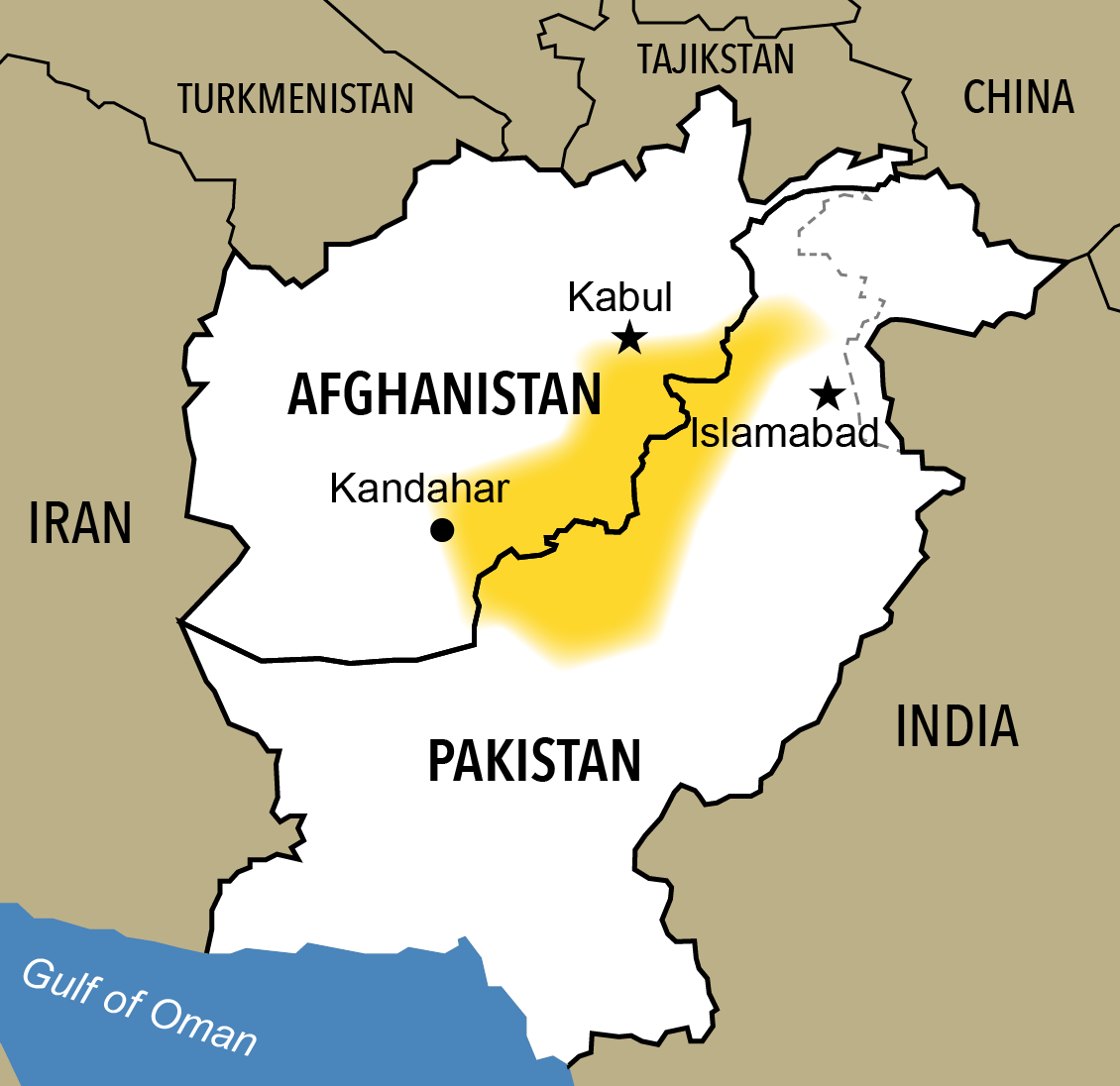
Why does VOA have separate Pashto broadcasts for Afghanistan and Pakistan?
Pashtuns living in Pakistan speak a different Pashto dialect than those living in Afghanistan, influenced heavily by Urdu and English. VOA’s dedicated programming to the border region ensured that people there could easily access and understand the news in their native dialect. While Pashtuns in Pakistan are more numerous than Pashtuns in Afghanistan, there is no independent Pashto media in the Urdu-dominated Pakistani media market. VOA’s Deewa Service was one of the few ways that Pashtuns in Pakistan could get independent news.
In addition, the challenges, issues, central governments, and political systems are different for Pashtuns living in Afghanistan than for those who live in Pakistan. The Pakistan military and radical religious groups control the narrative in Pakistan’s Pashtun belt. The concentration of madrassas in the region along with jihadi narratives fan anti-American sentiment, while extremists there provide support to militant groups in both Afghanistan and Pashtun areas of Pakistan. As a result, the Pashtun belt of Pakistan has been turned into sanctuaries for transnational terrorist outfits.
Addressing the complex issues in the border region is very different from reporting on the challenging matters facing the whole of Afghanistan. VOA’s Afghanistan Service, which broadcasts vital fact-based media in both Pashto and Dari to its audiences across Afghanistan, is not able on its own to fill the large media vacuum for Pashtuns living in Pakistan. Before VOA was mostly shuttered, its Deewa Service and Afghanistan Service were reaching distinctive audiences and having a real impact in the region, providing people with much-needed accurate information in their own language.
U.S. Diplomatic cable
“Shuttering VOA’s [Deewa] service will leave a critical news and information gap along the Afghanistan-Pakistan border, where military, jihadist, and extremist narratives and disinformation dominate the media landscape.”
— Islamabad, Pakistan
Contact your representatives
If you are a U.S. citizen and believe there is value in Voice of America — particularly if you have a personal story about listening to or watching VOA — please reach out to your representatives in Congress to encourage them to allow VOA to continue its vital mission of delivering truth to the world. We've simplified the process by creating a page to help you find their contact information and by creating a sample script of what to say.
Find out more
Press freedom situation, according to Reporters Without Borders (RSF)
Source: 2025 RSF World Press Freedom Index
Missed opportunities
Major stories VOA was unable to cover because of the effort to shut it down.

At the time of the March 15, 2025, shutdown, VOA's Deewa Service employed 11 full-time employees, 18 contractors and a network of stringers.
Recent highlights of VOA Deewa’s coverage
2024
US election coverage
Throughout 2024, VOA Deewa sent out its journalists to U.S. swing states to report on the public mood ahead of the elections, producing reports for TV and social media. On Election Day, it held a marathon seven-hour broadcast as well as round-the-clock digital coverage that updated its audience on election results, turnout and reactions. VOA Deewa reporters appeared more than 16 times on different TV channels in Pakistan, giving updates on the race.
November 25-26, 2024
Violence at political rally in Islamabad
VOA Deewa’s live coverage of a political rally by supporters of jailed former Prime Minister Imran Khan drew huge audiences on social media. The rally in Islamabad turned violent and clashes between Pakistani security forces and demonstrators resulted in at least a dozen deaths, including law enforcement personnel. VOA carried out accurate coverage in a media environment vulnerable to both government propaganda and political pressure.
December 2024
VOA investigates Chinese-funded deep-sea port
Local and government media in Pakistan rarely report critically about Chinese investment in the country due to pressure from authorities. However, VOA Deewa looked deeply into a Chinese-funded deep-sea port in the southwestern city of Gwadar and revealed that despite efforts, Pakistan was struggling to attract commercial activity there.
January 20, 2025
President Trump’s inauguration
VOA Deewa’s marathon coverage of the event was aired by several media outlets in Pakistan, including Pashto TV Mashriq. VOA journalists in Washington reported on the significance of the day and provided a look-ahead to Trump’s policies for the United States and South Central Asia.
March 6, 2025
Malala visits hometown 13 years after Taliban shooting
After 13 years of living abroad, Pakistani activist and Nobel Peace Prize laureate Malala Yousafzai returned to her home village in Pakistan’s northeastern Khyber Pakhtunkhwa province. VOA Deewa received around 10 million views on its digital platforms for covering the story.
March 11, 2025
Militants hijack passenger train in restive Balochistan
Around 450 passengers were on the train when Baloch insurgents opposed to the Pakistani state and China’s investment in Balochistan stormed the cross-country train in a brazen hijacking. The strategic location of VOA Deewa’s reporters in Pakistan enabled the service to report on each development of the rescue operation. VOA Deewa covered the story around the clock, providing firsthand information and eye-witness accounts.
March 15, 2025
After 19 years on-air, VOA Deewa goes silent
USAGM, led by Trump appointee Kari Lake, ceased all VOA programming, forbade journalists from reporting the news, and placed more than 1,300 workers on administrative leave.
Voices of support
“If you believe, as I do, that America is different than other countries — that is, that we stand not only for American interests, but for American and universal values — VOA is the only way in which many people in the world … can learn in an objective way how America is different, how America serves not only the interests of a country, but of certain values.”

Cameron Munter
Former U.S. ambassador to Pakistan and Serbia
“VOA’s social media platforms, at least in the region that I cover, they get a lot of hits. They’re massively popular. Even if the authorities don’t like them, these platforms are huge.”

Michael Kugelman
South Asia regional expert
“Voice of America is a much cheaper way for the United States to influence and inform people around the world — cheaper than sending our military, even cheaper than setting up U.S. embassies around the world.”

David Kramer
Former U.S. assistant secretary of state