
An annotated look
VOA’s programming plans far short of pre-2025 coverage levels
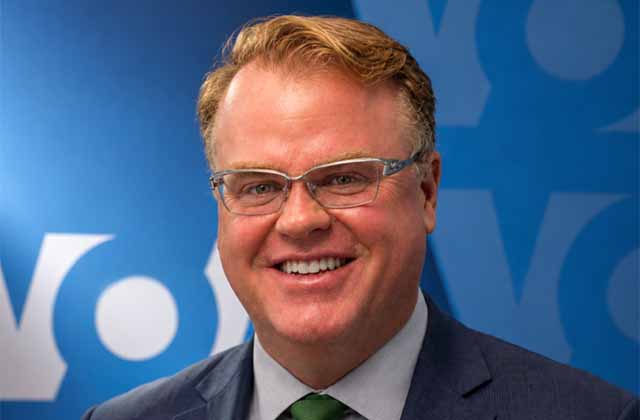
VOA Deputy Director Christopher Wallace submitted a declaration to federal court in October 2026 on VOA’s operations and programming. Wallace is effectively leading the outlet while VOA Director Michael Abramowitz and hundreds of other VOA staff remain on administrative leave, as part of the administration’s effort to dismantle VOA beginning in March 2025. His declaration outlines programming plans that remain far below 2024 levels, despite $200 million in congressionally appropriated funding for VOA in fiscal year 2026. Here is a full annotation of his declaration. Tap on the underlined phrases to read the annotations.
Published
FOR THE DISTRICT OF COLUMBIA
MICHAEL ABRAMOWITZ, et al.,
Plaintiffs,
v.
KARI LAKE, et al.
Defendants.
PATSY WIDAKUSWARA, et al.
Plaintiffs,
v.
KARI LAKE, et al.
Defendants.
Declaration of Christopher Wallace
I, Christopher Wallace, hereby make the following declaration pursuant to 28 U.S.C. § 1746:
- I serve as Deputy Director of the Voice of America (VOA). I have served in this position since March 16, 2026.
- I base this declaration on knowledge and information I have gained in the course of performing my official duties
- This declaration provides an update on VOA’s programming, staffing, and operational posture. In spring 2026, VOA began reviewing its legacy operating structure. USAGM’s Fiscal Year 2026 Program Plan, submitted to Congress on July 1, 2026, and filed with this declaration, describes the Agency’s programming priorities and planned operational changes. In 2026, VOA expanded programming in several language services, resumed additional language programming, adopted new newsroom and digital operating practices, and began implementing broader modernization initiatives. Some elements of that strategy remain under development or implementation.
Lake plan
Wallace disavows a memorandum promoted by former USAGM acting head Kari Lake that outlined plans to drastically downsize VOA and USAGM. | Read the memorandum.
- In carrying out my responsibilities, I do not use or rely on the March 2025 Statutory Minimum Executive Summary Memo to make operational decisions and I have no plans to use that document in the future. Instead, VOA’s current operations are guided by direction from USAGM, including the Program Plan and deliberations about programming and modernization consistent with VOA’s statutory responsibilities and Executive Order 14238. These decisions were made independent of the orders entered in the Abramowitz and Widakuswara cases.
VOA's operations
None of the documents cited here explain how the decisions were made for VOA to operate in only a handful of languages. Nor do they explain which federal statutes USAGM is relying on, if any, to make its decisions or why dozens of VOA language services remain silent.
- VOA’s operations at the beginning of 2026 were substantially more limited. At that time, Korean broadcasting had only recently resumed and consisted of a five-minute shortwave newscast aired three times daily, for a total of fifteen minutes per day, together with digital content. At that time, Kurdish broadcasting had not yet resumed. Journalists were being onboarded and the Agency planned to begin with digital content before adding radio and television. The return of Russian programming remained planned rather than operational.
- VOA currently offers programming in Persian, Mandarin, Korean, Dari and Pashto, Kurdish, Russian, and Ukrainian. Distribution varies by audience and includes combinations of television, radio and shortwave transmission, satellite, streaming, websites, social media, and other digital channels.
- Korean programming has expanded substantially. By early October 2026, VOA Korean was providing approximately 49 hours per week of radio-on-TV programming, thirty minutes of video podcasting a week, and extensive digital (24 hours a day) and social-media output.
VOA Kurdish
At the start of 2025, VOA’s Kurdish Service was broadcasting 68.1 hours of audio and video reports each week in two Kurdish dialects: Sorani and Kurmanji. | Learn more.
- Kurdish programming has advanced from a planned service to an operating service. VOA now produces approximately five hours per week of Kurdish live television programming, along with digital content for eight hours a day, and in 2026 began live Kurdish-language television news in the Kurmanji and Sorani dialects.
VOA Persian
At the beginning of 2025, VOA’s Persian Service was broadcasting 24/7, airing 168 hours of television programming each week.
- Persian programming has expanded as well. VOA Persian currently produces approximately 77 hours per week of original television programming, forty minutes of video podcasting a week, and maintains continuous digital operations. During Operation Epic Fury, VOA Persian expanded original live television news from approximately four to eleven hours daily, and at times provided around-the-clock radio simulcast coverage into Iran. This experience demonstrated VOA’s ability to surge programming quickly in response to a major international event.
Surge model
This only proved an ability to reactivate existing staff already on the payroll, not a sustainable way to surge during a crisis. Credible coverage requires an active newsroom and reporting network, not an on-demand model.
VOA Mandarin
In early 2025, VOA’s Mandarin Service was broadcasting 169 hours of audio and video reports each week. | Learn more.
- VOA is also producing approximately one hour and fifteen minutes per week of Mandarin television and two hours and thirty minutes per week of Mandarin radio programming. In addition, VOA produces digital content for 15 hours a day on weekdays and eight hours a day on the weekend.
VOA Afghan
Before March 2025, VOA’s Afghan Service was broadcasting 117.8 hours of audio and video reports each week. | Learn more.
- VOA produces five hours per week of combined Afghan (Dari/Pashto) broadcasting and provides digital programming 24 hours a day.
VOA Russian
VOA’s Russian Service was producing 13.5 hours of audio and video reports each week before it was silenced for 17 months. | Learn more.
VOA Ukrainian
At the start of 2025, VOA’s Ukrainian Service was producing 30.5 hours of television and digital journalism per week and had more than 40 affiliate partnerships. | Learn more.
- Russian programming has resumed and currently includes two hours and thirty minutes of television programming weekly. Ukrainian programming currently includes fifty minutes of television programming weekly. These services also provide digital programming, with Russian operating twelve hours per day, five days per week, and Ukrainian operating eight hours per day, five days per week. The Russian and Ukrainian television schedules are increasing in phases, with further production goals projected for November 6, 2026. VOA is also in the process of hiring two personal services contractors to support the commencement of Tatar-language programming, which has not yet begun.
Tatar language
Tatar is not an authorized broadcast language for VOA (it is for RFE/RL) and would need to be notified and justified to Congress.
Digital first
This is not a new approach. Many of VOA’s language services started going “digital first” more than a decade ago, a policy central to VOA modernization efforts. At the same time, VOA maintained platforms that reached audiences where they were: such as radio in North Korea and Tibet, and television in places like Indonesia, Iran and Latin America.
- In parallel with the expansion of individual language services, VOA has begun changing how its newsrooms operate. VOA has adopted a Digital Forward approach that treats digital distribution as a core means of reaching audiences rather than merely as a secondary outlet for broadcast content. Comparing September 2026 with September 2024, both website visits and social-media video views increased for four of seven tracked services: Pashto (69.3% and 40.2%, respectively), Persian (40.2% and 25.9%), Kurdish/Kurmanji (29.9% and 87.3%), and Korean (4.1% and 567.1%). VOA added approximately 1.13 million social-media followers, a 3.4% increase since March 15, 2025. Persian social-media videos received approximately 1.7 billion views in January–September 2026, about 150 million more than in the same period in 2024. VOA Persian’s newly launched podcasts received approximately 80,900 plays on Telegram during the first week of October 2026.
VOA Korean
VOA Korean is mandated by a congressional appropriations act to reach North Koreans. Because of government restrictions, people inside the country find it extremely difficult to access VOA programming through the web and social media. Unless VOA can show that the increased website visits and social media views come from North Korea, this digital approach doesn’t make much strategic sense for VOA’s Korean Service. | Learn more.
Surge model
This surge model for a news operation is not a viable way of building an audience. When breaking news occurs, audiences turn to sources they already use and trust. News organizations cannot appear when big international stories happen and then disappear again and hope to have impact. They also cannot suddenly broadcast in new languages and expect to attract audiences in places where there is no regular coverage.
- VOA has established a centralized surge and global-expansion capability to respond when major geopolitical, national-security, humanitarian, or foreign-policy events create urgent information needs outside ordinary programming. VOA has positioned bilingual journalists with Spanish- and Africa-language capabilities within its News and Assignment Desk, where they contribute to VOA-wide reporting but can be redirected quickly to their respective language capabilities when events require. The surge model is designed to begin with rapid digital and social-media reporting and then scale, as appropriate, to radio, television, satellite, affiliate networks, and other distribution channels.
VOA's English newsroom
This is not a new approach. VOA’s English-language Central Newsroom has performed this function and been a core part of VOA’s editorial operations since the outlet’s founding. In 2025, the 24/7 newsroom had around 100 full-time employees and contractors who produced multimedia news content designed to be shared and translated by all VOA language services. | Learn more.
- VOA has also begun implementing shared newsgathering and production capabilities rather than requiring each language service to independently perform every step of reporting and production. VOA is introducing industry-standard tools and services for breaking-news detection, verification and acquisition of eyewitness video, professional news feeds, remote production, and multilingual translation and transcription. These capabilities are intended to shorten the time between an event occurring and verified VOA reporting reaching audiences across multiple languages and platforms.
VOA employees
The plan does not explain why VOA would want to hire people to fill these positions when qualified VOA journalists in these language services remain on paid administrative leave.
- Personnel planning has also changed to support VOA’s expanded operating model. USAGM submitted a hiring plan to the Office of Personnel Management in July 2026 that identified 17 planned positions for VOA, separate from positions planned for other USAGM components. These positions include programming and production leadership; News and Assignment Desk and Global Expansion Desk leadership; digital operations and editorial-standards roles; and journalists or editors supporting Mandarin, Persian, Pashto, Ukrainian, Vietnamese, Spanish, Amharic, and Tigrigna language capabilities. As of October 13, 2026, USAGM had returned 168 employees from administrative leave to active duty.
VOA employees
Hundreds of VOA journalists are still on paid administrative leave. The plan does not say why they are not allowed to return to work.
- In summary, throughout 2026, VOA has expanded programming in restored language services, brought additional services into active operation, increased broadcast and digital output, adopted a digital-forward operating model, established a centralized surge capability, and begun deploying shared newsgathering tools. VOA and USAGM continue to assess their needs and implement the USAGM 2026 Program Plan, and are not relying in any way on the March 2025 Statutory Minimum Executive Summary Memo.
VOA's audience
Wallace ends his declaration without explaining how VOA might regain the 360 million weekly audience that it has lost across more than 100 countries, or why taxpayers are spending $1.6 million each week paying hundreds of journalists not to work.
I declare under penalty of perjury that the foregoing is true and correct.
Dated: October 13, 2026
Washington, District of Columbia
Christopher Wallace
Deputy Director
Voice of America
VOA's output
As of October 2026, VOA was broadcasting just 11% of its pre-March 2025 weekly output. Programming had plummeted from approximately 2,400 hours of radio and television per week to about 260 hours. Language services have been drastically cut, from 49 languages before the March 2025 shutdown to just eight.