
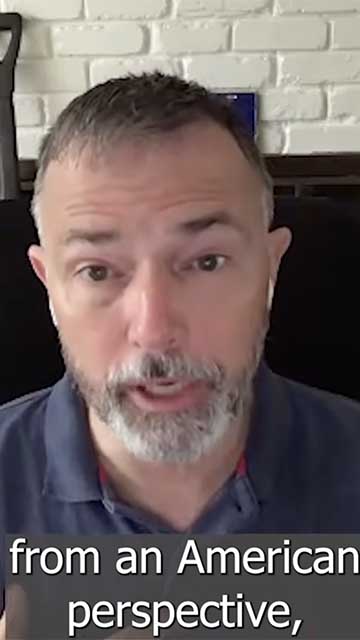
TRANSCRIPT:
SeaLight is devoted to the project of exposing things that happen in what we call the gray zone. So the places where normally, people are not able to see these malign activities, often by very large state actors like China or Russia.
If you can hold them accountable, if you can show the world what kinds of things happen in the gray zone, then we believe that that can act as a deterrent against those things happening, because the people who do them don’t want them seen.
VOA was actually very important to the project because the local and international newspapers or news outlets, for a variety of reasons, may or may not pay attention to some of the reports that we put out. They’ve just got other incentives to make things make the news. Sometimes the news outlets are controlled by more authoritarian governments. So they don’t want to cover the information.
So, for example, if we are tracking a China Coast Guard vessel that is harassing an Indonesian oil and gas exploration activity in the North Natuna Sea, if it is then picked up by VOA Indonesia and then because it gets into the Indonesian-language press, which is very important from an American perspective, because if we are interested in maintaining American interests in Southeast Asia, in the South China Sea, and China is pushing against those interests, then we want Indonesia to pay attention.
We are a maritime transparency advocacy group. So we believe in transparency in the oceans. What we would support is transparency as far as how VOA covers the news, right? So the ideal would be that VOA is devoted to covering stories that may not be covered otherwise, but are very important stories for people to hear about.
From an American perspective, I think that the transparent news, for the most part, serves our interests. You know, we are an open society, and open societies thrive on objectively-reported news and information. Closed societies use, rely almost exclusively on propaganda and state approved information. So I would oppose VOA if it were a propaganda outfit.
Published
Powell is the founder and director of SeaLight, a maritime transparency project launched by the Gordian Knot Center for National Security Innovation at Stanford University. He previously served 35 years in the U.S. Air Force.