
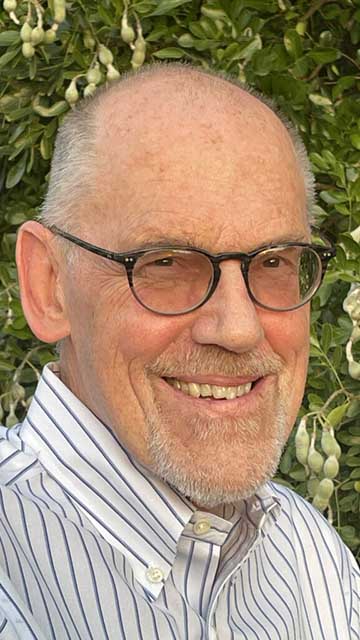
TRANSCRIPT:
I would like to speak about the Voice of America, which is really an American treasure belonging to the whole nation, something that we could take great pride in. I’m Mark Palmar and I had the privilege of heading the Russian Service of the Voice of America back in the 1980s, and later the USSR division that included, of course, our Ukrainian Service as well as Uzbeck and Azerbaijani and Georgian and Armenian [services].
And Voice of America definitely played a significant and important part in the ending of the Cold War, peacefully ending the Cold War. And as Mikhail Gorbachev famously said that during the putsch in 1991, he got his information from the Voice of America as well as from BBC and others.
We now face a very critical situation where the Trump administration has essentially shuttered a national treasure. For the past 10 years, I’ve had the opportunity to be an occasional guest on the Voice of America Russian Service, which is really a media platform including television as well as a very important interactive website. And I know that it has done an outstanding job of covering the full-scale Russian invasion of Ukraine and other important events around the world.
The Voice of America is central to the rest of the world, to the hundreds of millions of people who depend on it, to know what is going on, what American values are like. And so I think it is extremely important for the U.S. Congress to step in and to support the Voice of America because it is our national treasure.
It is what belongs to all of us. It does not belong to any administration. Rather, it is a national treasure and we the people should be able to decide how it should function, where it should function and so forth. So I urge the Congress to definitely fund the Voice of America going forward.
Published
Pomar served in senior positions at Voice of America and Radio Free Europe/Radio Liberty from 1982–1993, specializing in broadcasting to the Soviet Union and post-Soviet states. He later served as a senior fellow at the Clements Center for National Security.