Voices supporting VOA
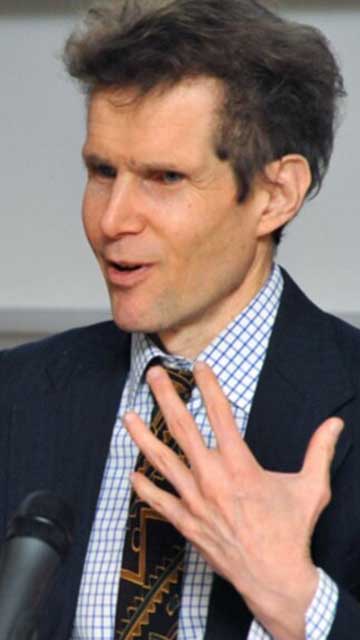
Mark Kramer
Director of the Cold War Studies program, Harvard University’s Davis Center
TRANSCRIPT:
VOA was set, even though it was set up during the Second World War, it really gained prominence and importance in U.S. foreign policy after the war, during the Cold War. And it served as an outlet for many citizens in what became the Soviet bloc to be able to find out what was going on in the world. It did reflect U.S. government positions, but it generally was very scrupulous about reporting news accurately.
And so citizens in the former Soviet Union, as well as East-Central Europe, would be able to tune in through special means – technology that they use to pick up shortwave radio broadcasts. Of course, the Soviet Union and its communist allies were trying to jam VOA transmissions, but there was a constant battle going on in terms of jamming and counter-jamming. And generally, the Soviet bloc was not especially successful in shutting off access to VOA altogether. It did limit it.
In the age of Putin, the last 26 years under Putin, the [VOA] Russian Service has regained a relevance that most people thought was permanently over. And that has been particularly the case over the last four years – four years and two months since Russia launched its war against Ukraine.
And that was accompanied in early March of 2022 with laws that really clamped down in a draconian manner and made it impossible for Russians to talk openly about what was going on with the war. They can’t even refer to it as a war; they have to call it a “special military operation” or face the risk of being arrested. There are many other restrictions on what they can do and say; no protest is permitted. And so if they want to gain an accurate sense of what is going on in the world and how other countries are reacting to Russia’s war, then one of the few ways they can do that is by tuning in to VOA.
It’s not just the Russian Federation. It’s also other countries that are extremely repressive and at odds with the United States, like China and others. But the importance of VOA is back, almost to the point where it was during the Cold War.
Published
Kramer is the director of Harvard University’s Cold War Studies Program and a leading scholar of Soviet and Cold War history. He is an expert on the history of the Soviet Union as well as political and economic change in post-communist Eastern Europe.