
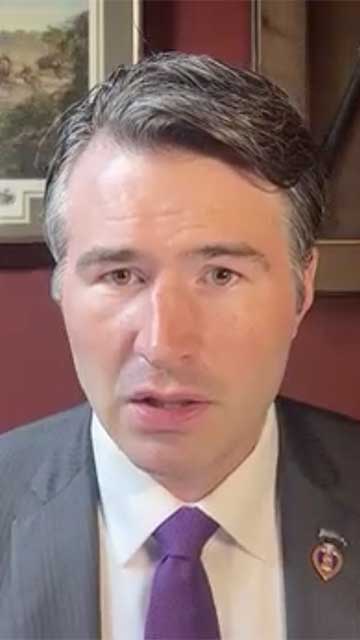
TRANSCRIPT:
On the cost per dollar of what VOA actually does, it is one of the most effective mechanisms of transmitting the American voice throughout the world. It is easily one of the most cost-effective national security investments that the American taxpayer can make.
If we’re not there providing our story in the region, then we are leaving the narrative to others, and from a military background, I would tell you that that’s going to be filled by an adversarial interest.
When we cut that [VOA] budget, what we really did is we ceded a significant amount of ground to China, especially in Latin America. We saw over the last decade the investment that China has been making in Latin America, not only obviously when it comes to content and broadcasting, but also through the Belt and Road Initiative, where they’ve been investing in what we have basically come to understand as debt trap diplomacy, where countries’ governments are making deals with Beijing that not only harm their own citizens but also put American national security at risk.
China invests in the local news agencies in Latin America with the intent of pushing content that is pro the Communist Party of Beijing and pro the message of Xi. That is the drive and goal. They get a lot — they pump a lot of money into it. The problem right now is that there is no other credible voice to talk about what the Belt and Road Initiative is.
This is what I think is the most important element here: In the contest for belief, the side that goes silent loses. And we can’t be that side.
Published
Church is a retired U.S. Army captain. He was injured during a deployment to Afghanistan in 2012 and was awarded the Purple Heart. After medically retiring from the Army in 2014, Church earned a law degree and became active in politics, working for Sen. Ron Johnson (R-WI) and running for a U.S. House of Representatives seat in Wisconsin in 2020. Church wrote an article about the value of VOA in RealClearDefense in May 2026.