
 Pakistan
Silenced for over a year, VOA still not sharing US perspectives in Pakistan

VOA Urdu Service journalist Iram Abbasi reports in front of the U.S. Capitol. The service is responsible for bringing news about the United States and its policies to audiences in Pakistan.
Published
Pakistan occupies a strategically important position in South Asia — a region where the United States, Russia, China and Iran compete directly for influence. Pakistani media regularly carries Chinese, Russian and Iranian state propaganda while political and religious elements routinely fan anti-American sentiment to gain sympathy. Pakistan also contends with religious extremism and terrorist groups such as Tehrik-e Taliban Pakistan, Baloch separatists, and Islamic State-Khorasan among others. In this environment, Voice of America reached millions of people with credible news and accurate information.
For more than seven decades, VOA’s Urdu Service broadcast uninterrupted to Pakistan in the country’s main language through cycles of democracy and military rule, conflicts with neighboring India, the war in neighboring Afghanistan, the development of nuclear weapons and challenges with terrorism and political instability.
Pakistan is strategically important to the United States for the role it plays in regional stability, counterterrorism efforts and global security. VOA has served U.S. interests there by countering disinformation, promoting transparency, and providing Pakistani audiences with accurate coverage of international affairs, American views and U.S. government policies.
Before President Donald Trump issued his March 14, 2025, executive order that effectively began dismantling VOA, the Urdu Service reached 5.2% of Pakistan’s adult population each week, or 7.7 million people. At the start of 2025, it was broadcasting 28.8 hours of audio and video reports each week. Now, it has stopped all broadcasts and is producing no content on digital media. Up until that point, VOA’s Urdu Service was one of the few news outlets in the country that directly challenged conspiracy theories targeting the United States.
When Pakistan’s former Prime Minister Imran Khan accused the U.S. of conspiring in his ouster from office in 2022, claiming a diplomatic cable was proof, the issue gripped national attention for months. In-depth reporting by the Urdu service reached wide audiences and provided U.S. government perspectives on the matter. The service sought out comment from the U.S. State Department and the U.S. Embassy in Pakistan, which denied that the cable laid out a U.S. plan to oust Khan from office.
Tweets from VOA’s Urdu Service were some of the most-viewed in Pakistan at the time of the controversy and a video explainer that contextualized the issue amassed over 1.1 million views and 114,000 interactions on Facebook alone. The service also conducted an in-depth interview with one of the journalists who published details of the alleged cable, offering audiences a deeper insight into the nuances of the controversy.
VOA Urdu also provided robust news coverage across the Muslim world, including conflicts in the Middle East which heavily shape sentiment towards the U.S. in Pakistan. It delivered extensive reporting on the Israel-Hamas war, including on the American perspective, with its first week of coverage garnering 56 million views.
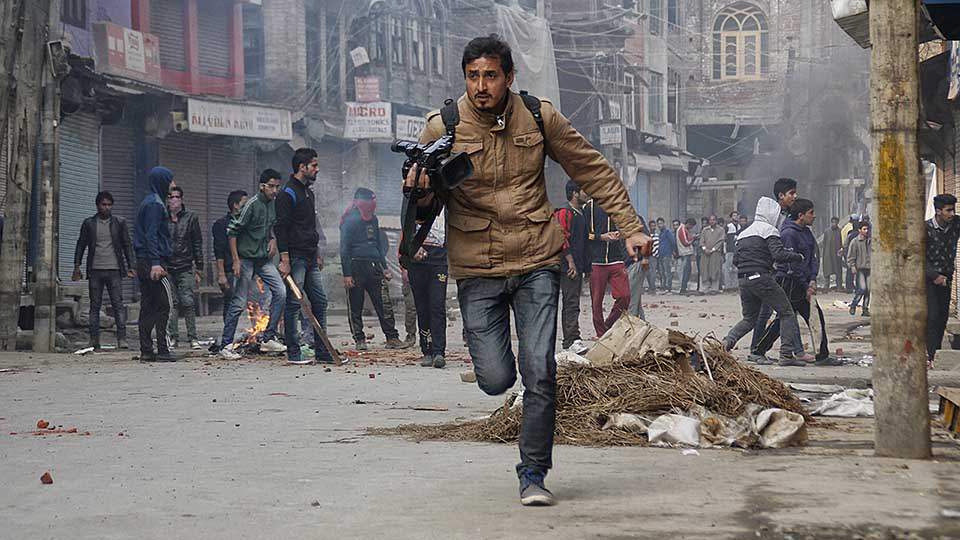 Zubair Dar reports for VOA’s Urdu Service from Indian-controlled Kashmir.
For its Urdu-speaking audience, VOA was a reliable window into Washington. During the run-up to the 2024 U.S. election, reporters with the Urdu Service made nearly 150 appearances across more than 24 Pakistani news channels, relaying news of the campaign and explaining the U.S. democratic system. Election-related social media posts tallied more than 1.5 million views across platforms and generated more than 235,000 engagements.
On election night, the service livestreamed Trump’s victory speech on Facebook and YouTube, and on Inauguration Day live-streamed Trump’s oath-taking ceremony. VOA’s live coverage showcased the country’s democratic traditions and also communicated a range of American domestic and foreign policy views.
In the absence of VOA’s independent reporting, audiences in Pakistan are left to rely primarily on government-run outlets and private media channels, which must navigate a series of red lines on what can be covered without punishment. These platforms are often heavily influenced by Pakistan’s security establishment as well as by China, Russia and Iran, resulting in coverage that reflects their priorities rather than balanced, fact-based journalism. At a time when U.S. adversaries are working hard to shape the narrative in ways that undermine stability, America cannot afford to lose its voice in Pakistan.
VOA Urdu articles published online per week
Publishing on the VOA Urdu website ceased following the president’s March 2025 executive order.
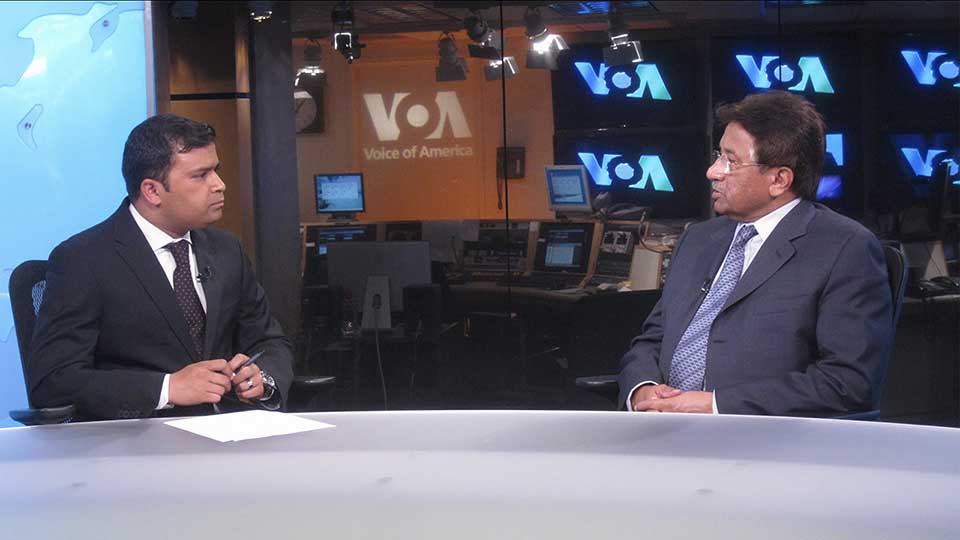
VOA journalist Muhammad Atif interviews former Pakistani President Pervez Musharraf on July 22, 2011.
Voices supporting VOA
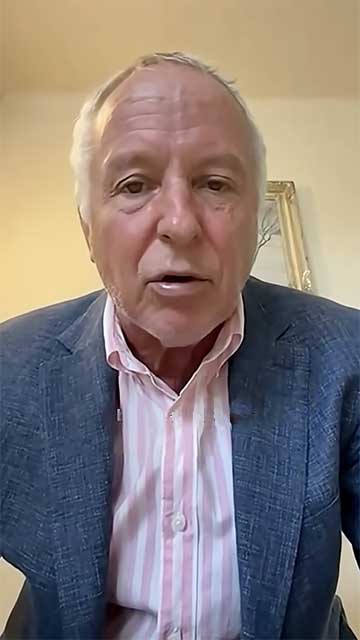
Cameron Munter
Former U.S. ambassador to Pakistan and Serbia
“If you believe, as I do, that America is different than other countries — that is, that we stand not only for American interests, but for American and universal values — VOA is the only way in which many people in the world … can learn in an objective way how America is different, how America serves not only the interests of a country, but of certain values.”
Contact your representatives
If you are a U.S. citizen and believe there is value in Voice of America — particularly if you have a personal story about listening to or watching VOA — please reach out to your representatives in Congress to encourage them to allow VOA to continue its vital mission of delivering truth to the world. We've simplified the process by creating a page to help you find their contact information and by creating a sample script of what to say.
Find out more
Press freedom situation, according to Reporters Without Borders (RSF)
Source: 2025 RSF World Press Freedom Index
Missed opportunities
Major stories VOA was unable to cover because of the effort to shut it down.
Headlines from around the world
- What’s lost if Voice of America disappears: Watchdog spirit, intrepid reporters, and focus on the global south (Global Investigative Journalism Network)
- The silencing of America’s voice leaves journalists abandoned (NewsDecoder)

At the time of the March 15, 2025, shutdown, VOA's Urdu Service employed 12 full-time employees, 17 contractors and a network of stringers.
Voices of support
“The Voice of America is a critical instrument of U.S. national security policy. For decades, it has been the instrument that the U.S. government has used to reach isolated and suppressed populations to provide them truthful information and share the benefits of an open and free press that characterize democratic peoples and nations.”

Ret. Gen. Joseph Votel
Former commander, U.S. Central Command
“VOA’s social media platforms, at least in the region that I cover, they get a lot of hits. They’re massively popular. Even if the authorities don’t like them, these platforms are huge.”

Michael Kugelman
South Asia regional expert
“As someone who has lived on several occasions in countries where the government controls the news and information very closely, having an alternative fact-based source for news and information is very important. It’s important to the people who are there, and it’s important to Americans who want to do business with countries like that.”

John Erath
Former U.S. diplomat
“Voice of America is a much cheaper way for the United States to influence and inform people around the world — cheaper than sending our military, even cheaper than setting up U.S. embassies around the world.”

David Kramer
Former U.S. assistant secretary of state