
Africa
China and Russia capitalize on VOA's exit from Africa

Reporters from across VOA's Africa Division, including from the Portuguese, French and Bambara language services, report on the 2024 U.N. General Assembly. The Africa Division broadcasts in 16 languages across the continent.
Published
For 65 years, Voice of America broadcast to Africa, promoting democratic values and countering hostile foreign narratives. It has been a primary way in which people across the continent learned about the United States — its policies, the political debates that underpin them, and Americans’ beliefs and values. With VOA’s silencing in Africa, China and Russia, along with extremist voices, including al-Shabab and Boko Haram, are filling the media landscape with narratives that often undermine American interests and misrepresent the facts of unfolding developments in Africa.
VOA first began broadcasting to Africa in 1960 with its French programming targeting audiences in 22 francophone sub-Saharan African countries. By 2025, it had expanded its broadcasts to 16 languages across sub-Saharan Africa, with the latest — Fulani — added in 2024 to reach a nomadic population across West and Central Africa.
VOA’s programming to the region reached 93.6 million people each week. The network’s audience share was largest in Somalia, where 61.9% of adults received news from VOA each week, and in Niger, at 45.8%. In terms of sheer numbers, Nigeria — Africa’s most populous nation — had the largest audience in the region at 37.4 million people, or 33.2% of its adult population.
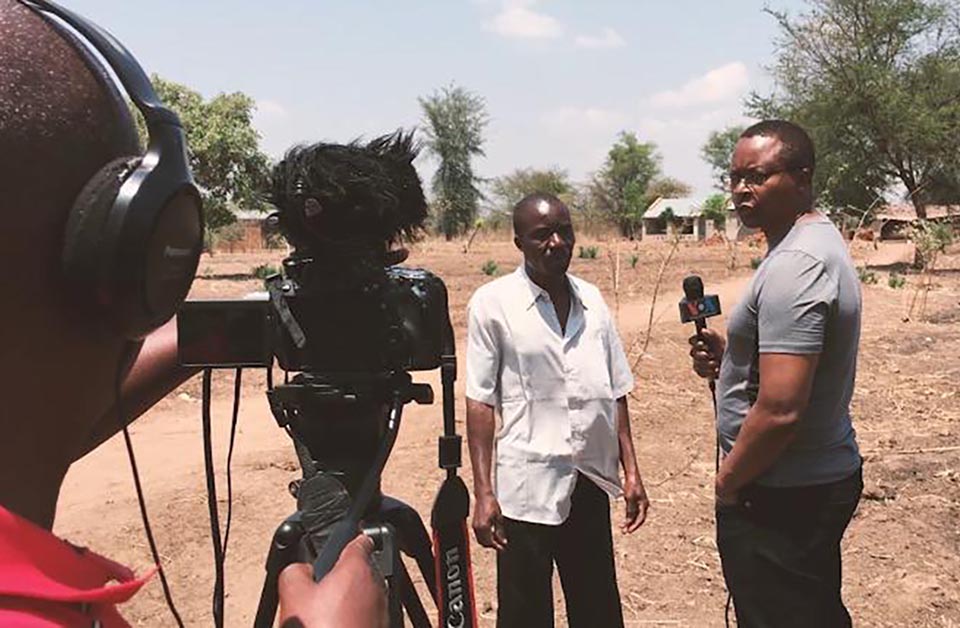 VOA reporter Vincent Makori films an interview in Malawi.
At the start of 2025, VOA’s programming to sub-Saharan Africa totaled more than 625 hours of audio and video content each week in addition to daily content in all 16 languages on digital media. VOA also amplified its programming by partnering with over 1,000 media outlets across Africa. This network allowed it to expand its in-depth coverage of major news events around the world, including the 2024 U.S. presidential election, deadly conflicts in Africa, and insurgent attacks.
However, when President Donald Trump issued his March 14, 2025, executive order that effectively began dismantling VOA, the division went dark. It has stopped all broadcasts and is producing no digital content.
In the absence of VOA, China and Russia have moved to fill the programming void. For years, China has been investing hundreds of millions of dollars in African media to push pro-China narratives. The China Global Television Network (CGTN) established a continental presence in 2012 with its Nairobi bureau, China Daily began a regular Africa edition in the early 2010s, and Xinhua has steadily built dozens of African bureaus and content-sharing agreements with national news agencies. Xinhua and CGTN had more than 37 bureaus in Africa as of April 2025, according to NeimanLab. Beijing also funds state-owned media partnerships, journalist training programs and infrastructure projects to influence media stories across the continent.
Russia has also moved aggressively to expand its influence in African media. RT, formally known as Russia Today, signed contracts with more than 30 African TV stations since Russia’s invasion of Ukraine in February 2022, according to NeimanLab, and Russian media partners have amplified pro-Kremlin narratives. Moscow also uses coordinated information campaigns and sponsored trips for local journalists to push narratives favorable to Russia. The Africa Center for Strategic Studies, a research group linked to the U.S. Department of Defense, found that disinformation campaigns in Africa nearly quadrupled between 2022 and 2024, with Russia responsible for the most cases.
Less than two weeks after VOA stopped broadcasting to Africa, CGTN announced it would significantly increase its resources to expand coverage across all regions of Africa. Russia’s TASS announced in 2025 that it would double its offices on the African continent by 2026 to a total of 12, adding new bureaus in Algeria, the Democratic Republic of Congo, Cameroon, Senegal, Ethiopia and Uganda.
A bipartisan group of eight former VOA directors wrote to U.S. senators in March 2025, warning that “gutting VOA [in Africa] would cede an entire continent to America’s adversaries and allow authoritarian regimes to control the narrative.”
Describing VOA as “one of the most cost-effective instruments of American soft power” they wrote, “VOA operates with extraordinary efficiency in Africa: just 200 staffers produce 59 radio shows and 31 TV programs, in addition to managing 16 websites and dozens of social media accounts in 16 languages.”
VOA has been one of the last strongholds against state-controlled narratives in many African countries, with its straightforward, fact-based journalism. Unlike Russian propaganda and Chinese influence campaigns, VOA is mandated by congressional charter to fairly report on all sides of an issue, something that African audiences sought out and appreciated.
When fragile democratic governments are at stake, America can not afford to cede the continent’s media landscape to China, Russia and extremist groups like al-Shabab, Boko Haram and Islamic State affiliates. Doing so would hand them an unopposed victory and abandon millions of Africans who rely on VOA for truthful information and a hope of greater democracy and freedom.
Publishing on VOA’s Africa Division websites ceased following the president’s March 2025 executive order
Total number of articles published per week on VOA’s Africa Division websites. Includes all of the Africa Division language service websites.
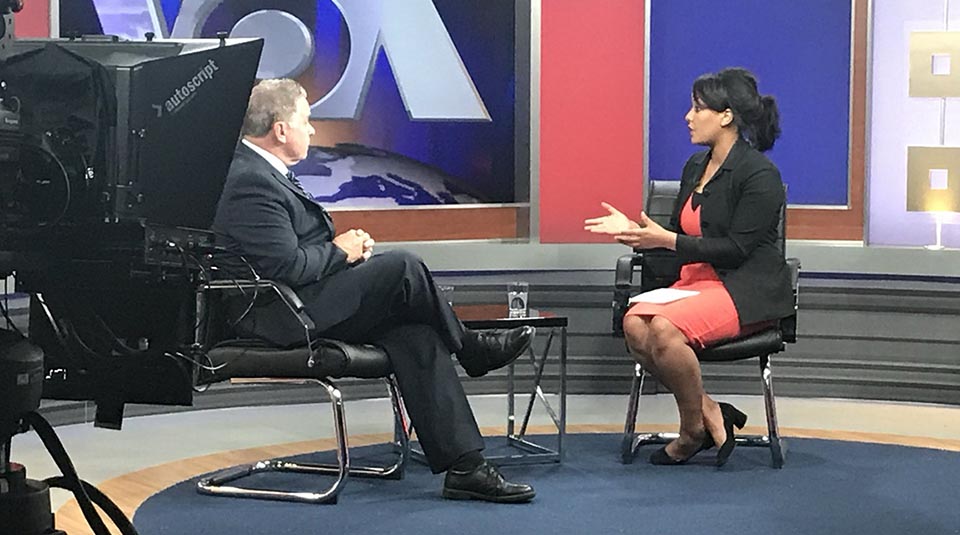
VOA journalist Salem Solomon interviews Rep. Chris Smith, R-N.J., chair of the House Foreign Affairs Subcommittee on Africa.
Voices from VOA

Roger Muntu
VOA French to Africa Journalist
VOA journalist Roger Muntu speaks with veteran broadcaster Claude Porsella, former director of VOA’s French to Africa Service. Their conversation reflects VOA’s historic mission and deep cultural and journalistic impact across Africa, as well as the human consequences of our sudden shutdown for audiences who rely on us for life-saving, independent information.
Voices supporting VOA
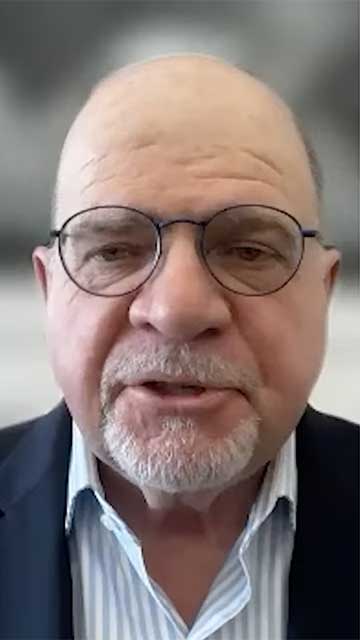
Christopher Dell
Former U.S. ambassador to Angola, Zimbabwe and Kosovo
“The Voice of America provided not only the voice of America to the world, it provided a voice that people could believe in. It provided an objective reality, a fact-checked basis for news that listeners around the world knew they could rely on to get the truth.”

Virginia Palmer
Former U.S. ambassador to Ghana
“I witnessed … the power that VOA has to project the power of American ideals and tell great stories about what America does and stands for in countries where the governments are actively blocking that kind of good news about America. I strongly believe Voice of America makes America stronger.”

João Pinto
Radio Nova Director, Angola
“VOA has been one of the media outlets we’ve been counting on to help us with the democratization of our society. That's why we consider it important and we want to continue working with VOA.”
Contact your representatives
If you are a U.S. citizen and believe there is value in Voice of America — particularly if you have a personal story about listening to or watching VOA — please reach out to your representatives in Congress to encourage them to allow VOA to continue its vital mission of delivering truth to the world. We've simplified the process by creating a page to help you find their contact information and by creating a sample script of what to say.
Find out more
Source: 2025 RSF World Press Freedom Index
VOA’s Africa Division language services
| Service | Year started | Weekly broadcast hours 2024 |
|---|---|---|
| French to Africa* | 1960 | 181.75 |
| Swahili | 1962 | 18.70 |
| English to Africa | 1963 | 258.75 |
| Portuguese | 1976 | 10.50 |
| Hausa | 1979 | 16.75 |
| Horn of Africa* | 1982 | 36.25 |
| Central Africa* | 1996 | 40.39 |
| Zimbabwe* | 2003 | 5.00 |
| Somali | 2007 | 33.58 |
| Bambara | 2013 | 11.50 |
| Total | 625.17 |
* Some VOA language services broadcast in multiple languages.
French to Africa Language Service

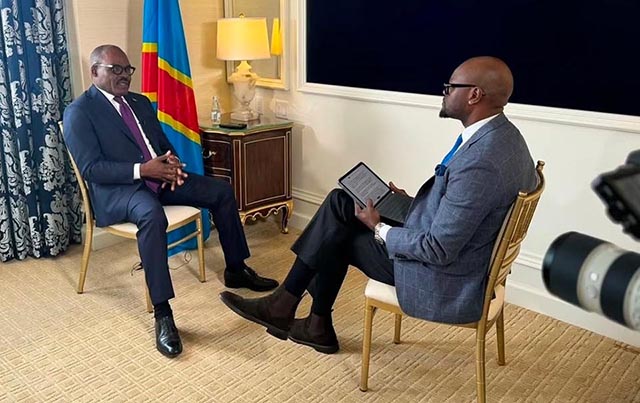
VOA French to Africa journalist Roger Muntu interviews Democratic Republic of Congo Finance Minister Nicolas Kazadi in December 2024.
Languages: French (The service also oversees programming in Lingala, Sango, Wolof and Fulani.)
Target area: Francophone sub-Saharan countries
First broadcast: 1960
The year was a pivotal year for Francophone sub-Saharan Africa, with 14 countries gaining independence from France.
Service overview: “VOA’s French to Africa Service produces a broad mix of news and interactive programming for radio, television and the internet. On shortwave, VOA targets 22 Francophone countries in sub-Saharan Africa. On FM, VOA is broadcast on 24/7 transmitters in Abidjan, Bamako, Bangui, Brazzaville, Bukavu, Dakar, Gao, Goma, Kananga, Kigali, Kisangani, Lubumbashi, Matadi, Mbuji-Mayi, N’djamena, Niamey, Ouagadougou, Pointe Noire and Timbuktu. VOA provides an alternative to state-controlled media that dominate the airwaves in many of these countries. Although independent radio and television stations are making some advances, many remain subject to government interference.”
— The U.S. Advisory Commission on Public Diplomacy’s 2024 annual report
Russia’s media operations: Russia has been active in spreading disinformation and anti-France rhetoric across the Sahel, where coups in Mali, Burkina Faso and Niger have led to the expulsion of French troops. The French military has also left bases in Chad, Senegal and Ivory Coast. Analysts point to Russian propaganda as a key driver of the shift away from France in the Sahel.
In 2024, U.S. General Michael Langley, then head of U.S. Africa Command, told lawmakers that one of the main drivers of Niger forcing U.S. troops out of the country and abandoning a $100 million drone base was Russia’s disinformation campaign. “The Russian Federation had their playbook. They had their passing game through their disinformation,” he told the House Armed Services Committee.
Swahili Language Service
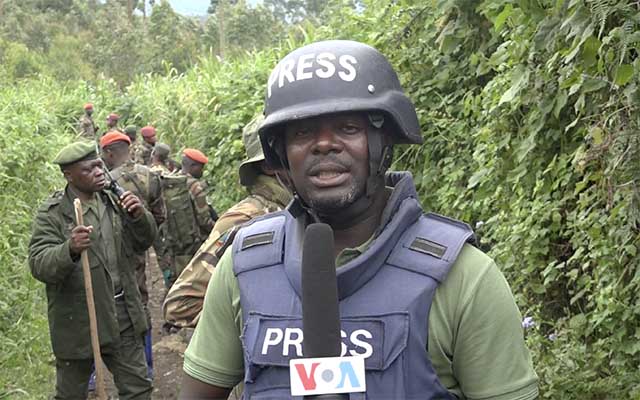
VOA Swahili stringer Austere Malivika reports from the Democratic Republic of the Congo.
Language: Swahili
Target area: Tanzania, Kenya, Uganda, Burundi, Rwanda and the Democratic Republic of Congo
First broadcast: 1962
The 1960s saw countries with large Swahili-speaking populations move toward democracy, with Tanganyika (later known as Tanzania), Kenya and Uganda gaining independence, and Zanzibar merging into Tanzania.
Service overview: “VOA’s Swahili Service broadcasts to East and Central African nations of Tanzania, Kenya, Uganda, Burundi, Rwanda, the Democratic Republic of Congo, and several pockets of Swahili-speaking communities in West and Southern Africa, the Middle East, and Asia. VOA Swahili programs are aired on shortwave and several FM affiliates in the region.”
— The U.S. Advisory Commission on Public Diplomacy’s 2024 annual report
China and Russia’s media operations: Russia has been broadcasting in Swahili since the Cold War, and China has been producing news in the language since the early 2000s. China’s largest news bureau on the African continent is in Nairobi, Kenya, a hub for Swahili-speaking regions. In 2020, the bureau supported 150 journalists and 400 staff who produced 1,800 stories a month, according to a 2023 State Department report. Russia’s Sputnik set up a Swahili center in June 2025, and the TASS news agency announced plans to open new offices in Uganda and the DRC by 2026, doubling its offices on the continent to 12 countries by the end of the year.
English to Africa Language Service
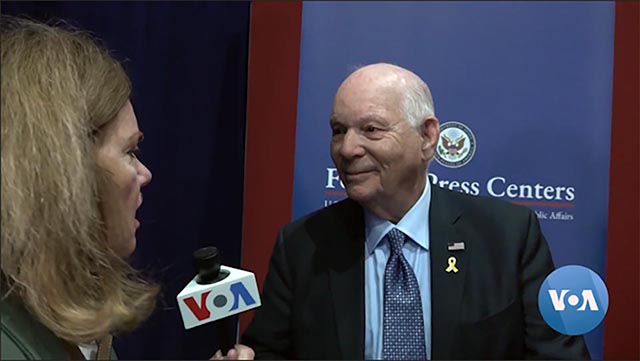
VOA's Carol Van Dam presses Sen. Ben Cardin, D-Md., chairperson of the Foreign Relations Committee, about the "forgotten war" in Sudan, August 2024.
Language: English
Target area: English speakers in all African countries (Map highlights countries where English is an official language or widely used in government.)
First broadcast: 1963
VOA began its broadcasts in English to the African continent just months before Kenya gained its independence from Britain. That same year, Nigeria became a federal republic and the Organization of African Unity — the precursor to the African Union — was established in Addis Ababa, Ethiopia.
Service overview: “VOA’s English to Africa Service provides multimedia news and information covering all 54 countries in Africa. VOA programs engage audiences with information about politics, science, technology, health, business and the arts, as well as programming on sports, music and entertainment.”
— The U.S. Advisory Commission on Public Diplomacy’s 2024 annual report
China and Russia’s media operations: The continent's Southern Africa region is the area most targeted by Chinese-linked actors, who carried out disinformation campaigns in Angola, Malawi, Zimbabwe, Namibia, Botswana and South Africa, according to a 2024 report by the Africa Center for Strategic Studies. Chinese diplomats are increasingly using their positions to influence media content across the continent, publishing more than a dozen op-eds per year in countries such as South Africa and Nigeria, according to Freedom House.
Research by the Africa Center for Strategic Studies also found that three of the top five most targeted African countries for disinformation campaigns have large English-speaking populations — South Africa, Nigeria and Sudan. In South Africa, Kremlin-linked actors carry out the most campaigns, while in Sudan, it is military actors.
Portuguese Language Service
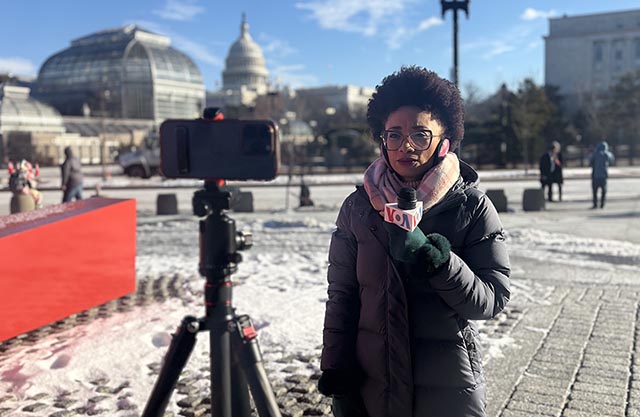
VOA Portuguese journalist Mayra de Lassalette reports from Washington during the 2025 presidential inauguration.
Language: Portuguese
Target area: Lusophone Africa (Angola, Mozambique, Guinea-Bissau, Cape Verde and São Tomé and Principe).
First broadcast: 1976
In 1976, Portuguese-speaking African countries were solidifying their independence two years after the Carnation Revolution ended Portugal's long colonial rule. However, the year also saw Angola plunge into a civil war that became a Cold War proxy battle, while Mozambique began its own civil conflict.
Service overview: “VOA’s Portuguese to Africa Service broadcasts to Lusophone Africa and other countries where there are sizable Portuguese-speaking communities. The Portuguese broadcasts also reach East Timor, a Portuguese-speaking country in Southeast Asia, as well as Brazil via shortwave and the internet. The program line-up includes news, discussions, interviews, and a wide variety of features, including music and art.”
— The U.S. Advisory Commission on Public Diplomacy’s 2024 annual report
Russia and China’s media operations: Russia has long ties to Lusophone Africa, dating back to the Soviet era and has been expanding its influence in the region. In June 2025, the Russian state-owned news agency RT launched content in Portuguese specifically targeting audiences in Mozambique and Angola.
In Mozambique, state-owned media outlets such as the news agency AIM, the television station TVM, the radio broadcaster Rádio Moçambique, and the daily newspaper Jornal Notícias have long-standing ties with Chinese media entities. They report favorably on China and its bilateral relationship with Mozambique, according to Freedom House.
Hausa Language Service
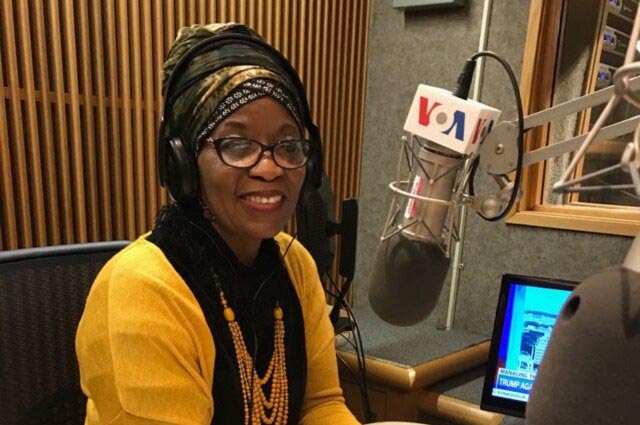
Grace Alheri Abdu is the managing editor of VOA Hausa.
Languages: Hausa
Target area: Nigeria, Niger, Ghana, Chad and Cameroon
First broadcast: 1979
Nigeria transitioned from military rule to a civilian government in 1979 with the election of President Shehu Shagari. In subsequent years, the country experienced three coups and years of turbulence before a period of greater stability in West Africa beginning in 1999, when Nigeria began democratic transitions.
Service overview: “Hausa is a West African language spoken by over 60 million people in the region — primarily in Nigeria, Ghana and Niger and also in Cameroon, Chad, Libya, Cote d’Ivoire, Burkina Faso and Benin. Politically and economically, the targeted countries are vital to U.S. interests, particularly Nigeria, with its sizable population of more than 210 million and its vast oil and gas resources. VOA Hausa offers programming of direct and simulcast broadcasting on shortwave and MW/AM radio. At the same time, the service’s website features live and on-demand audio broadcasts and two digital weekly features, including an Americana-focused one.”
— The U.S. Advisory Commission on Public Diplomacy’s 2024 annual report
China’s media operations: China Radio International broadcasts in Hausa and its Facebook page has 1.7 million followers. The Chinese embassy in Nigeria frequently reaches out to editors at major news outlets about news content and appears to pay journalists not to cover negative stories about China, according to a 2022 report by Freedom House.
Horn of Africa Language Service
Languages: Amharic, Afan Oromo and Tigrigna
Target area: Ethiopia and Eritrea
First broadcast: Amharic: 1982; Tigrigna and Afan Oromo: 1996
1982 is a year of conflict for the region with Ethiopia invading Somalia in an attempt to overthrow Somali President Siad Barre, who repels the invasion with the help of U.S. military assistance. Instability persists in the next decade with a civil war in Somalia, the outbreak of war between Ethiopia and Eritrea and growing Islamic extremism in neighboring Sudan.
Service overview: “The Horn of Africa Service broadcasts to Ethiopia and Eritrea in three languages: Amharic, Afan Oromo and Tigrigna. Amharic programming is meant for more than 130 million people living in Ethiopia and Eritrea, as well as diaspora communities throughout the world. Afan Oromo is directed at an estimated 40% of Ethiopians living in the Oromia region of Ethiopia, in the northern parts of Kenya, and the diaspora. Tigrigna is heard throughout the Tigray region in northern Ethiopia and in Eritrea. Digital and mobile platforms are also available on the web. The Horn of Africa Service broadcasts local, regional, U.S. and international news, as well as an array of programming about Ethiopian, Eritrean and American cultures, politics, current affairs, economics, health, education and entertainment.”
— The U.S. Advisory Commission on Public Diplomacy’s 2024 annual report
China and Russia’s media operations: Russian state media outlets are increasingly expanding their presence in the region. Sputnik opened an editorial center in Addis Ababa, Ethiopia, in February 2025 and began broadcasting in Amharic. Russia’s TASS news agency has also been working on opening an office in Ethiopia by 2026.
China's influence in Ethiopia includes helping the government to build and maintain communications technology systems that are used for domestic surveillance and censorship, according to a 2023 State Department report.
Central Africa Language Service
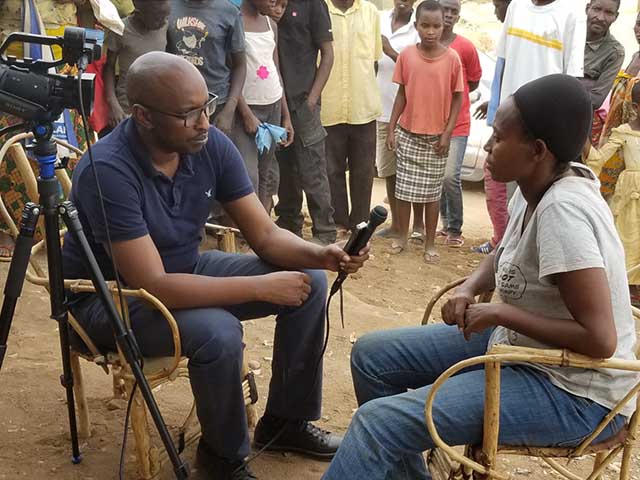
VOA reporter Edward Rwema interviews a Burundian refugee in eastern Rwanda.
Languages: Kirundi and Kinyarwanda
Target area: Rwanda, Burundi, Eastern Democratic Republic of Congo, Southern Uganda and Northwest Tanzania
First broadcast: 1996
VOA began broadcasting to Central Africa two years after the end of the Rwandan genocide and months before the start of the First Congo War. That war, along with the more devastating Second Congo War, killed millions, and while the war officially ended in 2003, regional instability and fighting persist today.
Service overview: “VOA Kirundi/Kinyarwanda is a balancing medium in a region with historical ethnic and political strife that sets standards of impartial and comprehensive reporting, addresses misinformation and disinformation, engages in solutions journalism, promotes democratic values, and fosters civil dialogue and reconciliation between political stakeholders.”
— The U.S. Advisory Commission on Public Diplomacy’s 2024 annual report
Russia’s media operations: Russia’s Tass news plans to open its first office in Central Africa, in the DRC, by 2026. The region recently saw more than 20 disinformation campaigns, according to a 2024 report by the Africa Center for Strategic Studies, with two-thirds of them carried out by Kremlin-linked actors.
A 2024 State Department report detailed atrocities in Africa committed by the Wagner Group, a Russian state-funded private military company. It said Russian disinformation falsely portrays the group as playing a positive role in nations such as the Central African Republic, with the disinformation campaigns describing Wagner forces as having “saved” CAR and having strengthened “peace and stability” in the country.
Zimbabwe Language Service
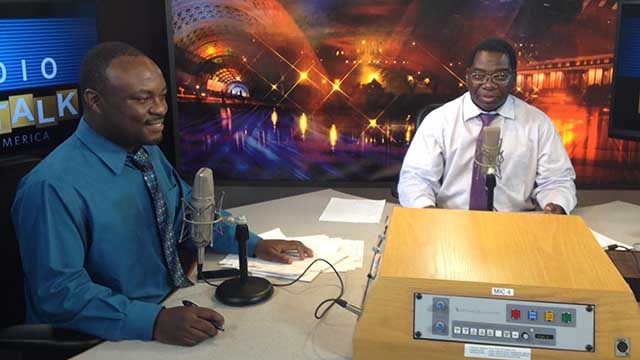
VOA Zimbabwe's Gibbs Dube and Blessing Zulu hosting a popular call-in show “Livetalk” in Washington.
Languages: Shona, Ndebele and English
Target area: Zimbabwe. Its Studio 7 program also reached audiences in South Africa, Malawi, Namibia, Mozambique, Botswana and Zambia.
First broadcast: 2003
When VOA began broadcasting to Zimbabwe in 2003, the country was ruled by longtime leader Robert Mugabe and was dealing with the effects of his campaign to seize the land of thousands of white farmers and redistribute it to Blacks, often his political allies. Zimbabwe was facing food shortages and one of the world’s highest inflation rates.
Service overview: “VOA’s Zimbabwe Service broadcasts to Zimbabwe through various delivery methods and in three languages. Since its launch in 2003, the service has continued to be an important source of independent information in a country where one party has ruled since 1980 and where the media space is restricted to the government-owned or sponsored outlets. VOA Zimbabwe has also evolved to include multimedia publishing and broadcasting on various digital channels such as its own website, YouTube, Facebook, X, WhatsApp and Instagram.”
— The U.S. Advisory Commission on Public Diplomacy’s 2024 annual report
China's media operations: Zimbabwe’s government controls most of the country’s media outlets and those outlets are often highly supportive of China. The cooperation between the two countries on the media front is used to benefit both governments. Zimbabwe’s state media uses its power to promote Chinese political and business propaganda, while Chinese disinformation campaigns are picked up in the media and used by Zimbabwe’s government to create a pretext to crack down on journalists and civil society to further its hold on the country.
Somali Language Service
Language: Somali
Target area: Somalia and neighboring countries
First broadcast: 1992-1994, then again from 2007-2025
The early 90s saw civil strife, famine and UN intervention in Somalia. A pivotal year came in 2007 with Ethiopian troops in Somalia ousting the Islamic Courts Union, the U.S. carrying out airstrikes against suspected al-Qaida members and the rise of the al-Shabab extremist group.
Service overview: “VOA Somali reaches Somalia and neighboring countries on AM, FM, shortwave, the internet and digital platforms. A team of Somali broadcasters based in Washington, D.C., along with freelance reporters in Somalia and elsewhere in Africa and the world, provides news to a country with a federal government fighting the terrorist group al-Shabab.”
— The U.S. Advisory Commission on Public Diplomacy’s 2024 annual report
China's media operations: China and Somalia signed an agreement in 2021 for China to modernize media institutions in the country, including repairing and equipping Radio Mogadishu and the Somali National News Agency. China has recently been further strengthening its ties with Somalia as it seeks to counter cooperation between the breakaway province of Somaliland and Taiwan. The two regions signed a maritime agreement in July 2025, drawing China’s ire. China has engaged in disinformation campaigns to delegitimize Somaliland’s democratic government and is increasingly spreading narratives across Africa with the aim of convincing countries not to openly recognize Somaliland.
Bambara Language Service
Language: Bambara
Target area: Mali
First broadcast: 2013 as part of the French Service; then in 2021 it became a separate language service
2013 is the year that French-led forces launched an operation at the Malian government’s request to stop an Islamist advance towards the capital. However, less than a decade later, Mali formally expelled all French troops from the country.
Service overview: “VOA’s Bambara Service to Mali produces a mix of news and interactive programming for radio and the internet. VOA Bambara programming airs through local FM transmitters in the three main cities: Bamako, Gao and Timbuktu. Its programs are also carried by a dozen affiliates in Mali and Burkina Faso. The service is one of the main sources of independent and reliable news for millions in the country, especially its northern parts, which Tuareg separatists and Islamist groups largely control.”
— The U.S. Advisory Commission on Public Diplomacy’s 2024 annual report
Russia’s media operations: Mali is one of the most targeted African countries for disinformation campaigns, according to the Africa Center for Strategic Studies. The country saw 12 such recent campaigns, according to the group’s 2024 report, with more than half of them carried out by Russia. The group said “Russia has inundated the Sahel with disinformation” and said Russian networks have helped “prime and promote” recent coups in the region, including in Mali, Burkina Faso and Niger.
The Wagner Group, a Russian state-funded private military company, has been active in Mali since its deployment there in 2021. Russian officials, Russian state-funded media and Kremlin-linked Telegram channels continuously promote the group’s “positive” role in the country, according to a 2024 State Department report. After Russia, the military juntas in Mali and Burkina Faso are the second largest sponsors of disinformation in West Africa, according to the Africa Center for Strategic Studies.
Featured stories
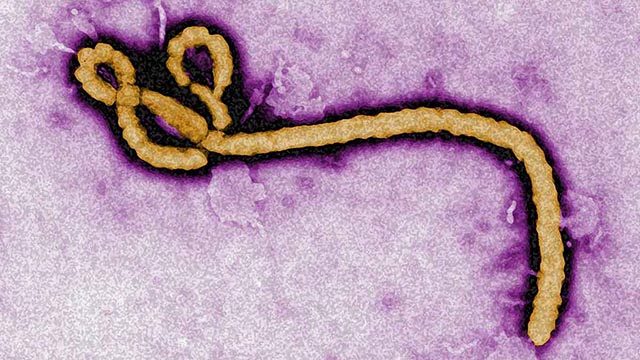
How Western DRC’s Ebola outbreak was contained
The Ebola outbreak in Congo has been closely tracked and, so far, well-contained, in stark contrast to the 2014 West Africa outbreak that killed thousands of people.
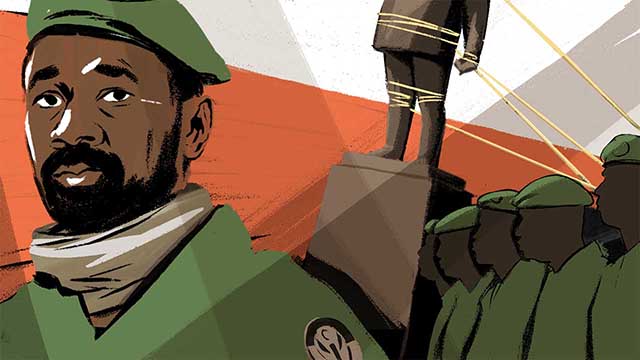
Understanding the rise in coups across Africa
A rise in the overthrow of governments on the African continent prompts a closer look at the phenomenon.
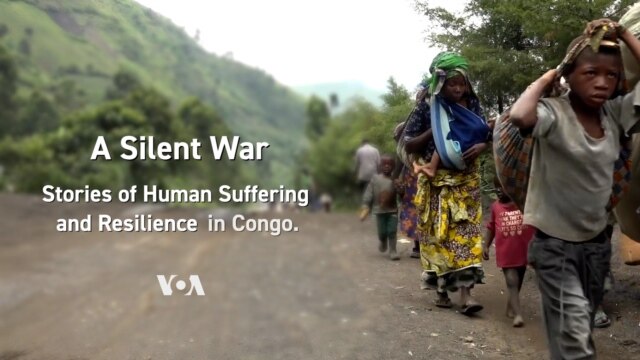
A silent war: stories of human suffering and resilience in Congo
This poignant documentary sheds light on the ongoing humanitarian crisis in the Democratic Republic of Congo (DRC), particularly in its eastern region. The film delves into the lives of individuals who have been internally displaced due to persistent intercommunal militia attacks and military operations.
Watch the documentary. English
Headlines from around the world
- Africa's press freedom hit hard by VOA shutdown, US aid cuts (DW)
- As Trump silences Voice of America, Russia and China seize the opportunity to reshape Africa’s news ecosystem (NiemanLab)
- Sub-Saharan Africa: community radio programs shut down, access to information in jeopardy after Voice of America suspension (Reporters Without Borders (RSF))
- VOA’s closure in Africa deepens information void (IFEX)
- As America silences its voice in Africa, China and Russia amplify theirs (The Hill)

At the time of the March 15, 2025, shutdown, VOA's Africa Division employed 128 full-time employees, 79 contractors and a network of stringers.
Voices of support
“VOA serves as a trusted news source for countless individuals in Somalia and the [Horn of Africa], where misinformation exacerbates conflict. Its reporting provides a critical counterbalance to unreliable narratives.”

Mohamed Abdirizak
Former Somali minister of foreign affairs
“VOA is a channel that promotes diversity, opening a space for all groups to express themselves, to bring up their concerns, share their reflections. For us women, this is very important because we have had little access to media outlets that make us feel very comfortable.”

Nzira Deus
Executive director of Women's Forum, Mozambique
“With U.S. Agency for Global Media (USAGM) likely scaling back operations significantly, Post has lost its most potent interagency partner in the fight against Chinese media influence in Botswana. … Absent USAGM content via the Voice of America (VOA) or another similar source, Xinhua News Agency and Sputnik will be the primary sources of redistributed international news wire content in Botswana, including those that broadly shape narratives about the United States.”
— Gaborone, Botswana
U.S. diplomatic cable
“For over four decades, USAGM had served as a counterweight to foreign influence and propaganda operations, building a network of 40 affiliate radio and TV stations across Nigeria. … Without VOA's trusted reporting from the American perspective, the United States has lost not only a tool to counter adversaries in the information space, but also an effective mechanism for advancing U.S. interests directly into the homes of millions of Nigerians.”
— Lagos, Nigeria
U.S. diplomatic cable
“VOA Hausa's outreach plays a key role in neutralizing extremist messaging. The vacuum caused by no VOA Hausa counter-messaging will be filled by bad actors' narratives and will erode U.S. influence in Nigeria's Hausa-speaking north, where VOA's credible reporting countered both extremist propaganda from groups like Boko Haram and the strategic messaging of adversarial states.”
— Abuja, Nigeria
U.S. diplomatic cable